
Adıyaman
City Detective (Şehir Dedektifi): Children’s Right to the City
Located near the epicenters of the earthquakes, roughly 80% of Adiyaman’s city center suffered severe damage or collapse after the earthquakes. Many children lost their entire families, and, years later, many continue to live in container settlements. Through Şehir Dedektifi’s work, these children begin to heal as they learn the history, culture, and ecology of their city and the nearby archaeological site of the ancient city of Perre. They then use this knowledge to become active citizens and urban planners, making their experience visible through art and design. Şehir Dedektifi’s initiatives serve as a unique model for post-disaster recovery that places children at the center of spatial and civic transformation. Şehir Dedektifi’s work positions children not as observers but as co-creators of Adıyaman’s future, showing that recovery after disaster also means cultivating imagination, solidarity, and the right to participate in shaping one’s city.
Image Credits: Şehir Dedektif, ACHA
Perre Children and the City Biennial
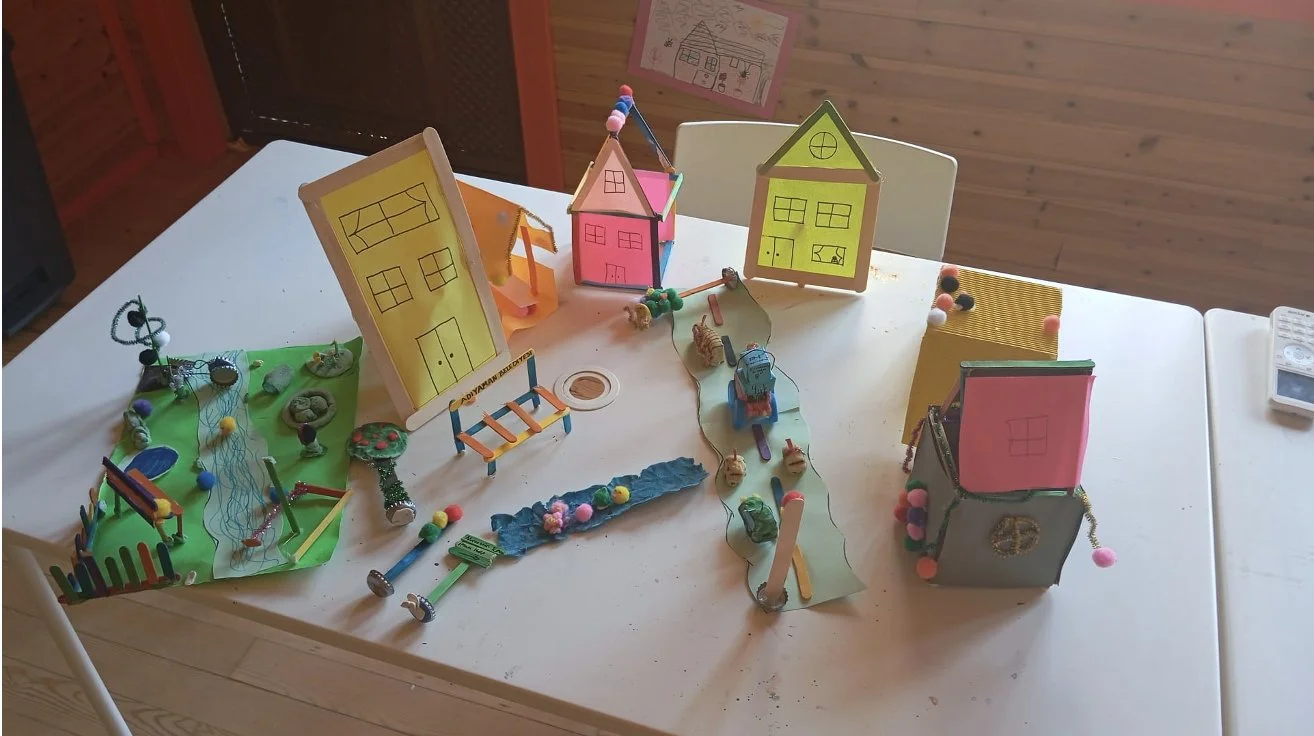
Over eight months of workshops, 541 children from different neighborhoods — including those living in container settlements — collaborated with artists, designers, and local organizations. Each class spent one week-long session with an educator, first exploring the nearby ancient city of Perre, and then returning to participate in a workshop exploring how their city could become more inclusive and imaginative. Through drawing, model-making, sound design, and mapping, they reimagined Adıyaman, expressing their ideas about accessibility, mobility, ecology, and play. They learned that the reconstruction of their city is not simply about rebuilding structures, but also about restoring urban life, memory, and the sense of belonging. Their work was shown at a summer-long exhibition (the Biennial) at Adıyaman’s cultural center in 2025.
-
![]()
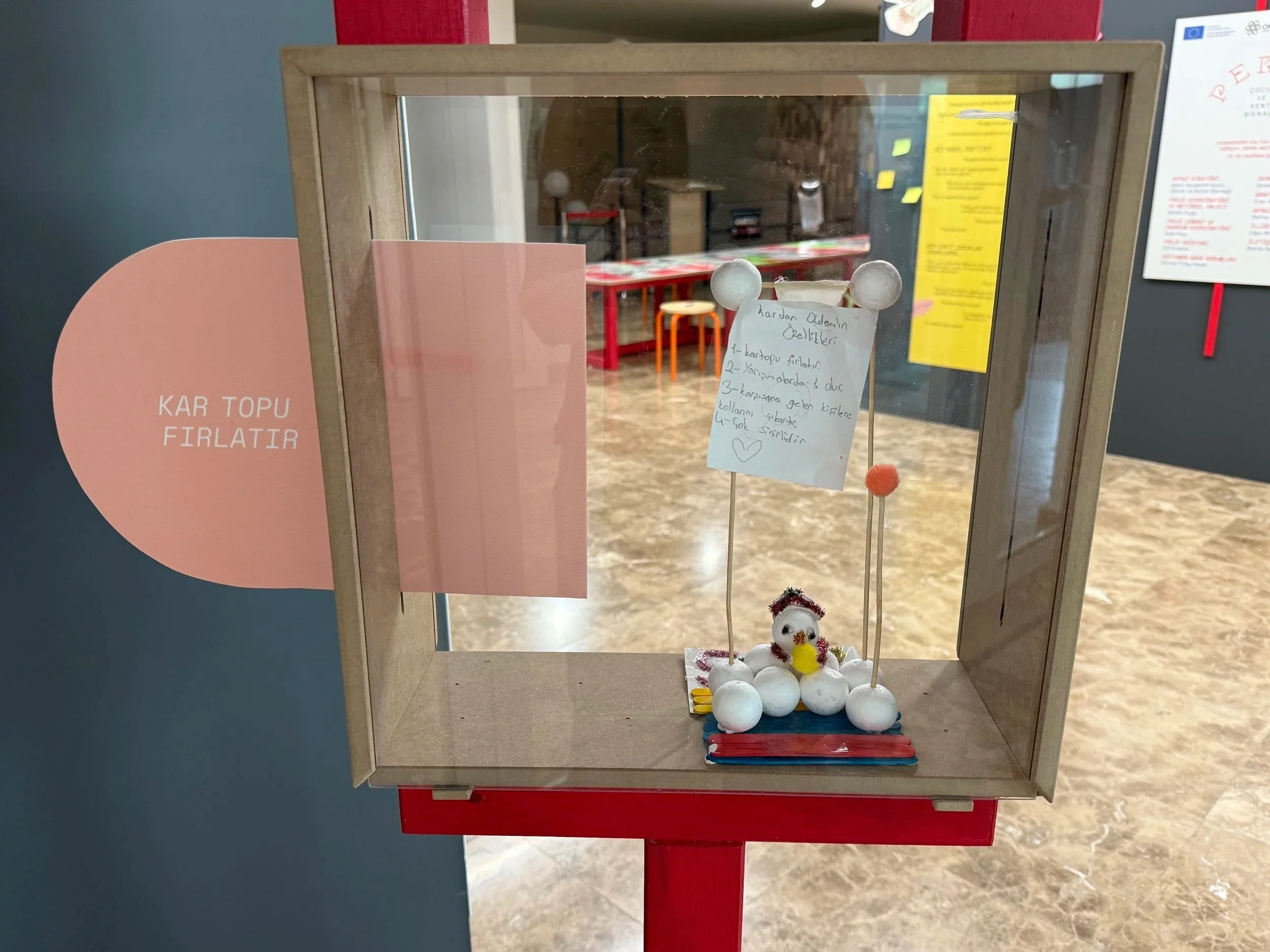
Kar Topu Firlatir (Snowman)
-
![]()
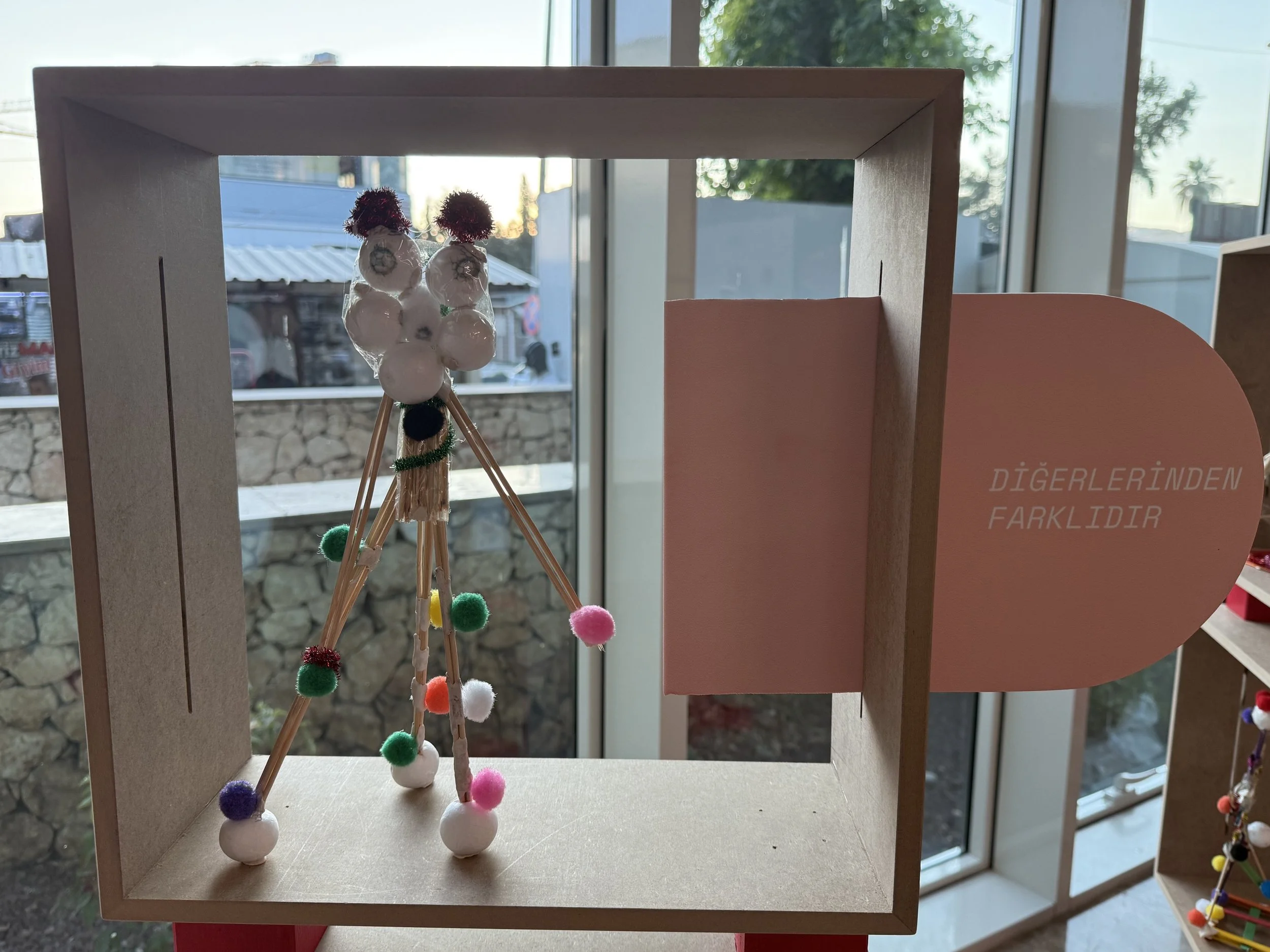
Diğerlerinden farklıdır (Being different from others)
-
![]()
Doğayı temizler (Cleaning nature, the air)
-
![]()
Yolları onarır (Fixing the roads)
-
![]()
Hayvanlarla konuşur (Talking to animals)
-
![]()
Zamanı durdurur (Pausing time)
-
![]()
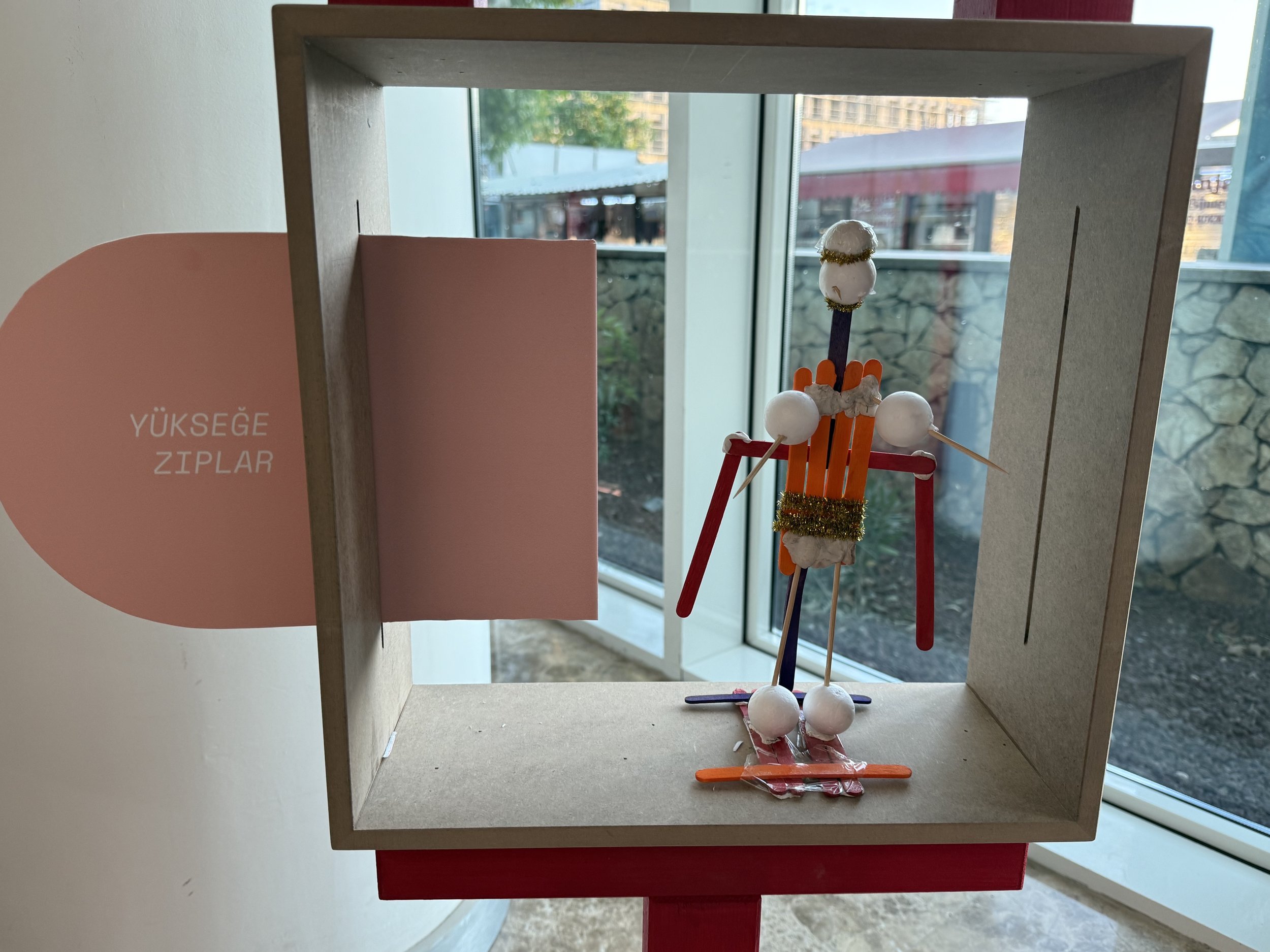
Yükseğe zıplar (Jumping high)
-
![]()
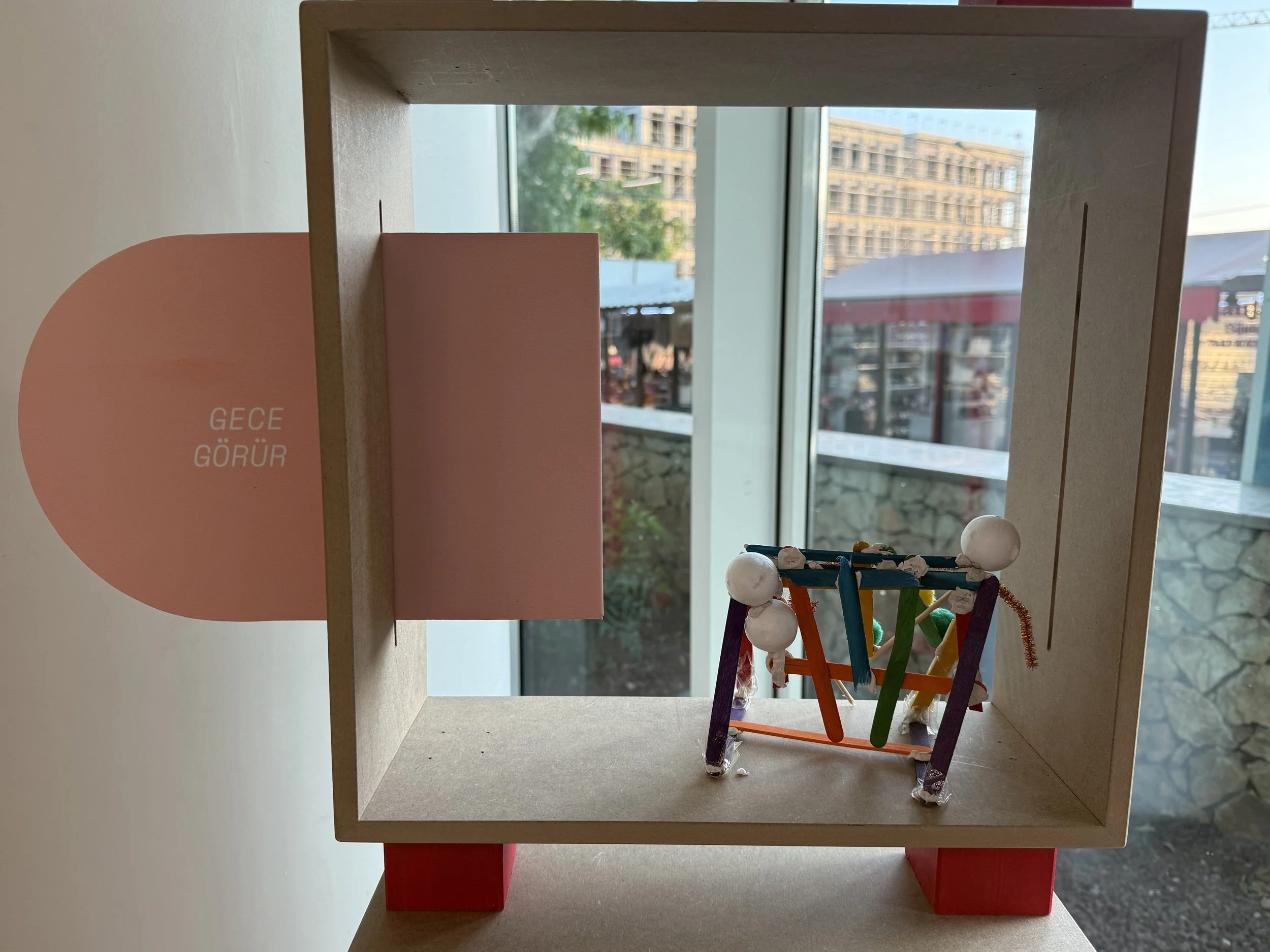
Gece görür (Seeing at night)
-
![]()
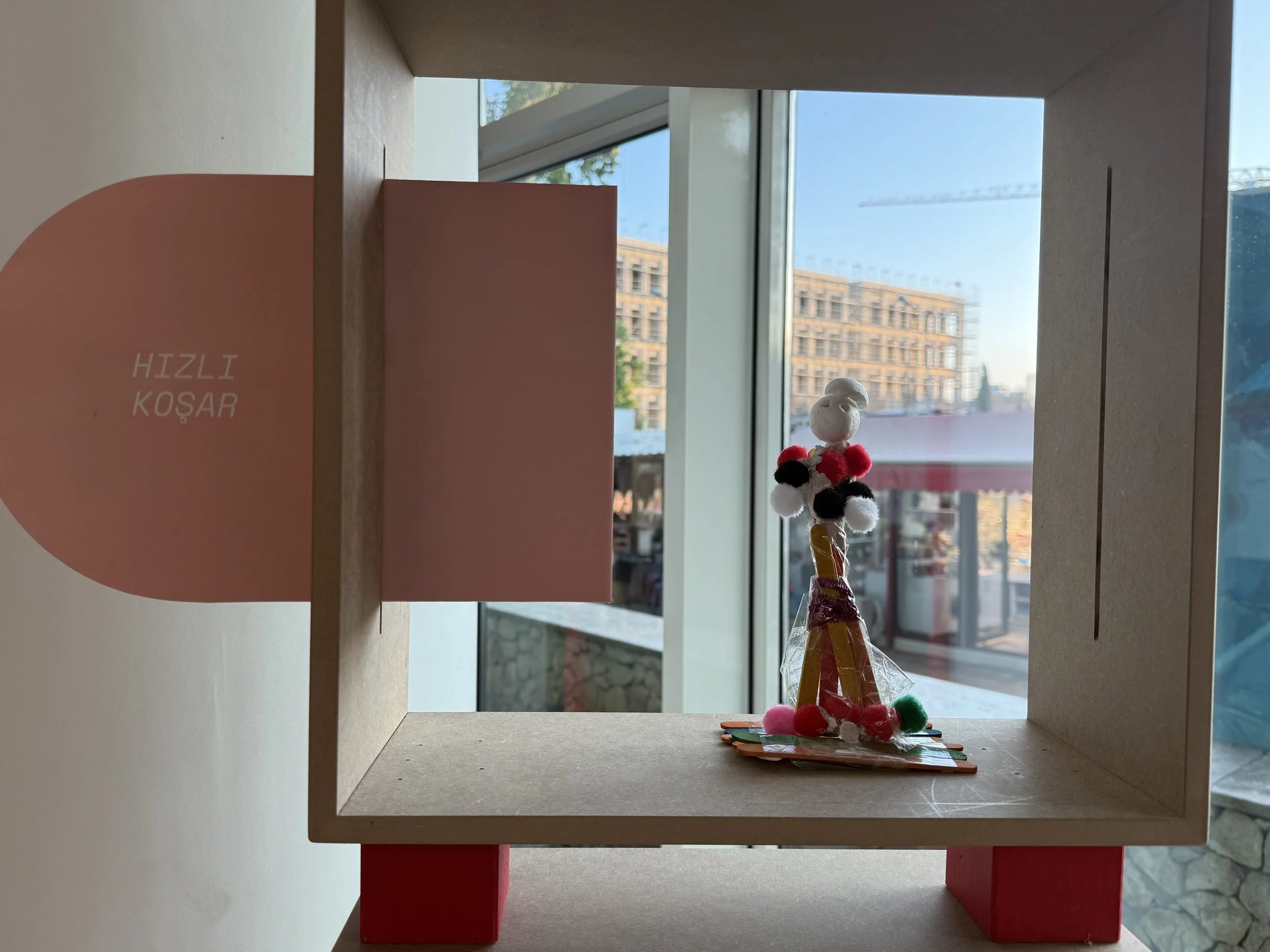
Hızlı koşar (Running fast)
-
![]()
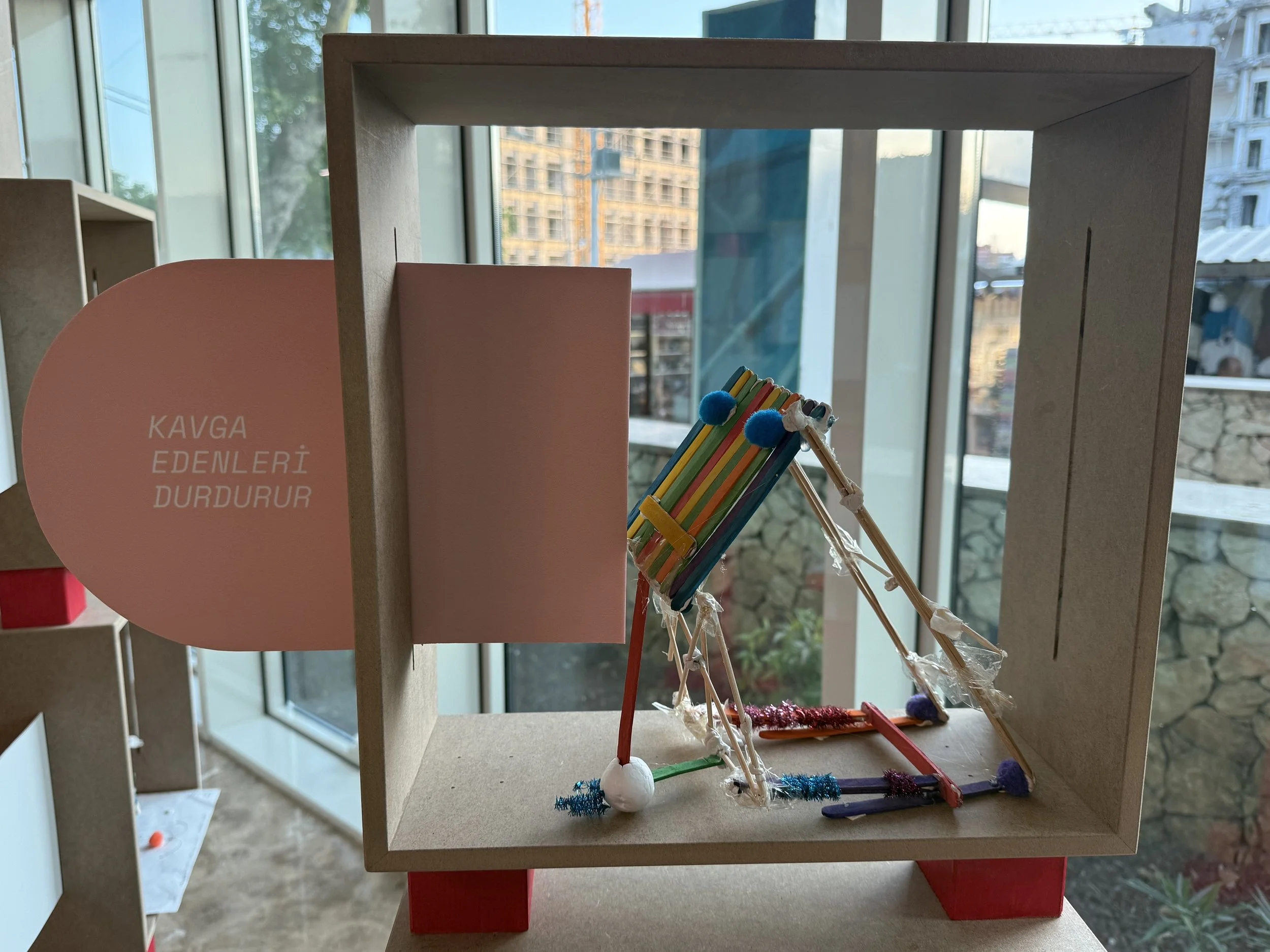
Kavga edenleri durdurur (Stopping violence)
-
![]()
Trafiği azaltır (Reducing traffic)
-
![]()
Uçabilir (Flying)
-
![]()
Görünmez olabilir (Being invisible)
-
![]()
(Organizing schools)
-
![]()
Çocukları eğlendirir (Entertaining children)
-
![]()
Doğayı korur (Protecting nature, different)
-
![]()
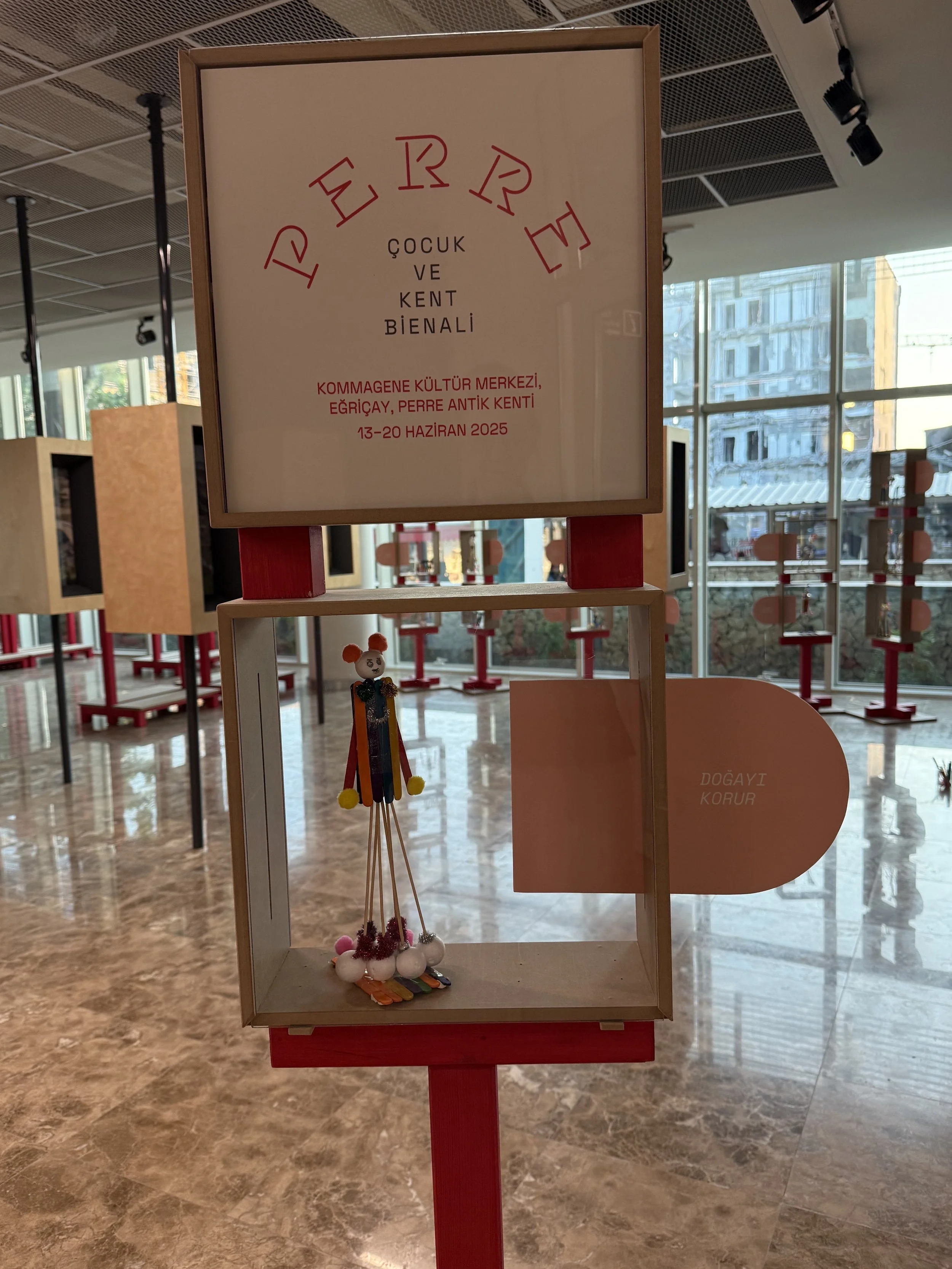
Perre Bienali Exhibition Entrance
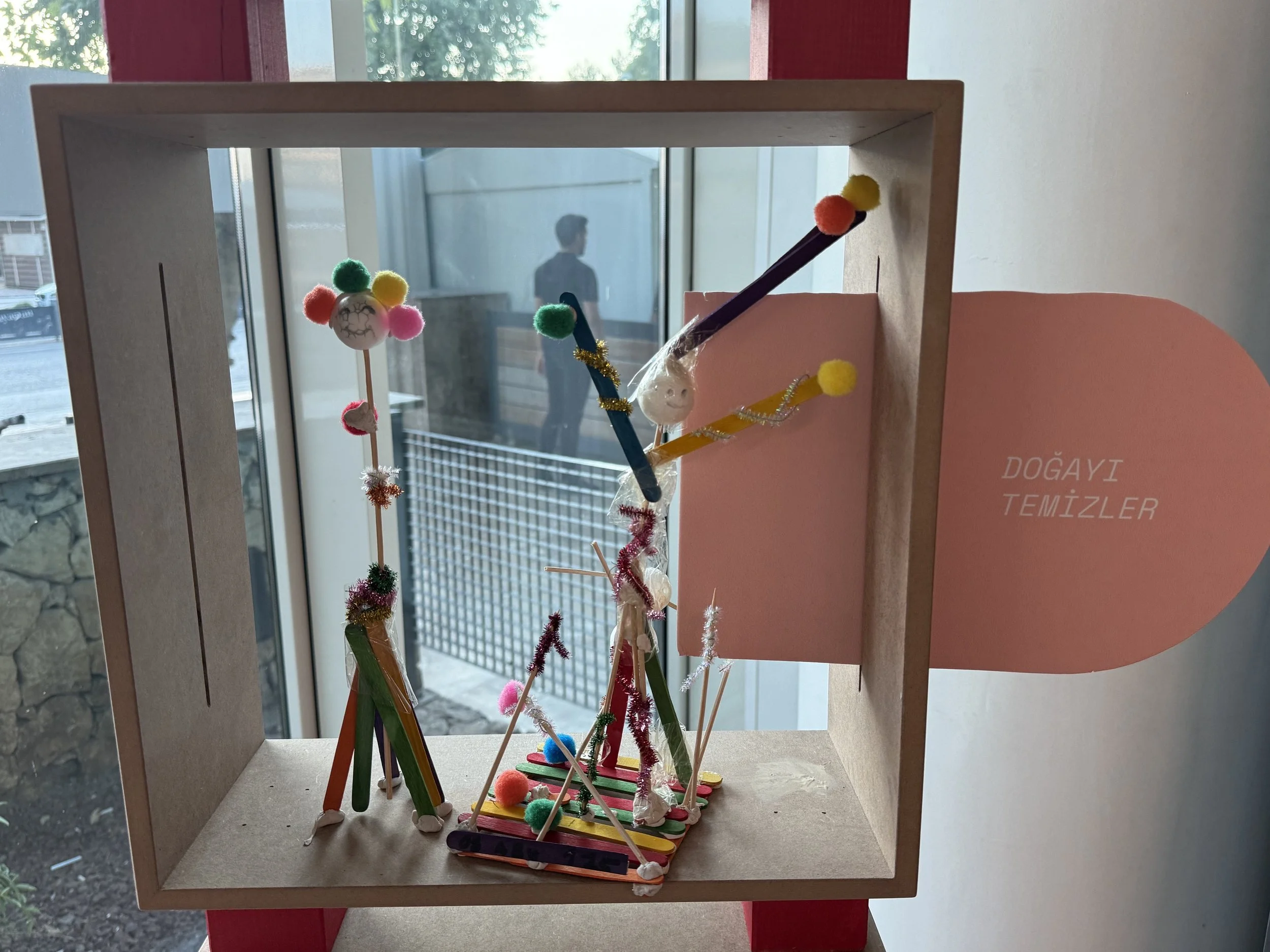
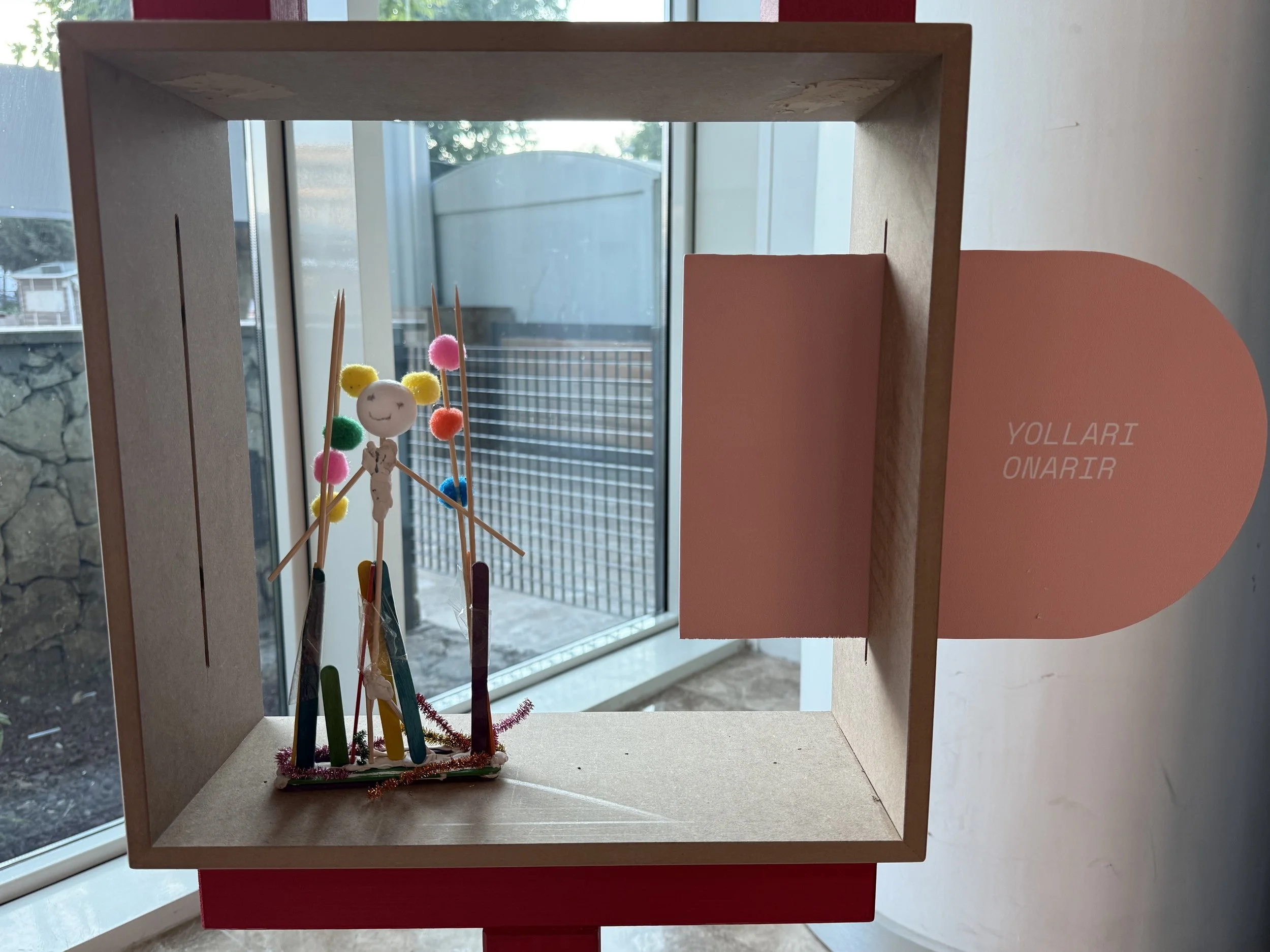
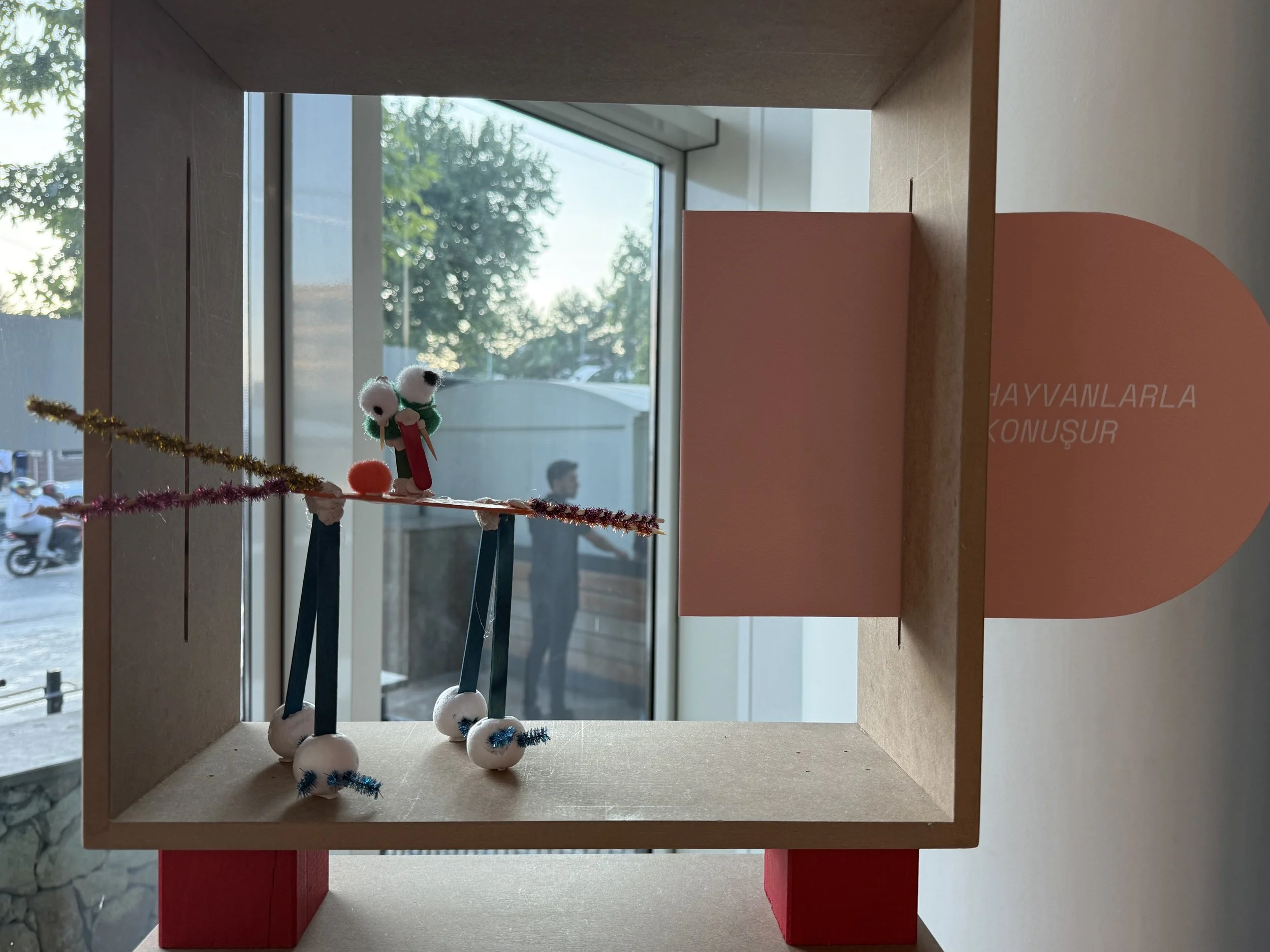
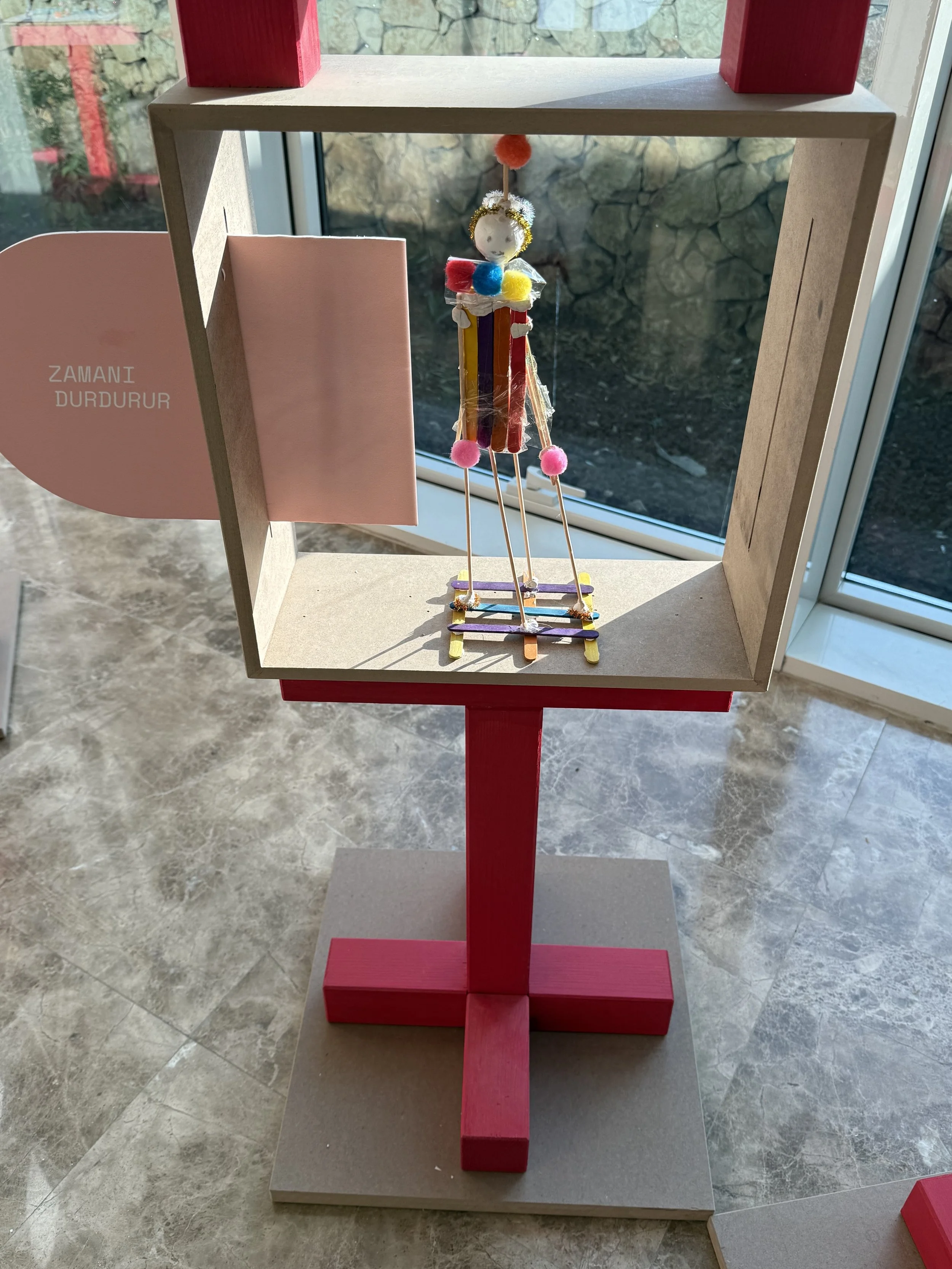
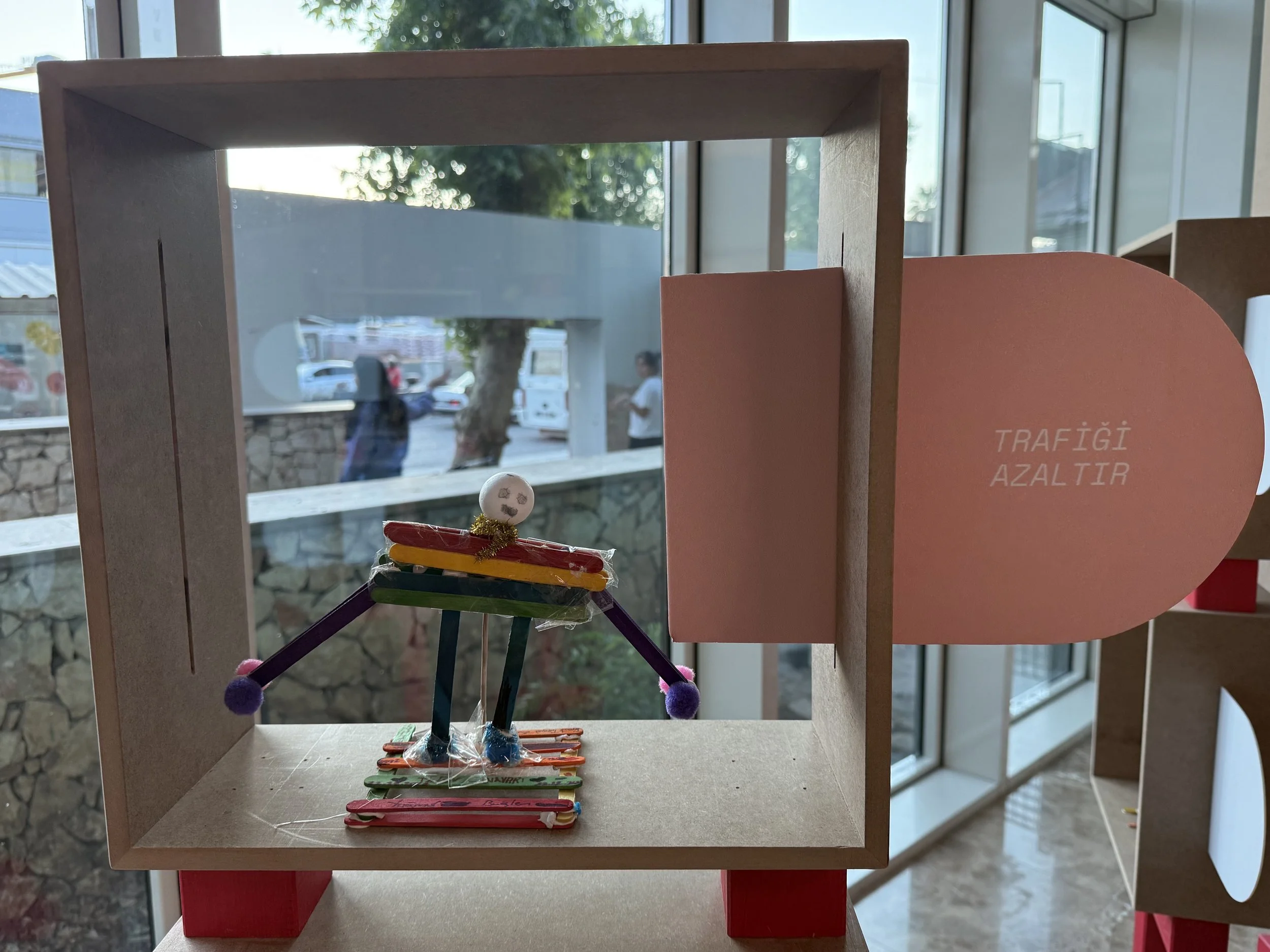
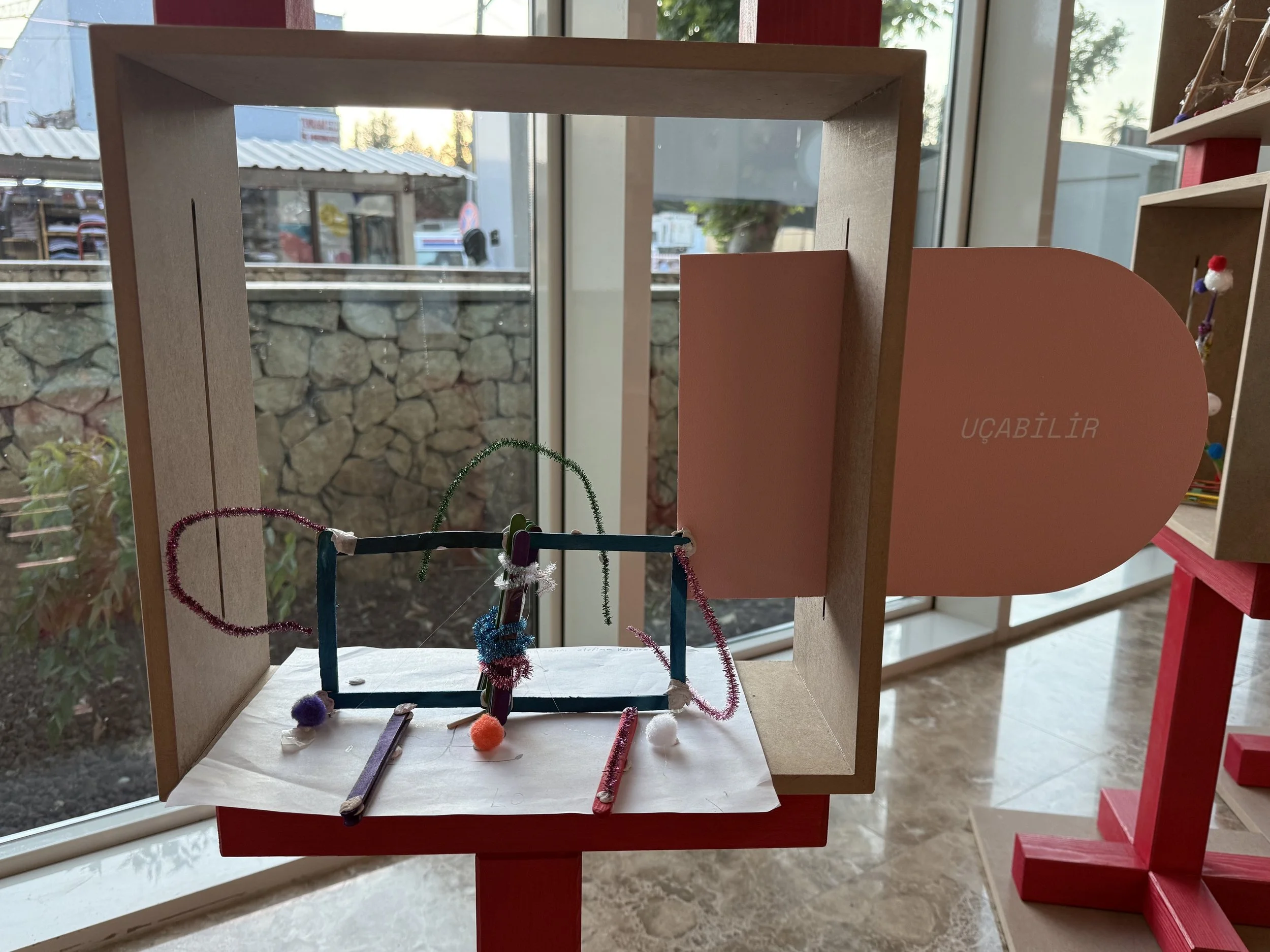
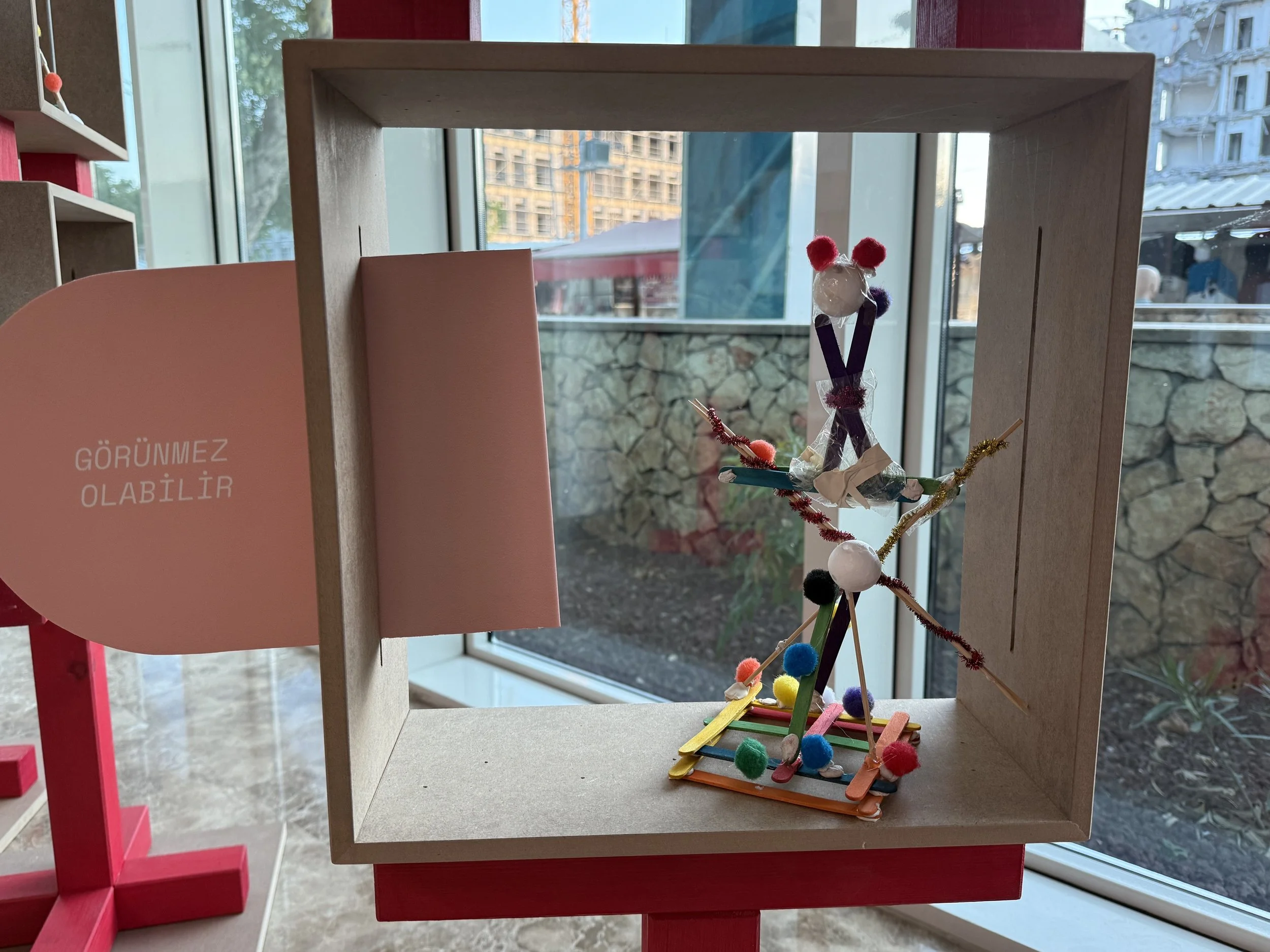
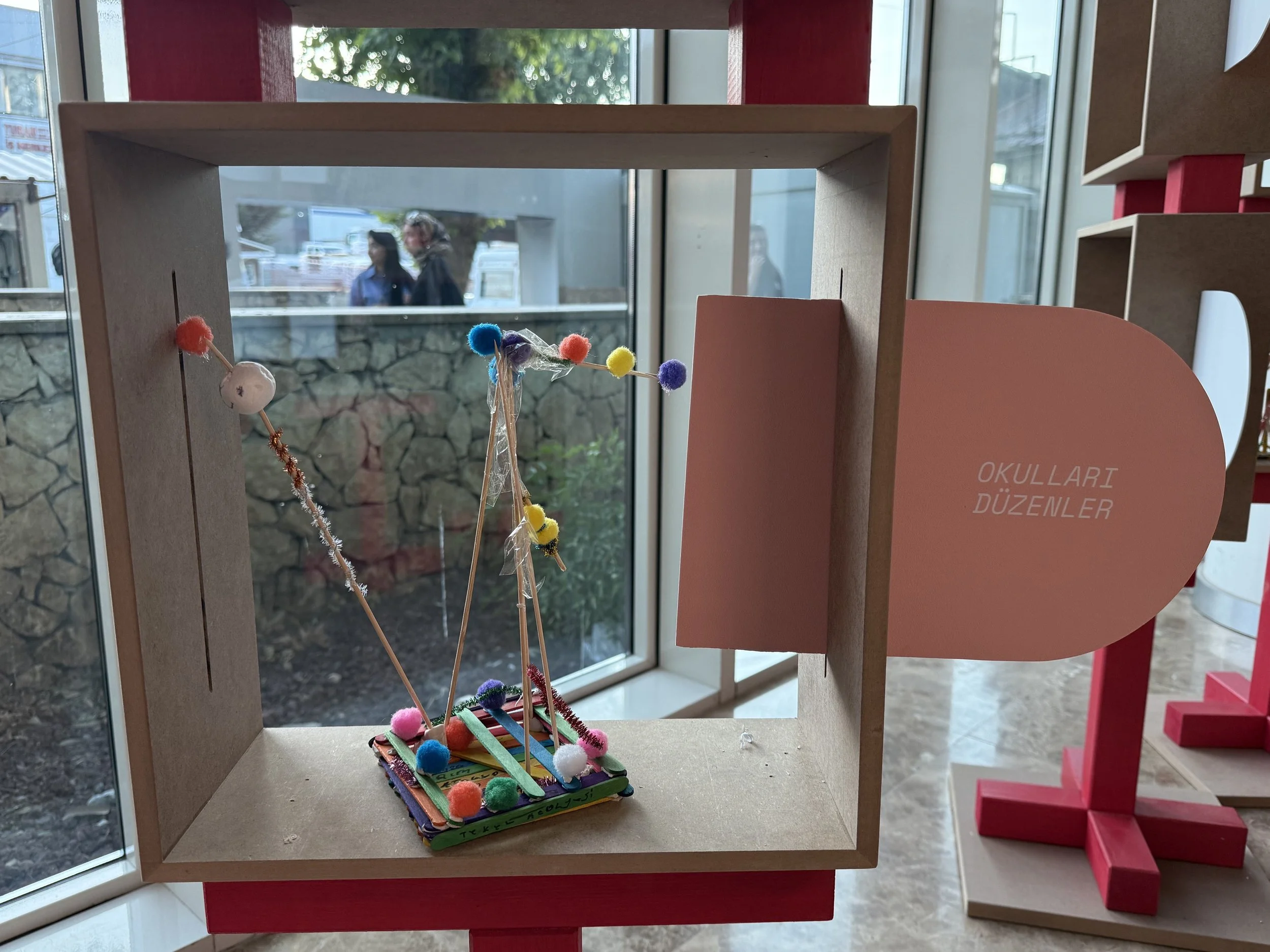
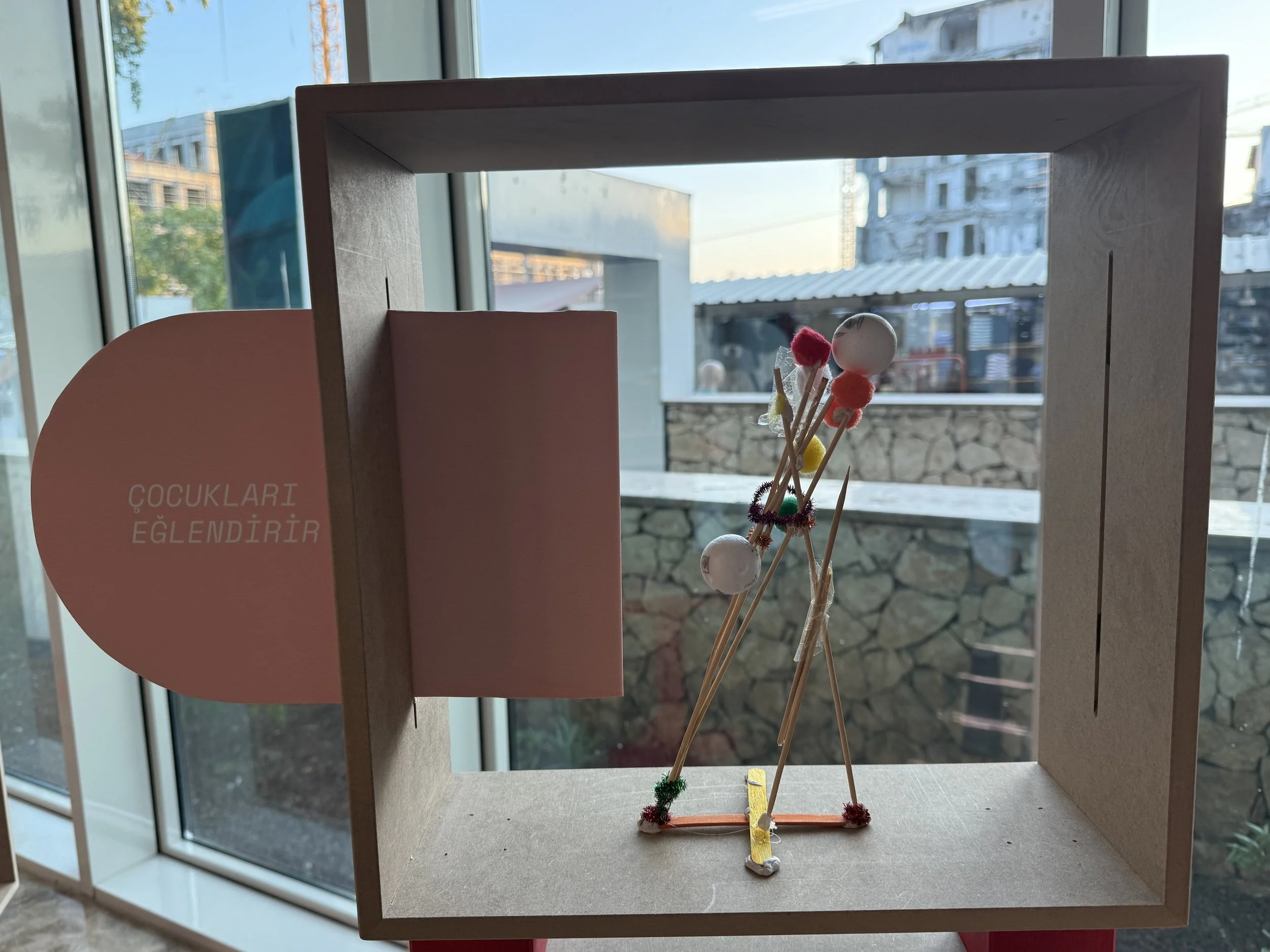
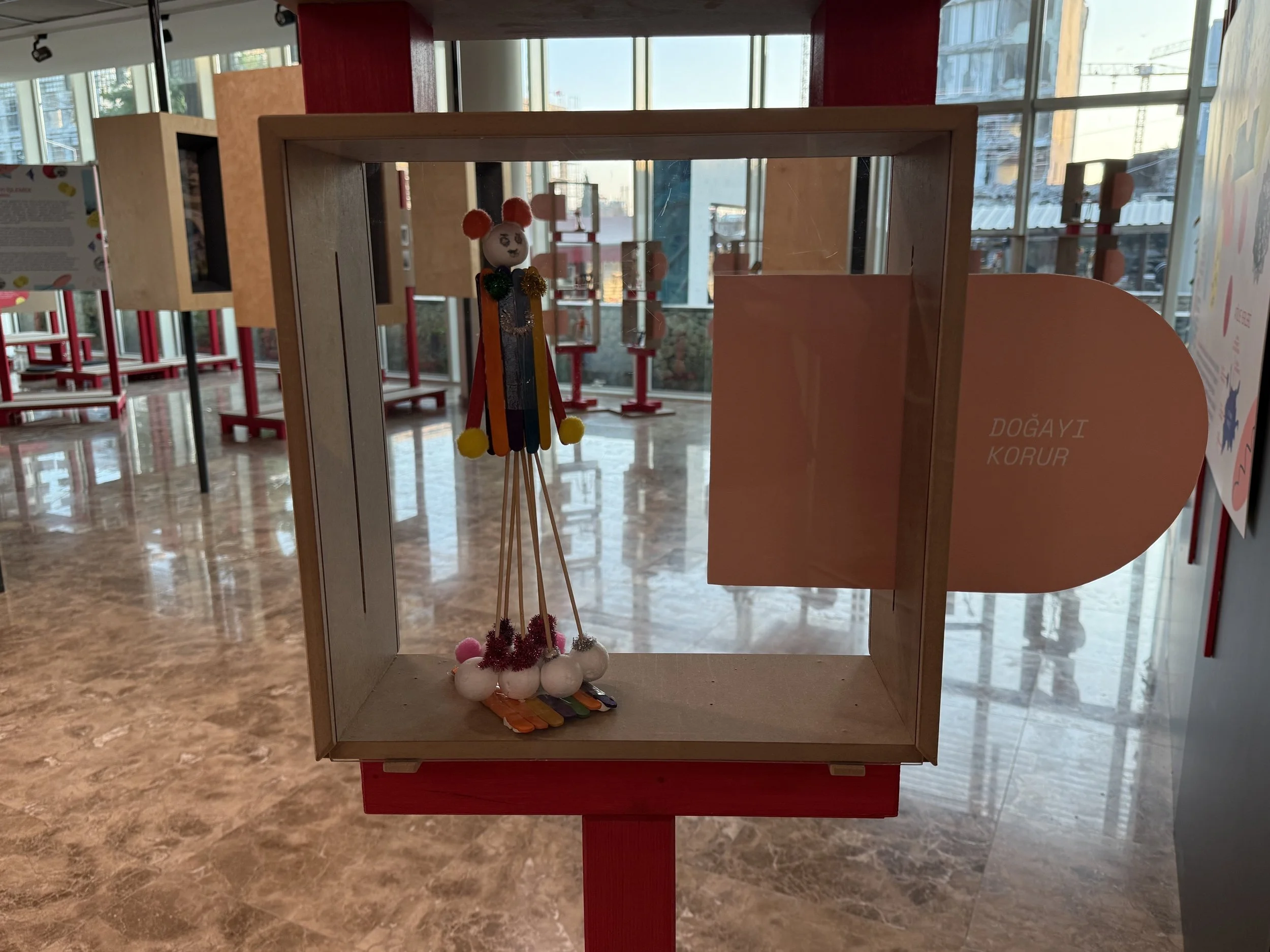
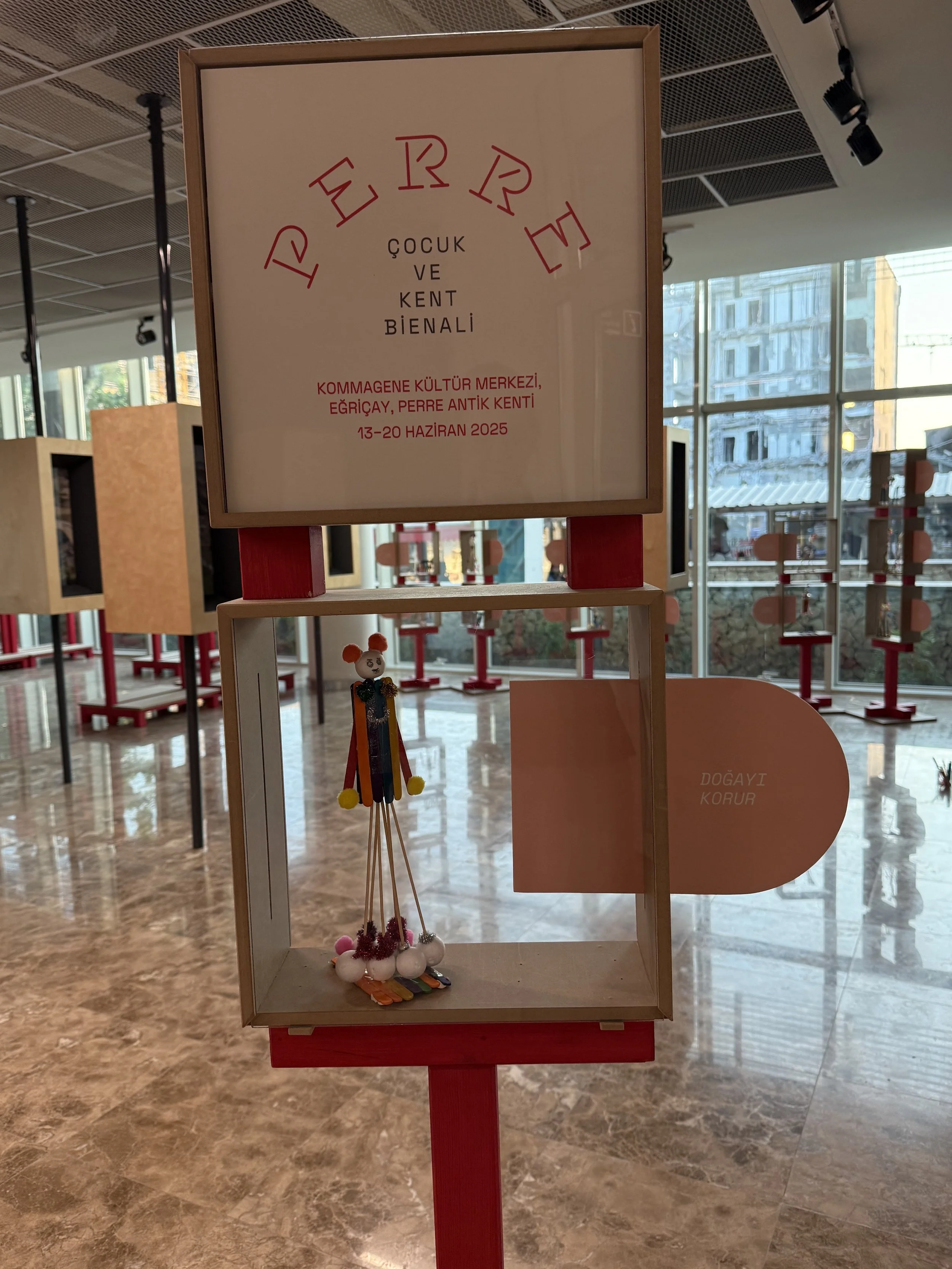
The Longest Monster
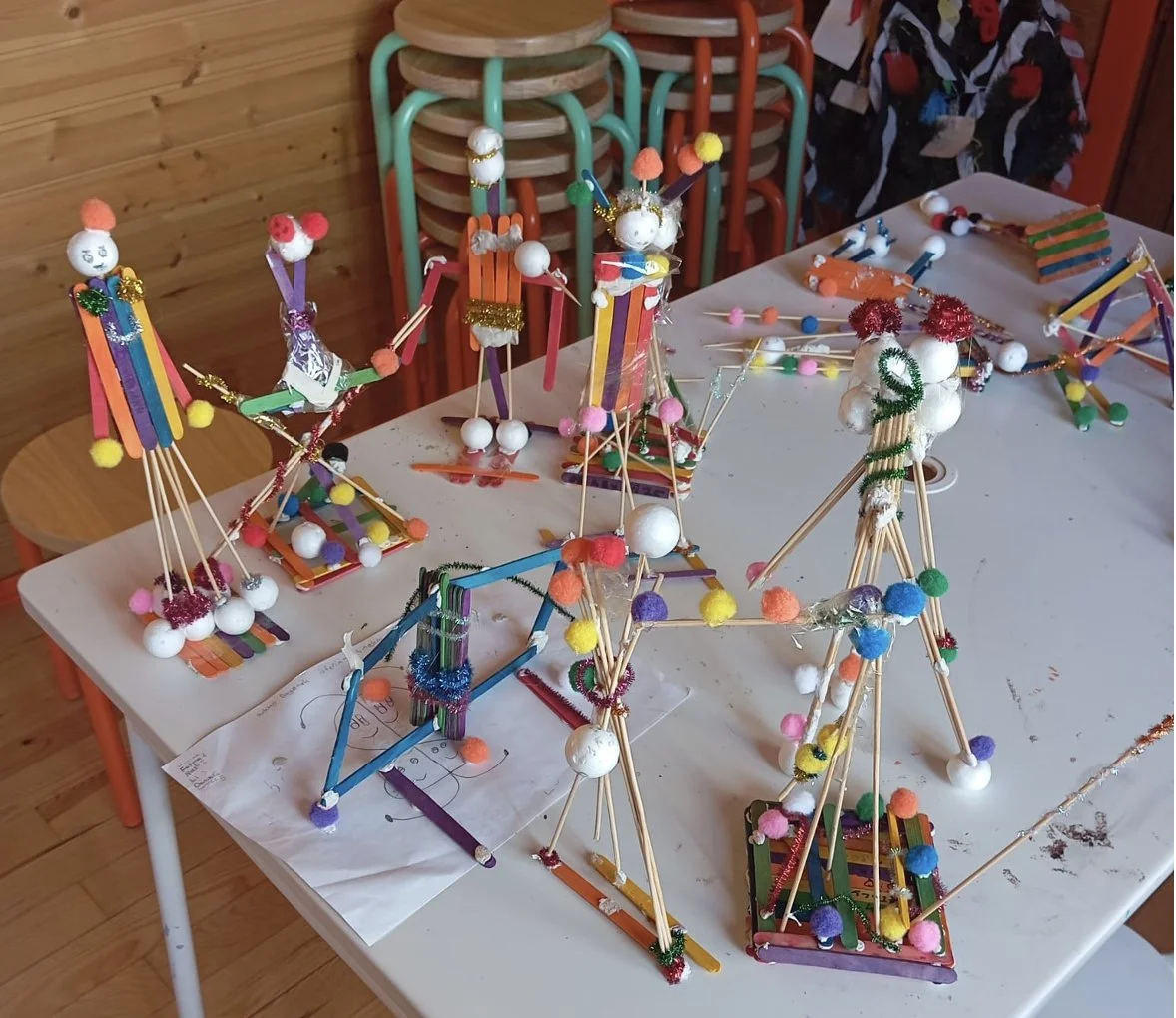
In this workshop, children explored creativity and their expectations for a safer life through three-dimensional design practices. They were guided by a central question:
“If you were to design a monster to make yourself feel better and safer, what would your monster’s superpower be?”
This prompt activated children’s imaginations translating concepts of safety and resilience into tangible images of their own making. Among these imagined powers were “standing firmly on one’s feet,” “clearing the rubble,” “silencing those who swear,” “jumping high,” “cleaning nature,” “being different from others,” “flying,” “turning invisible,” “stopping people from fighting,” “pausing time,” “entertaining children,” and “talking to animals.” These expressions directly mirrored children’s expectations of safety, cleanliness, structural stability, social protection, and harmony with their surroundings.
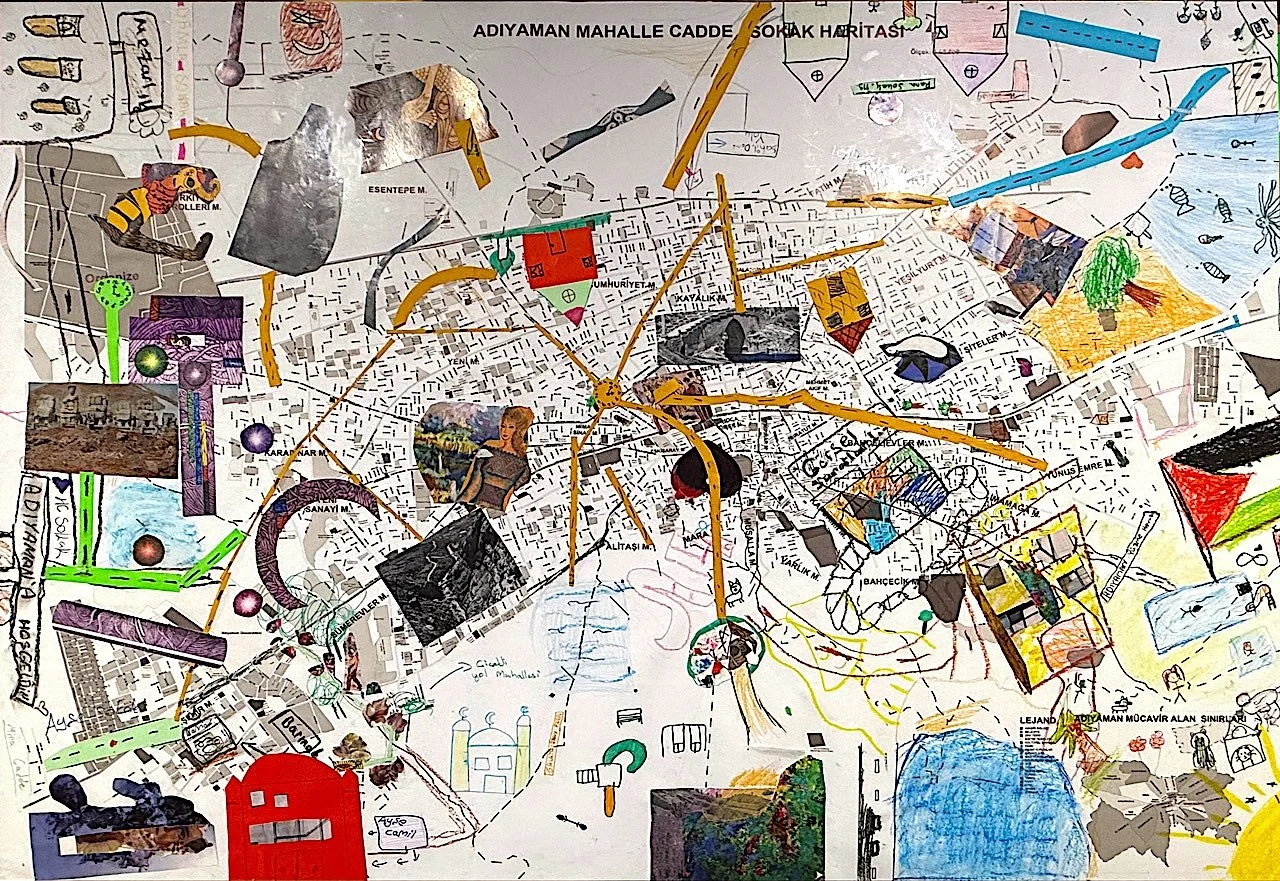
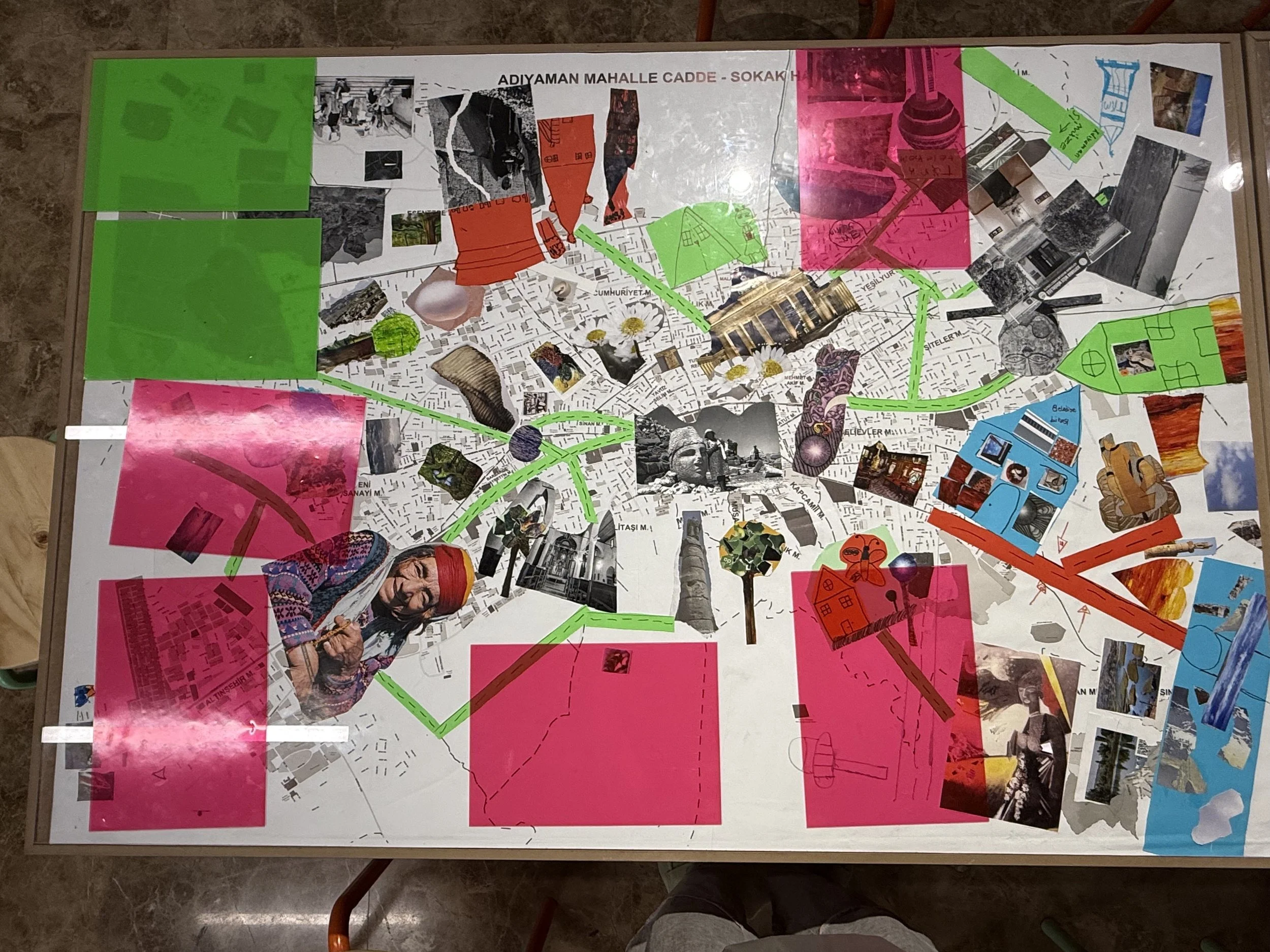
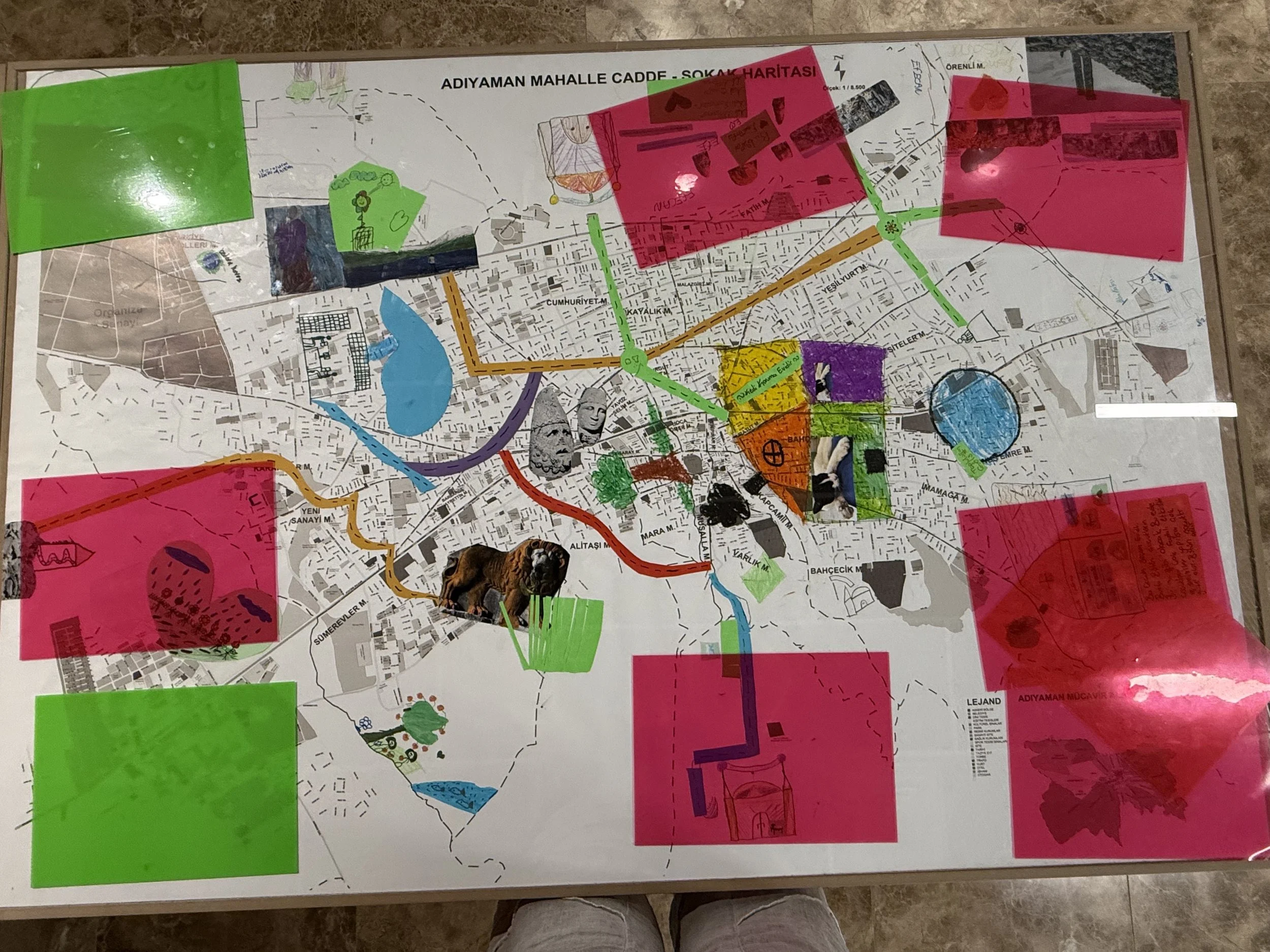
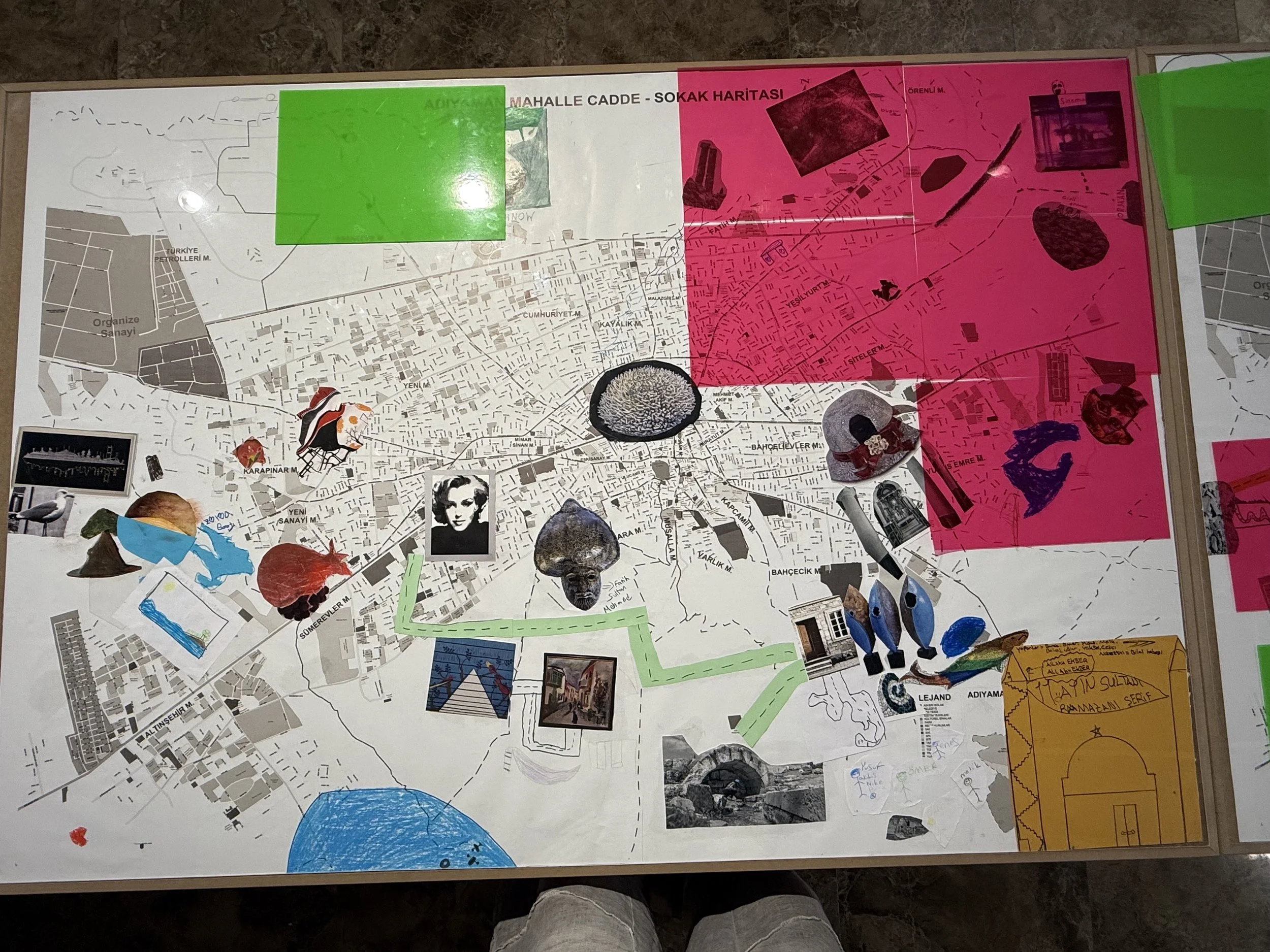
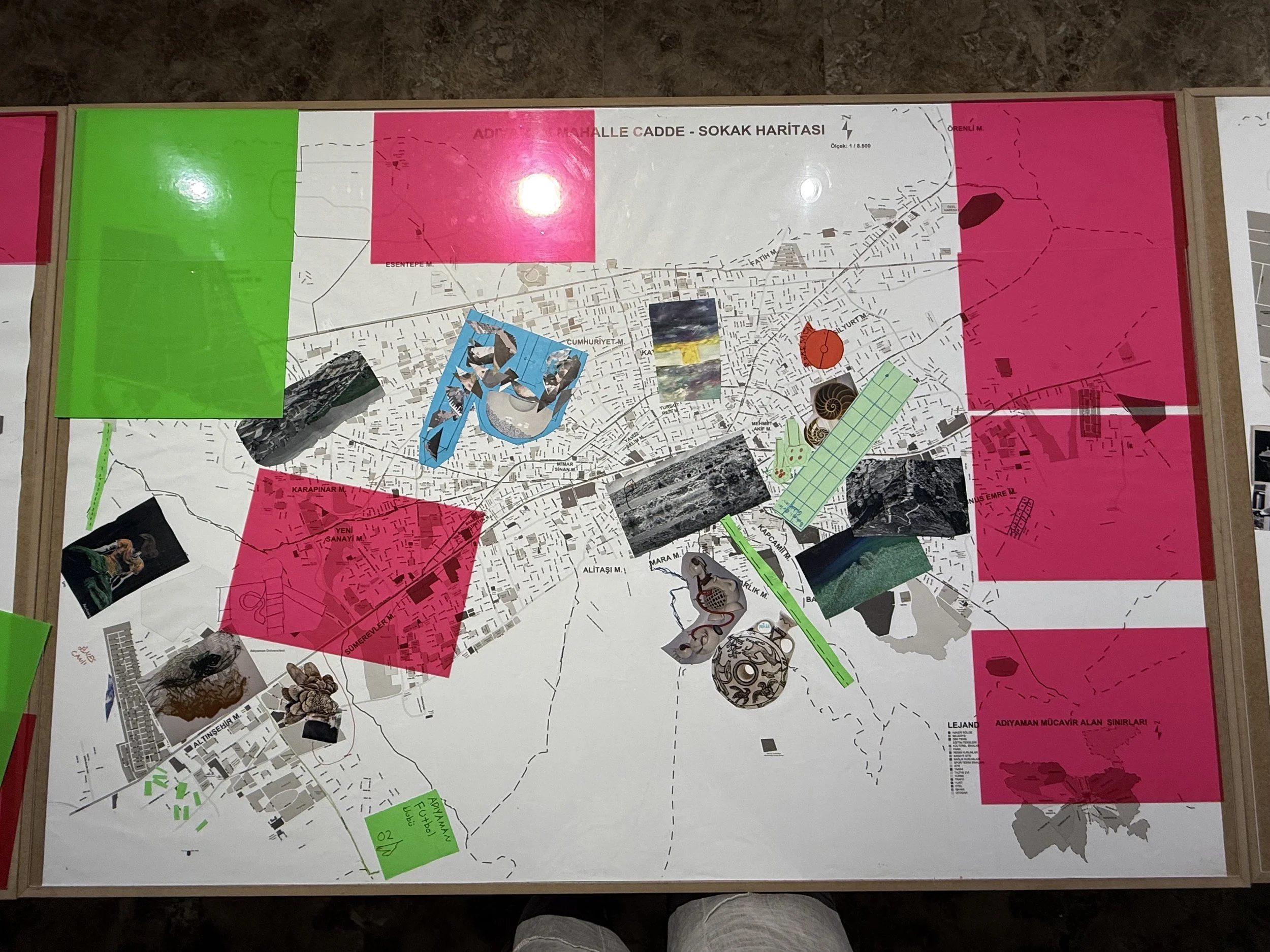
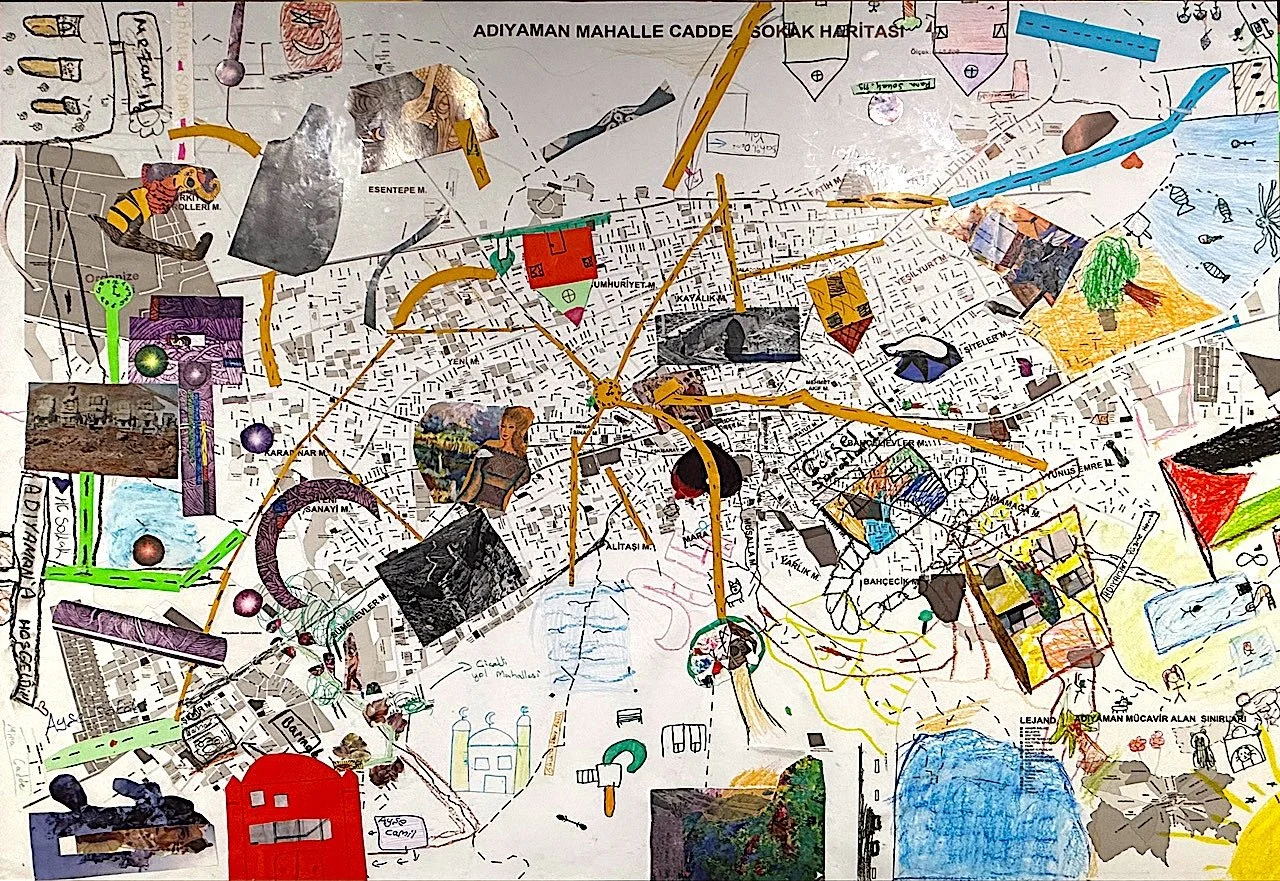
Bird’s Eye (Map Project)
Working with a large map of the city, children explored how cities can be represented through art. Through the map collage technique, they examined artistic depictions of urban spaces and reflected on where and how people can access art in their own city. The workshop was guided by the following questions:
“Look at the map and try to find where you live. What kind of artwork would you place in Adıyaman? Where would you locate it?”
This process encouraged children to analyze maps critically and create new spatial narratives. Many participants saw the city map for the first time, first marking its roads—one child explained, “Because even the places that exist can’t be reached; there are no buses or roads to get there.”
By placing their creations on maps of their neighborhoods, they reinterpreted the city as a living canvas, helping them develop a deeper sense of place and strengthen their emotional connection with Adıyaman.
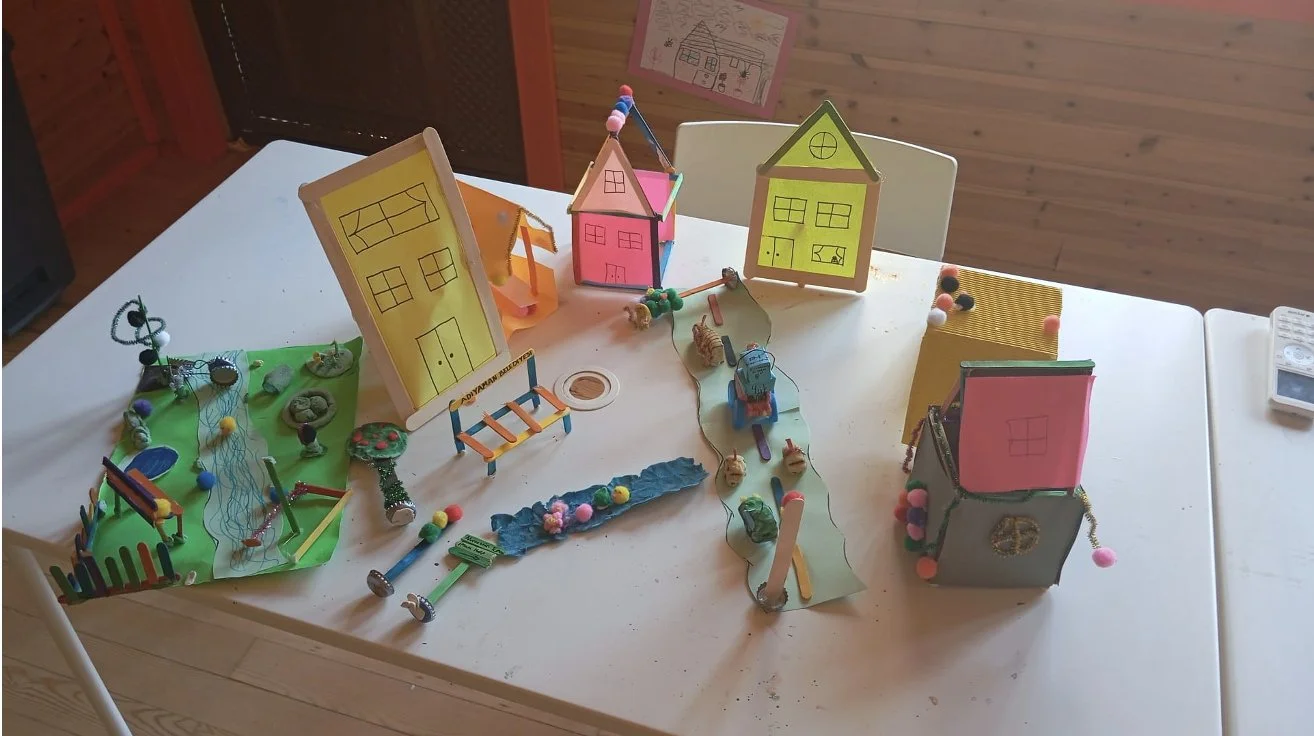
The City and Architecture: Stop Motion Workshop
Using modeling clay, toys, and colored cardboard, 75 children created their own short animated films to redesign Adıyaman from their own perspective. During the workshop, participants were encouraged to reflect through questions such as:
“Are there any buildings in Adıyaman that you find interesting? What makes them special? If you were to create a cartoon about Adıyaman, what would happen in it?”
These prompts supported children in observing architectural spaces and expressing their urban imaginations creatively. In their works, children envisioned a city with wide streets, abundant greenery, and vehicles that respect the movement of other living beings, expressing their desire for a more just, safe, and ecological Adıyaman.
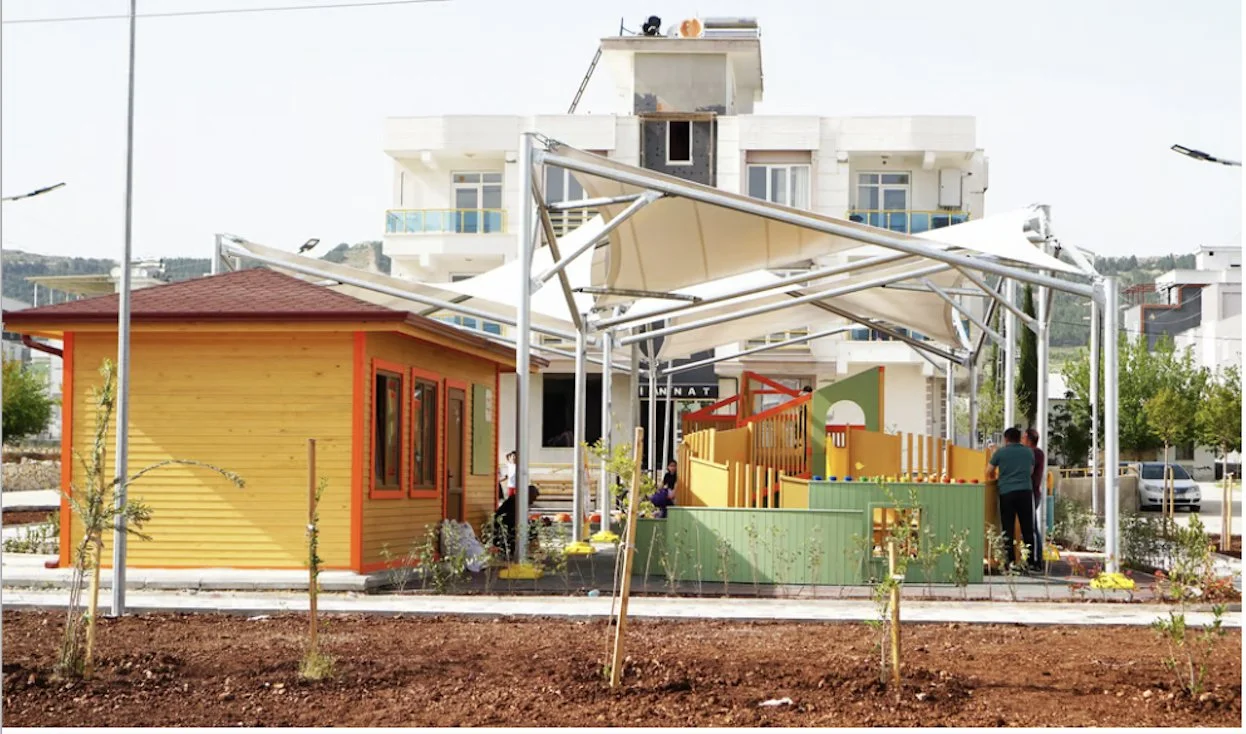
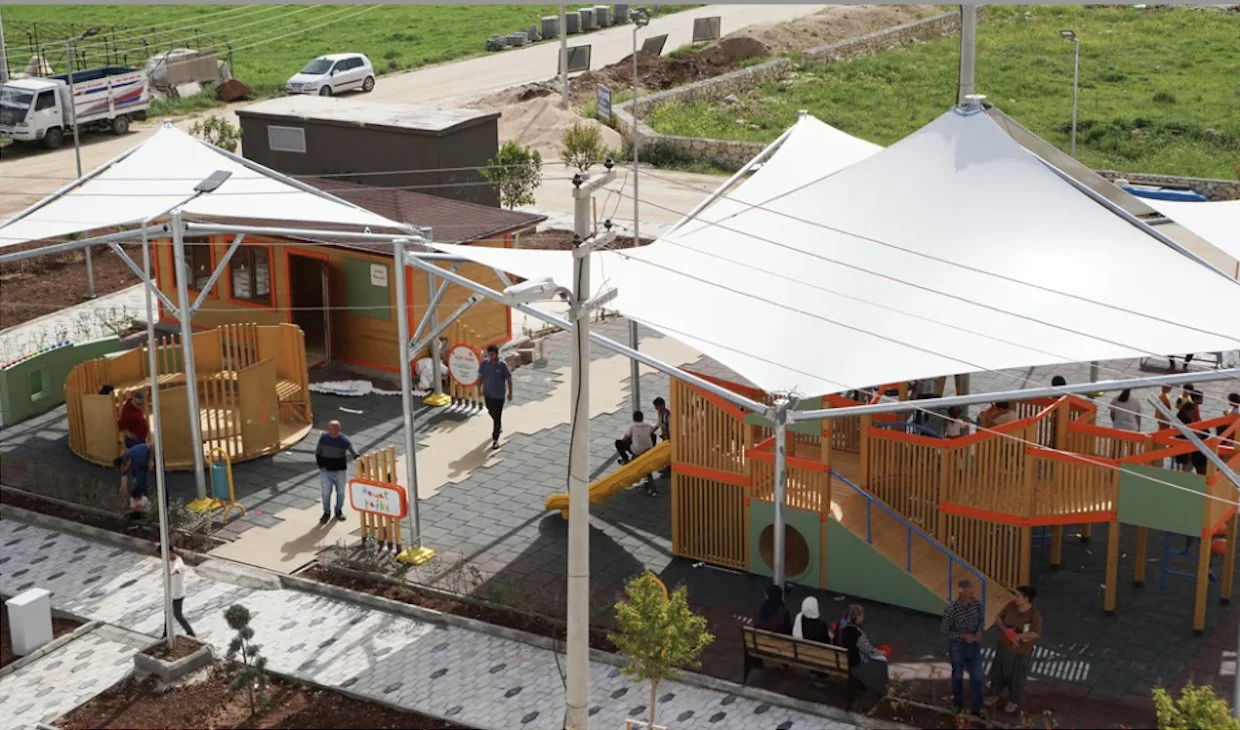
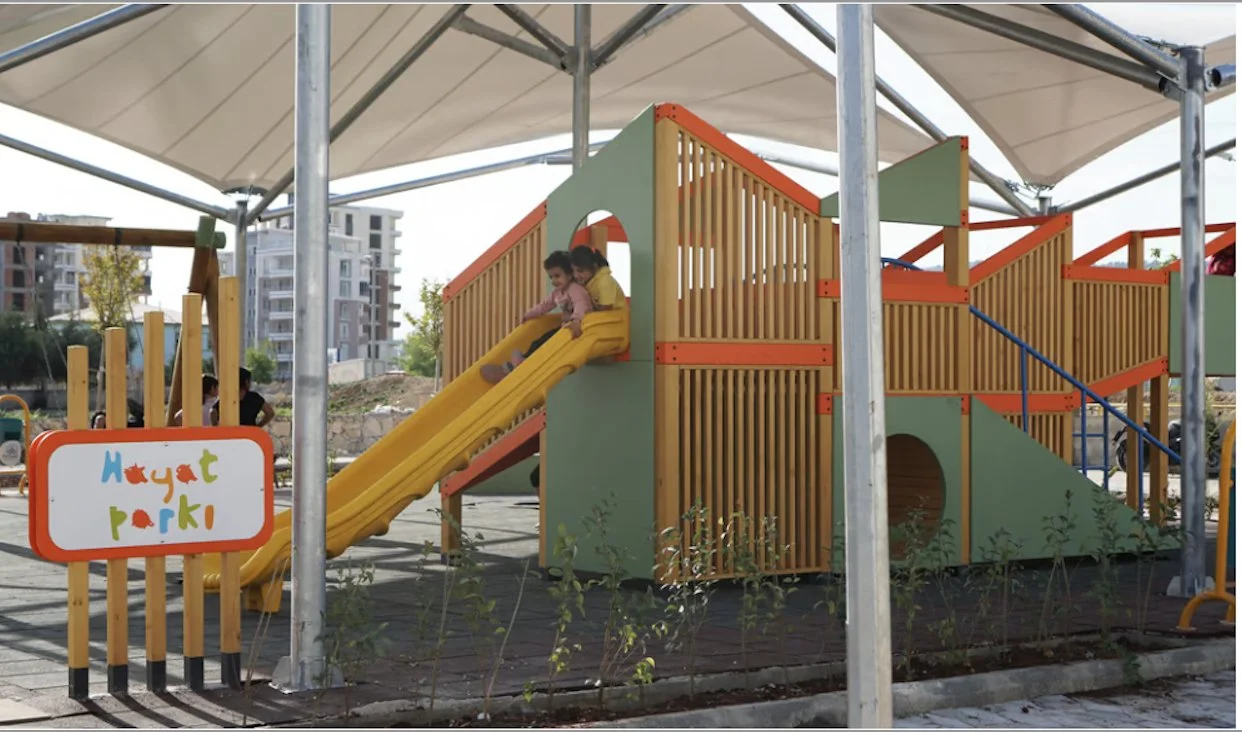
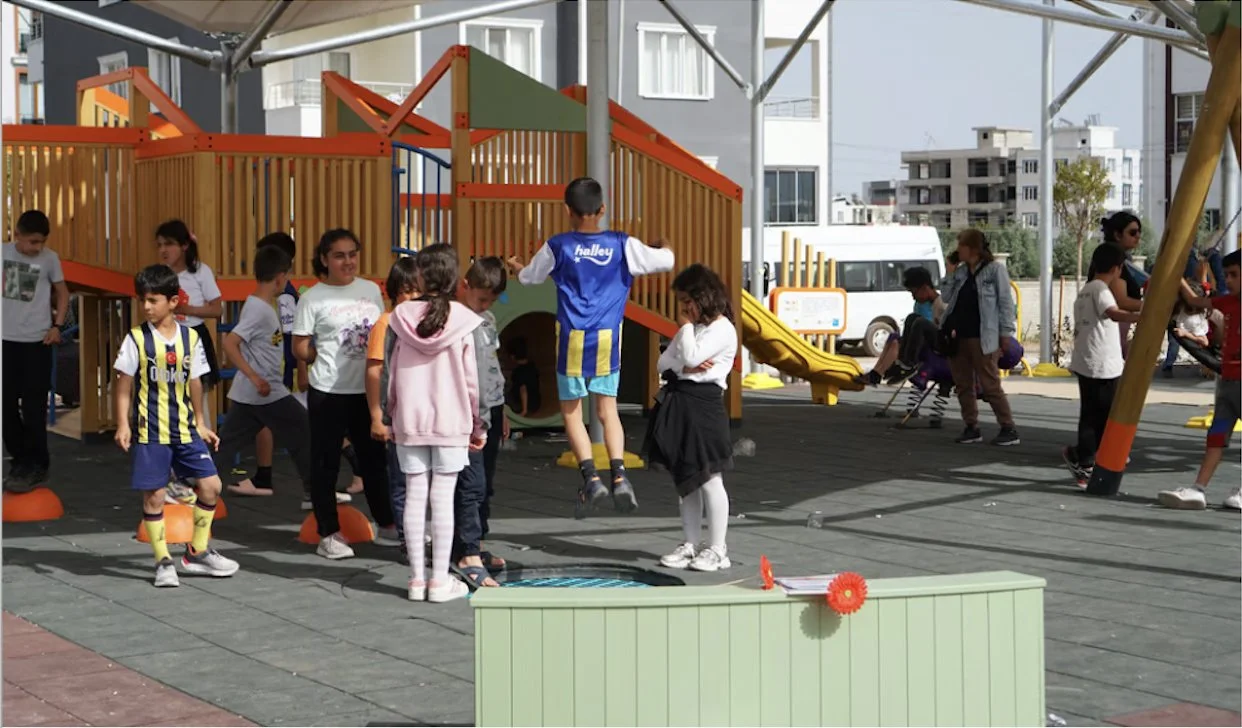
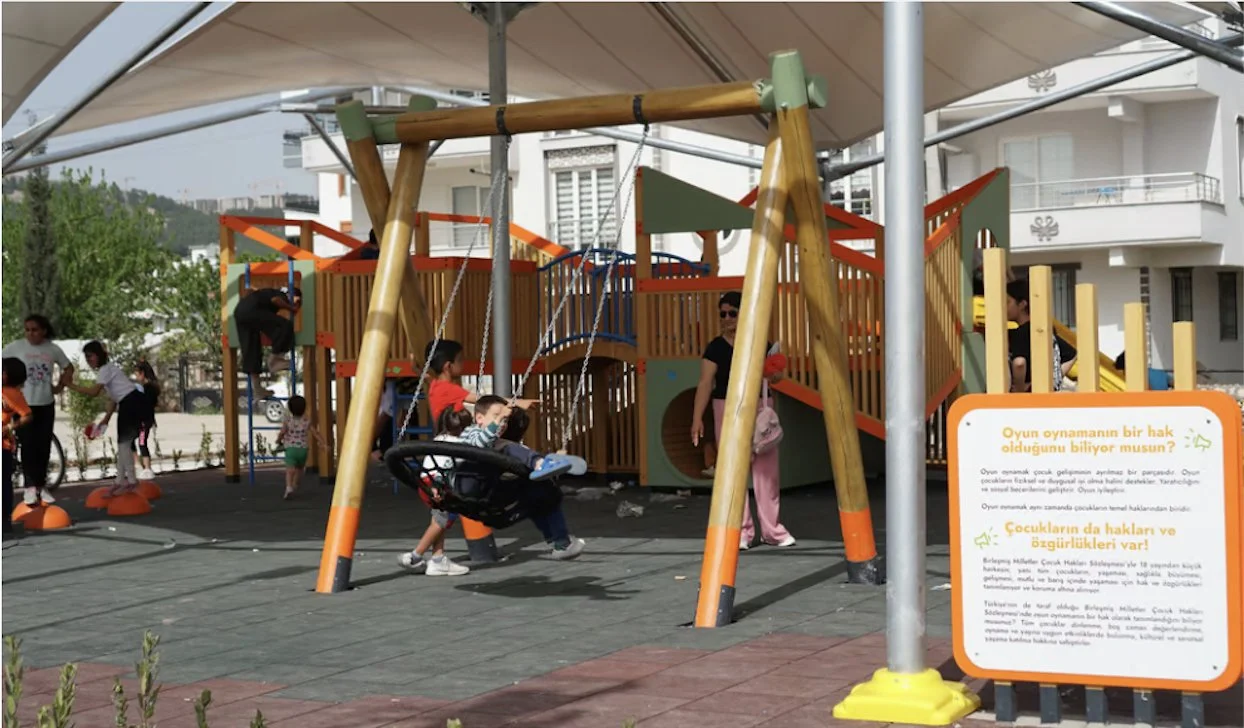
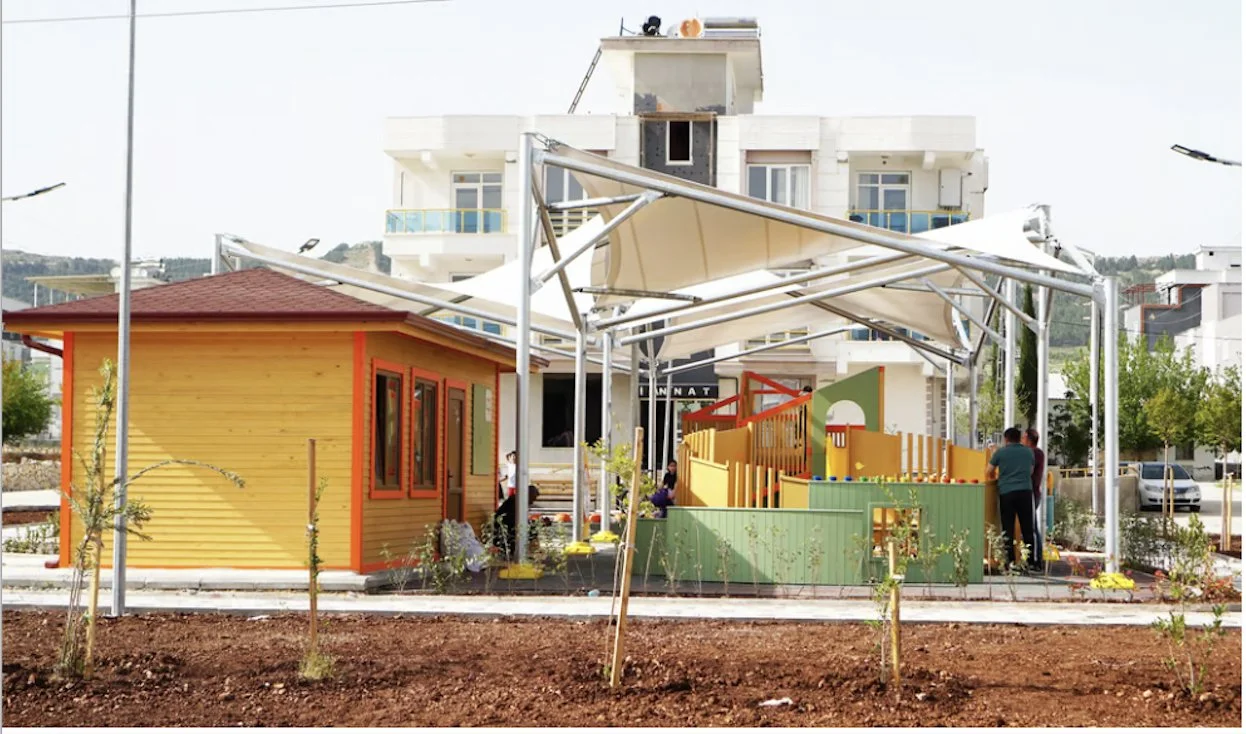
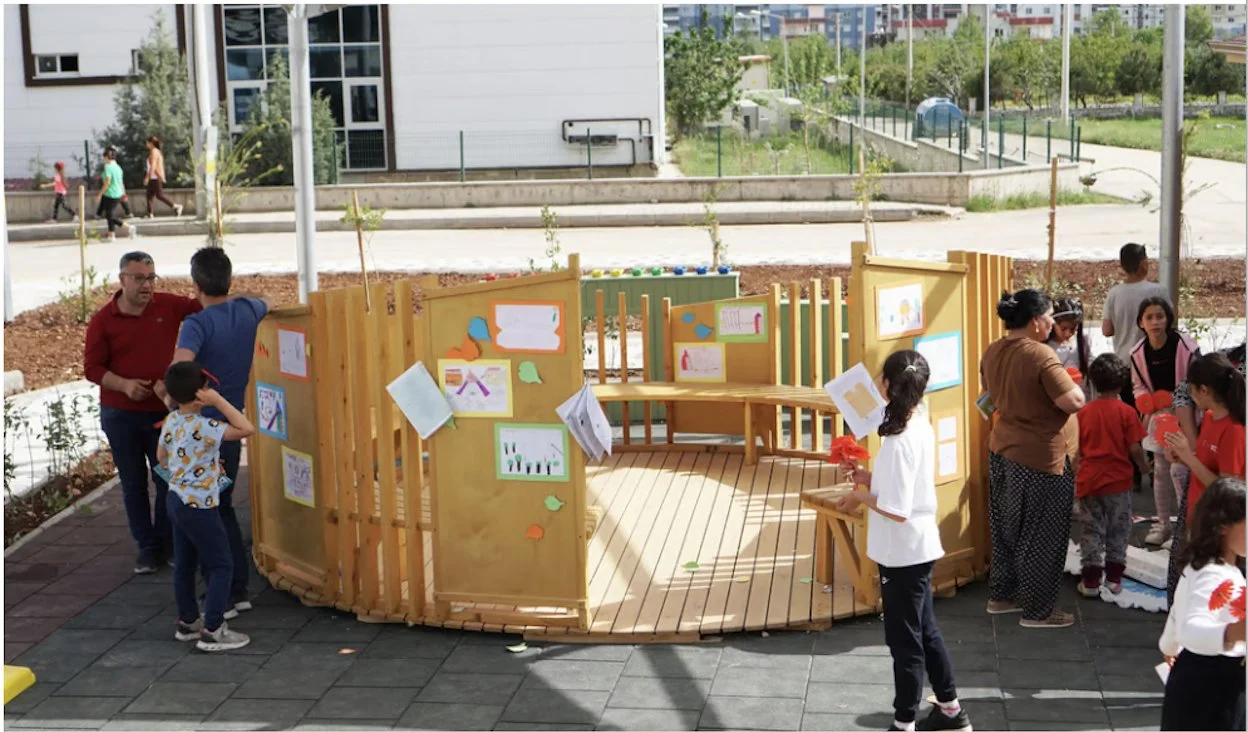
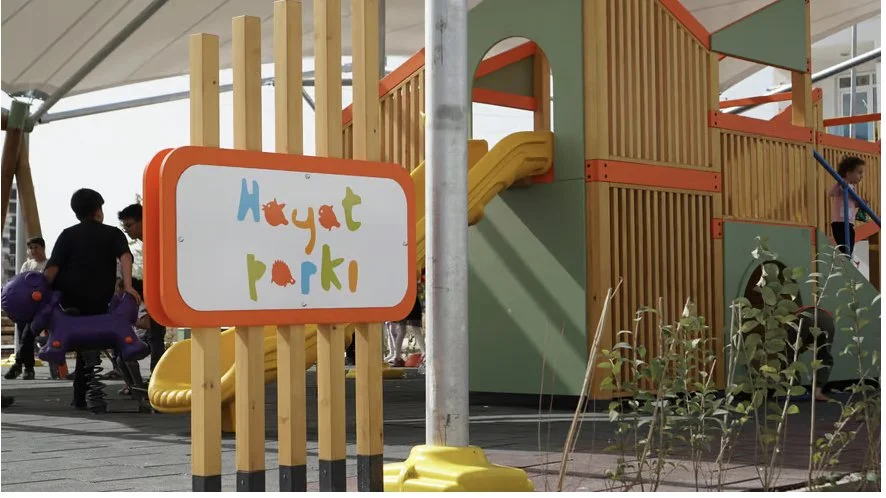
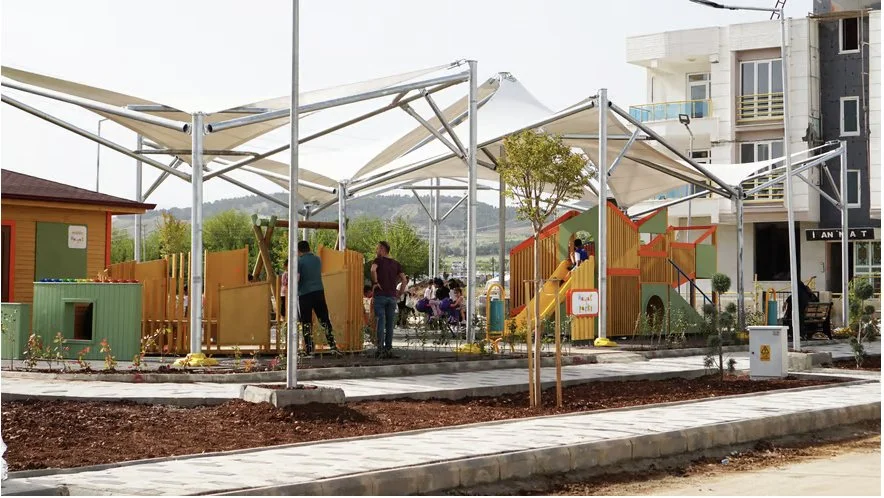
Hayat Parkı: Participatory Design
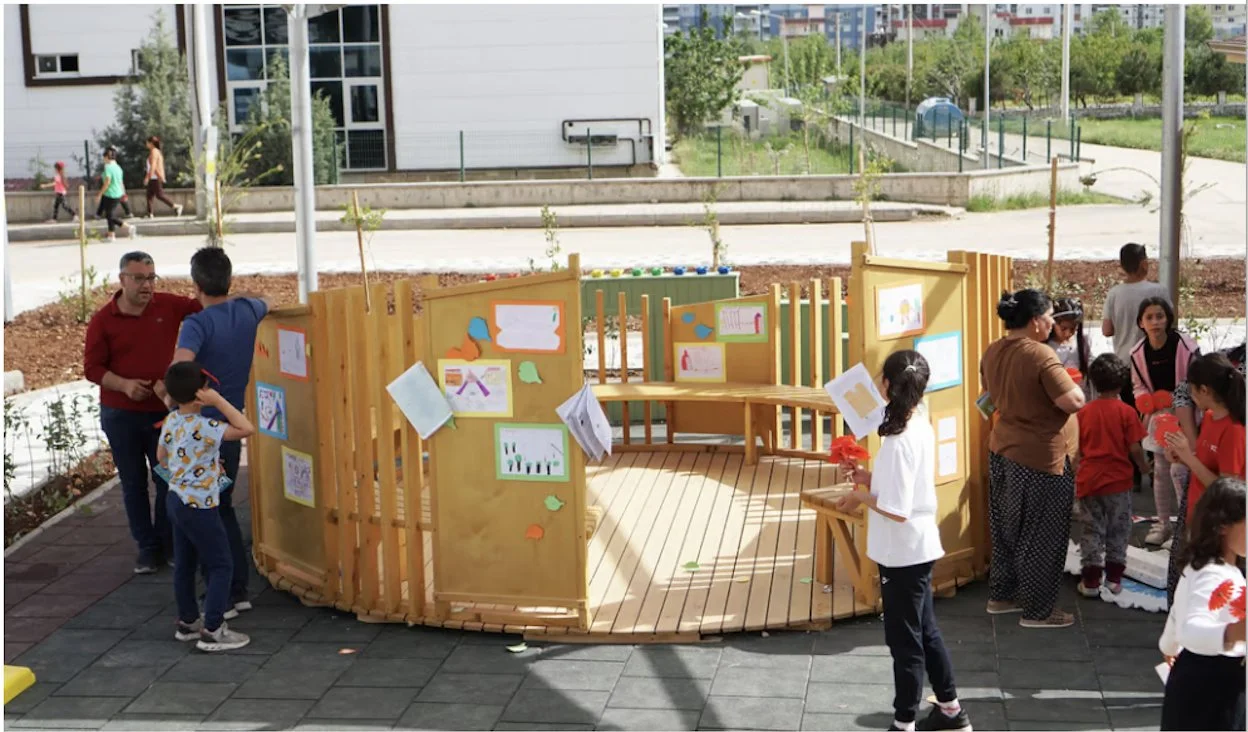
Hayat Parkı is a playground near Adıyaman’s school district designed through a collaborative process with children. The park combines shaded wooden structures, age-inclusive play equipment, and an open classroom with a covered workshop to support educational and psychosocial activities. It is an actively used, child-friendly public space and a model for child-centered urban recovery. Şehir Dedektifi continues to develop training programs on children's rights and protection, child-friendly budgeting, and child-centered cultural policy planning, for the municipality’s social support and cultural affairs departments.
City School at Hayat Parkı: Citizenship and Belonging
The City School is an art and design-based participatory program built on the experiences of the Hayat Parkı participatory playground and the Perre Children and the City Biennial. The program will take place in the workshop space located within Hayat Parkı and in container settlement learning areas in the city, with plans to expand to rural areas as part of its outreach.
Through a total of 35 weekly workshops, 600 children aged 6 to 17 (50% participation target for girls) will participate in art and design-based activities, producing creative responses to their city as decision-makers. Guest artists, architects, or researchers will connect local contexts with broader design and environmental perspectives. A Children’s Advisory Council, composed of 10 children aged 8–17, will meet regularly to evaluate workshops, share ideas, and engage with representatives from municipal departments, strengthening a model for neighborhood-based child participation.