
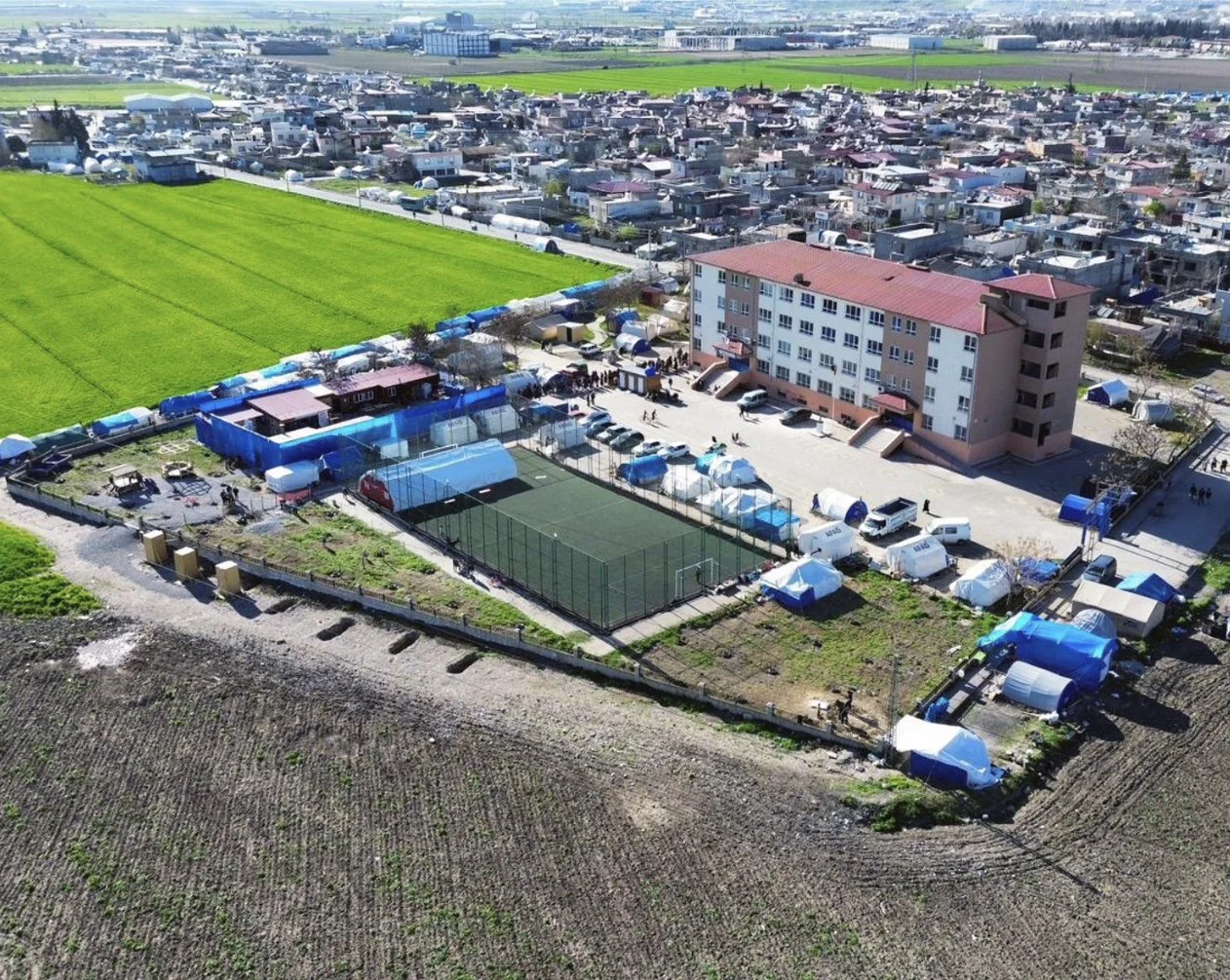
Kahramanmaraş, Türkiye
Architecture for All (Herkes İçin Mimarlık Derneği) (HiM)
HiM is a platform with over 100 student and professional volunteers who gather together to raise awareness about social problems and offer architectural and design solutions. Formed in Istanbul in 2011 and active in the 2013 Gezi Park forums, the group draws on Henri Lefebvre’s concept of the “right to the city,” believing that urban space should be shaped collectively by those who inhabit and use it. The work shown here focuses on community spaces designed and built during the “mid and long-term” phases following Türkiye’s 2023 earthquakes, and illustrates the participatory mechanisms used in design, planning, and construction processes.
HiM’s projects were inspired in response to the scarcity and poor quality of socialization spaces in the tent and container cities where disaster victims live. HiM particularly considers the needs of children and women in post-disaster circumstances. The community center designs also allow for kitchen and play areas, toilets, animal shelter, vegetable beds, and shading details. Despite challenges and disappointments faced by HiM, HiM’s involvement in the region continues to be profoundly meaningful to the communities it serves.
Image Credits: HiM, Kaf Kolektif, ACHA
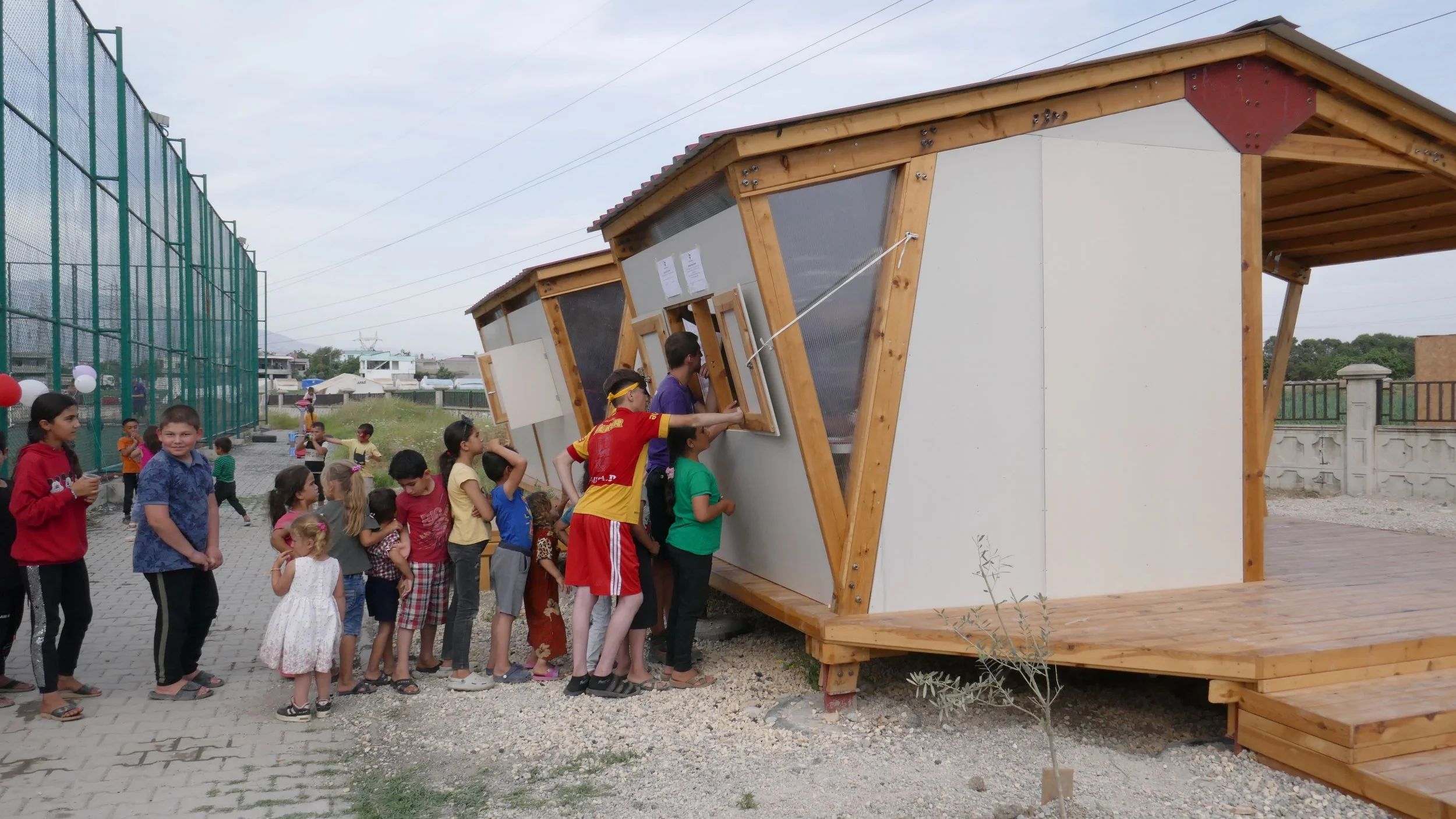
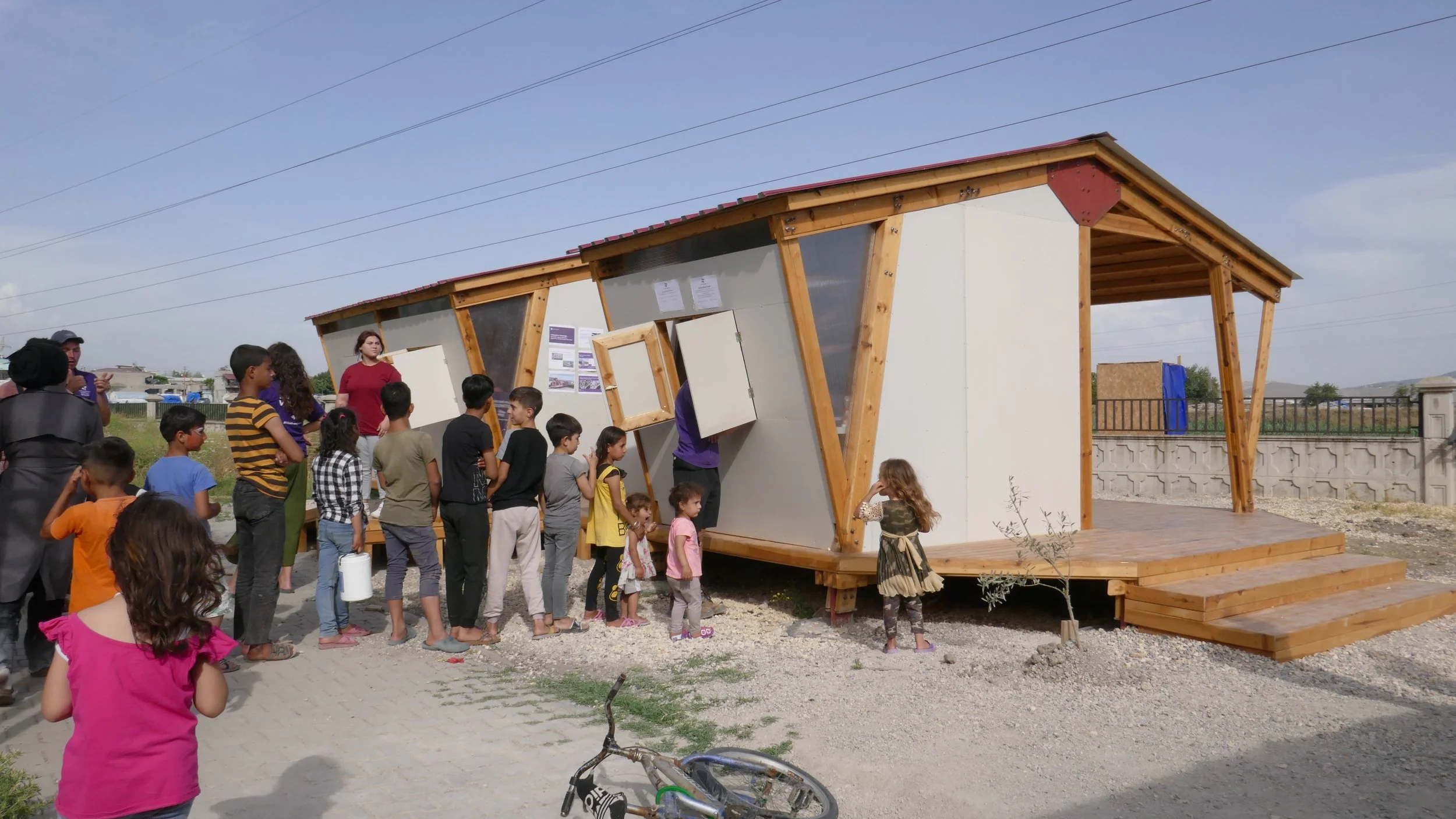
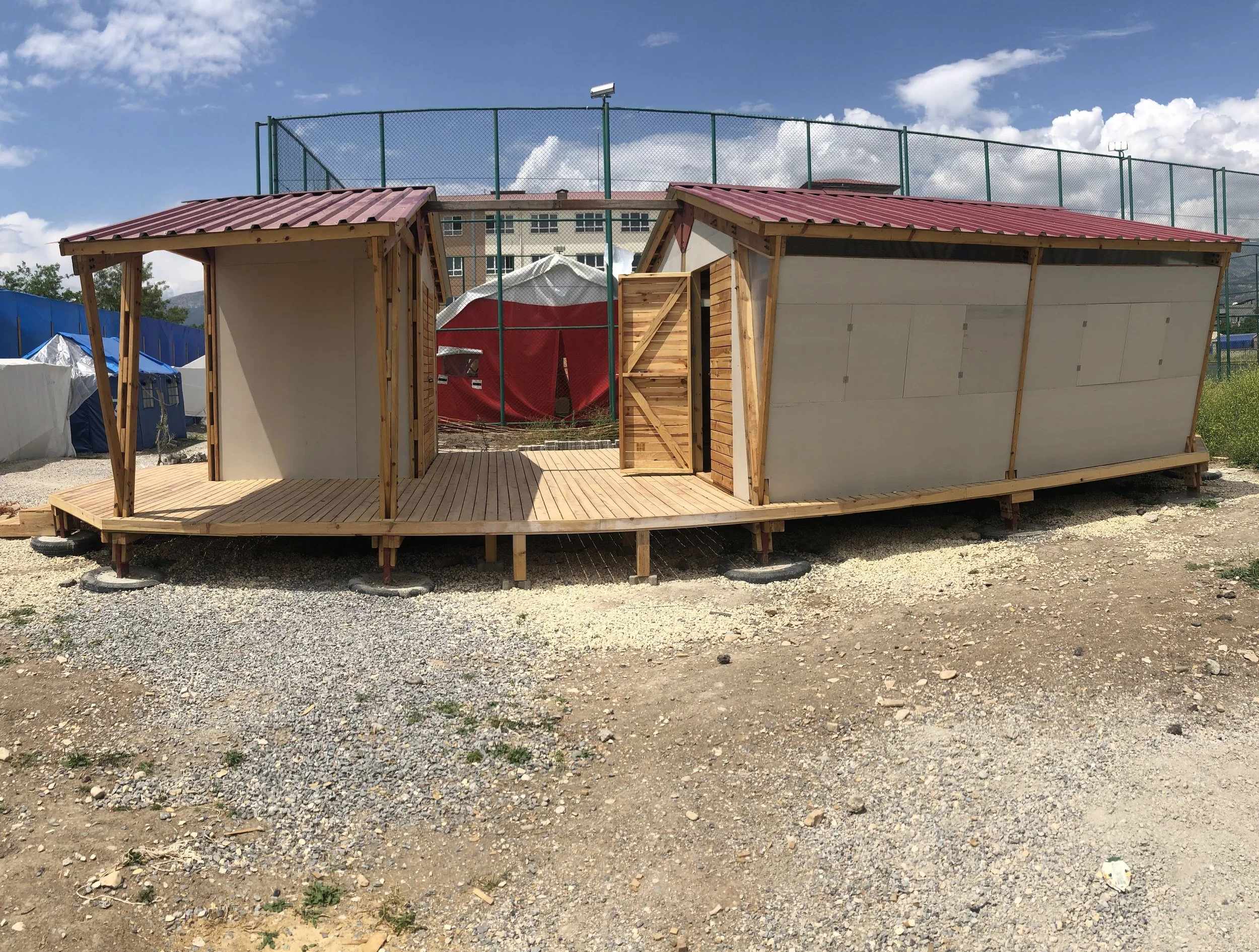
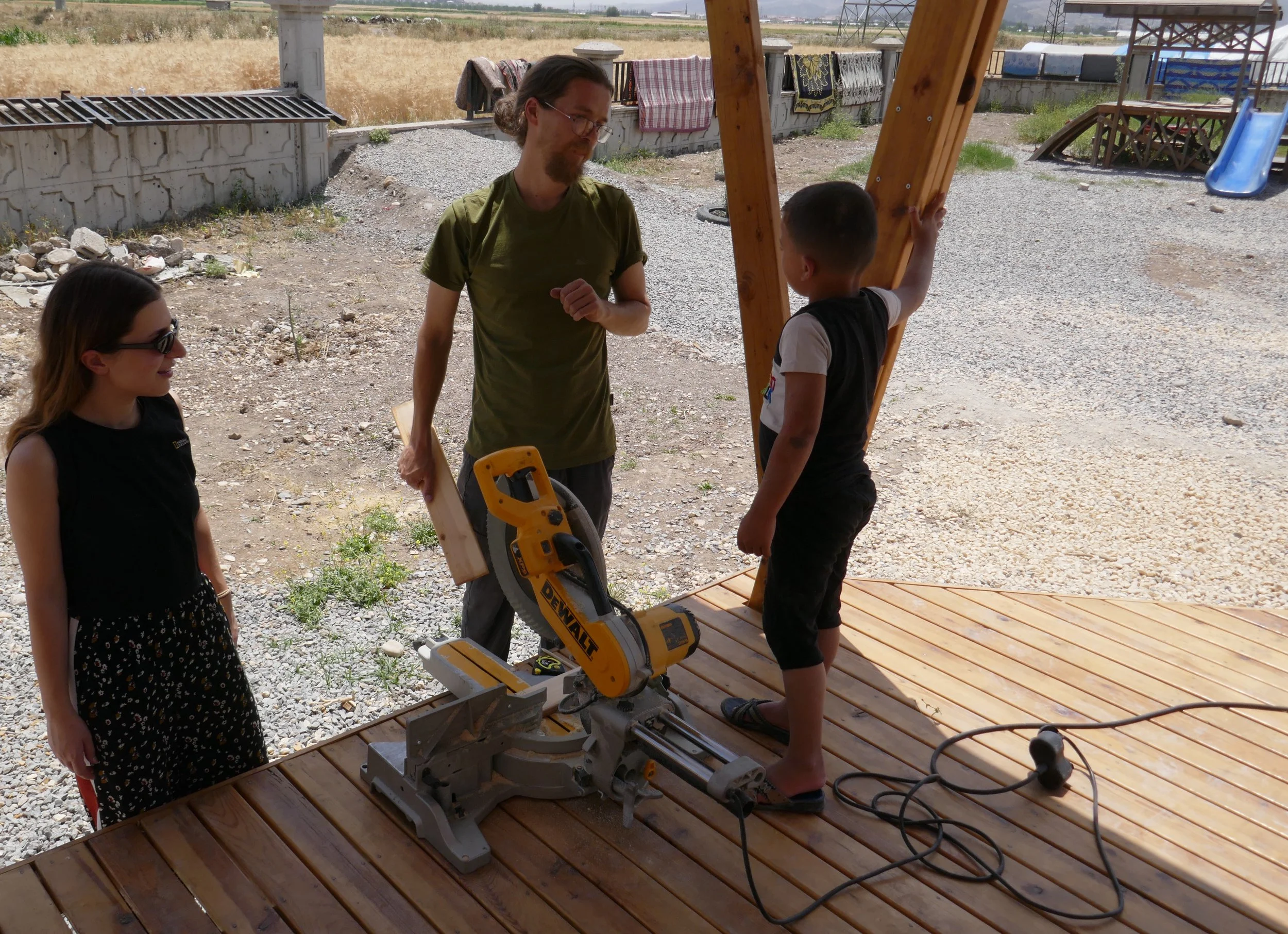
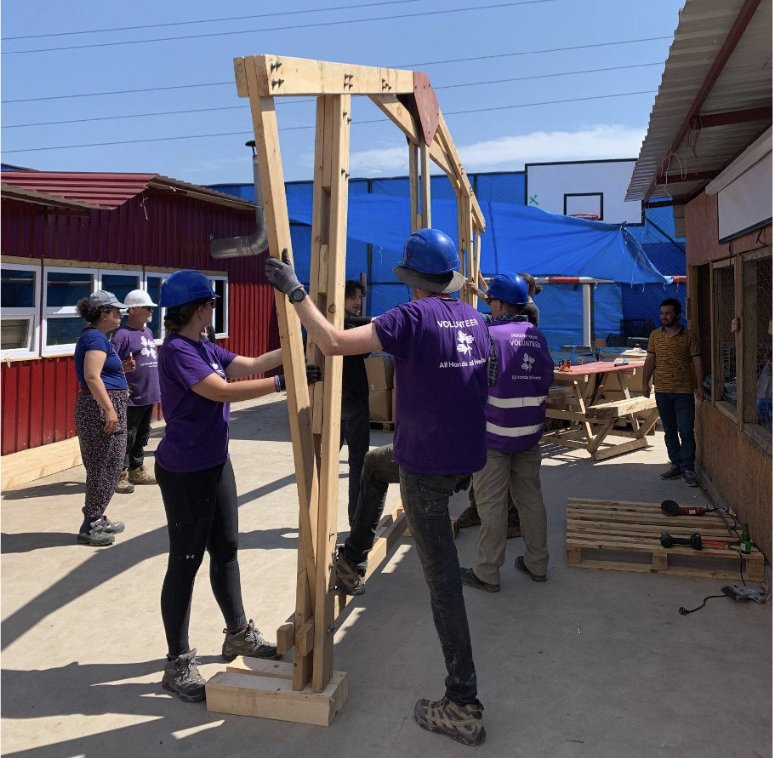
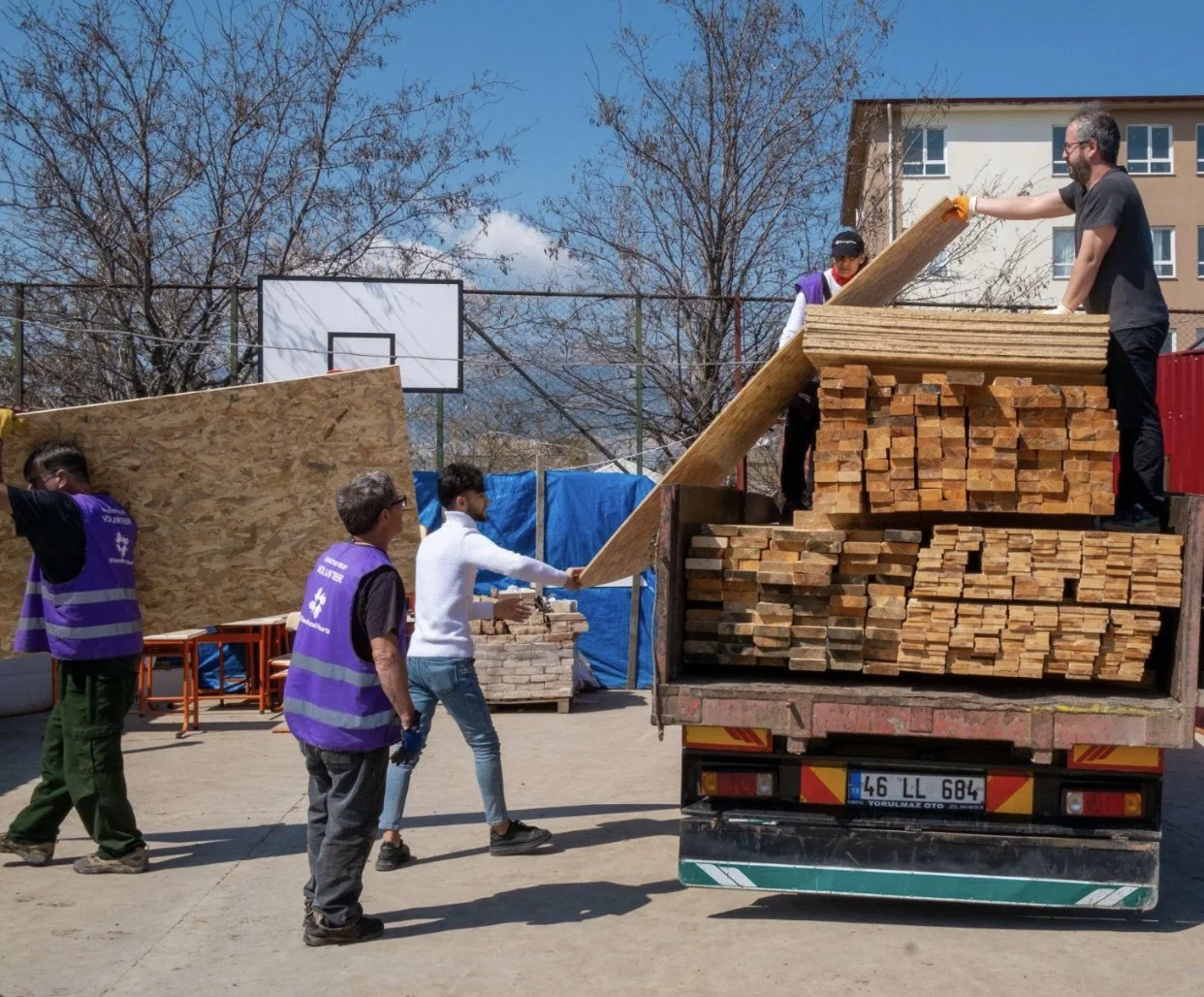
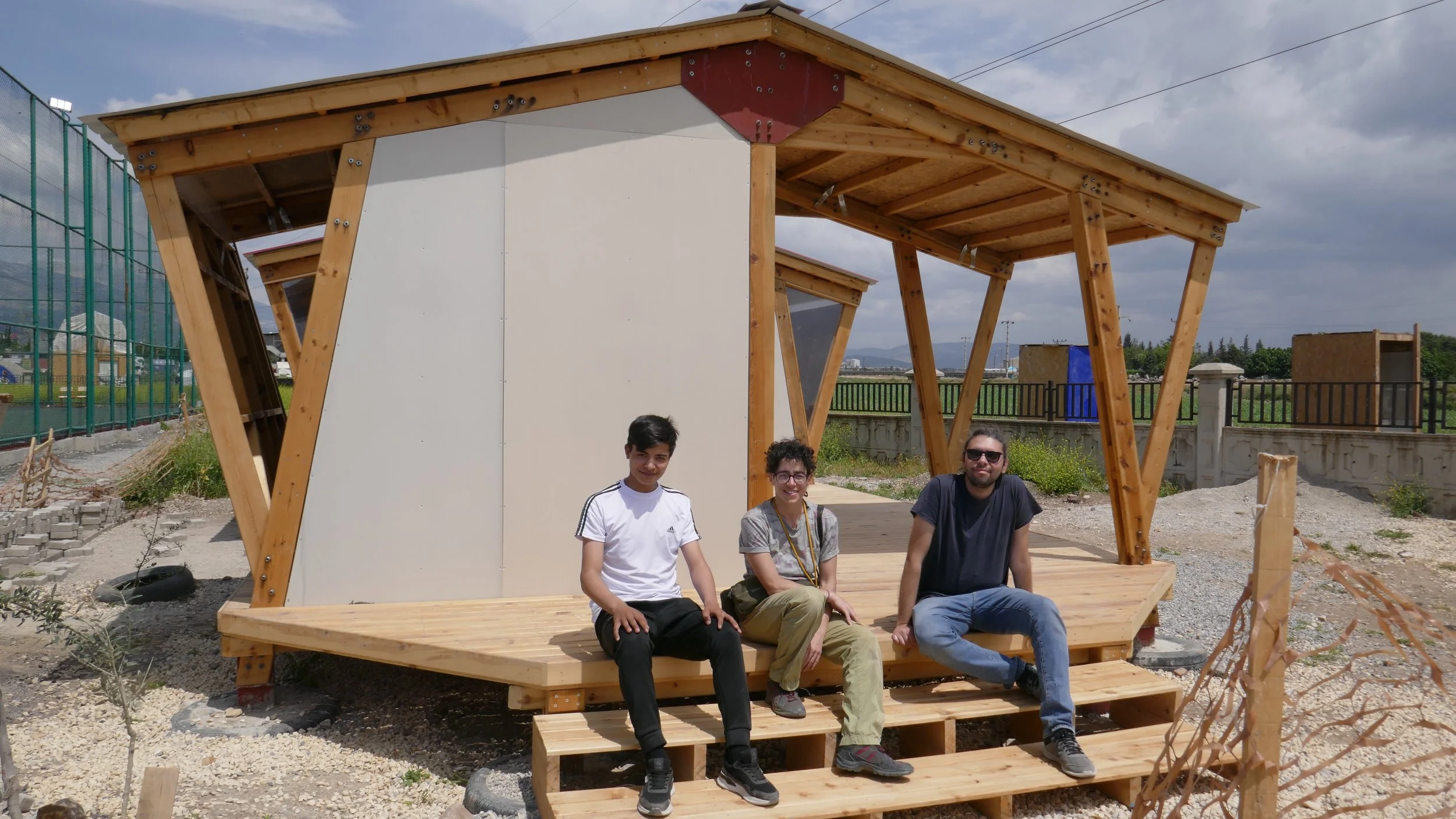
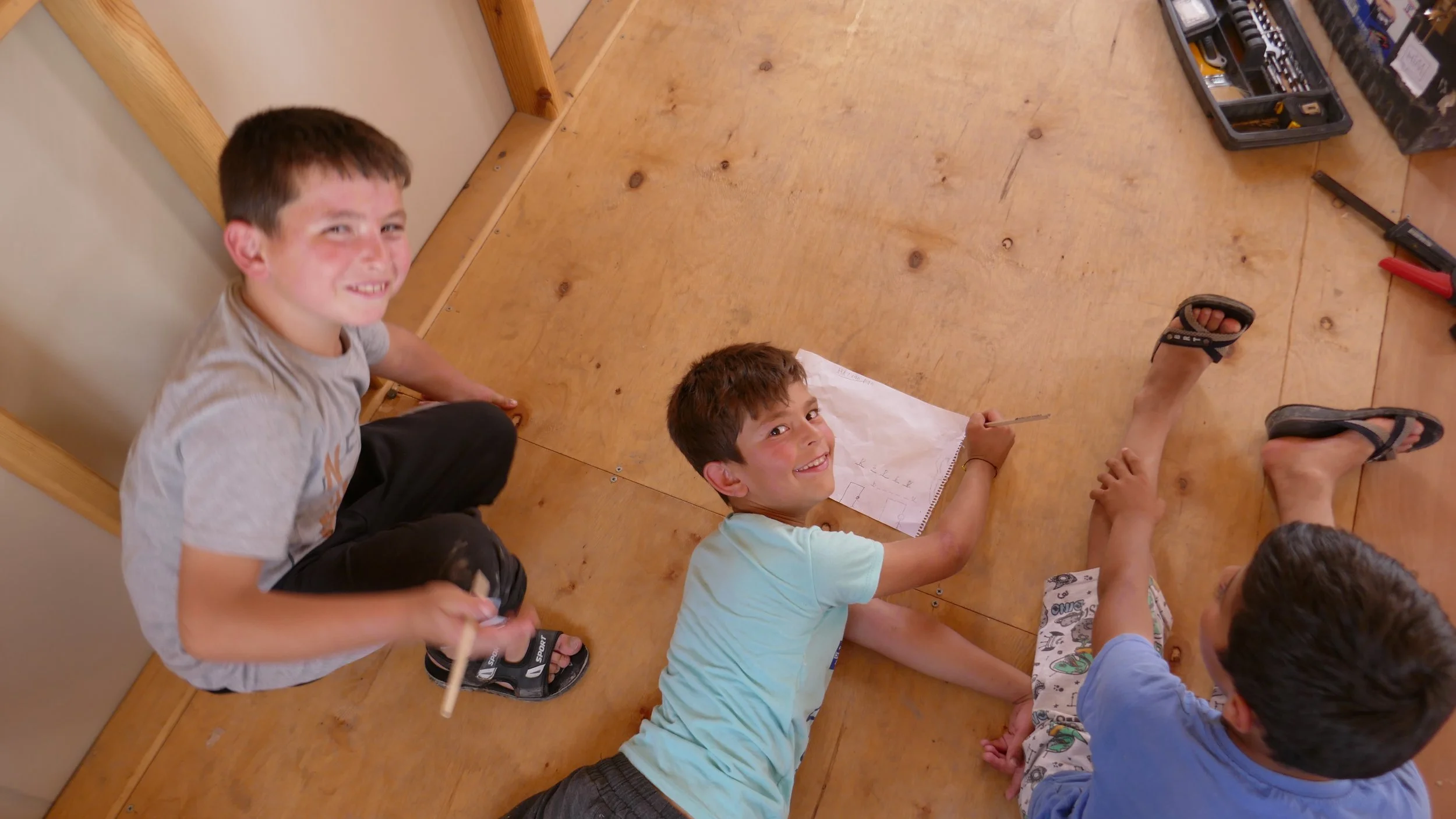
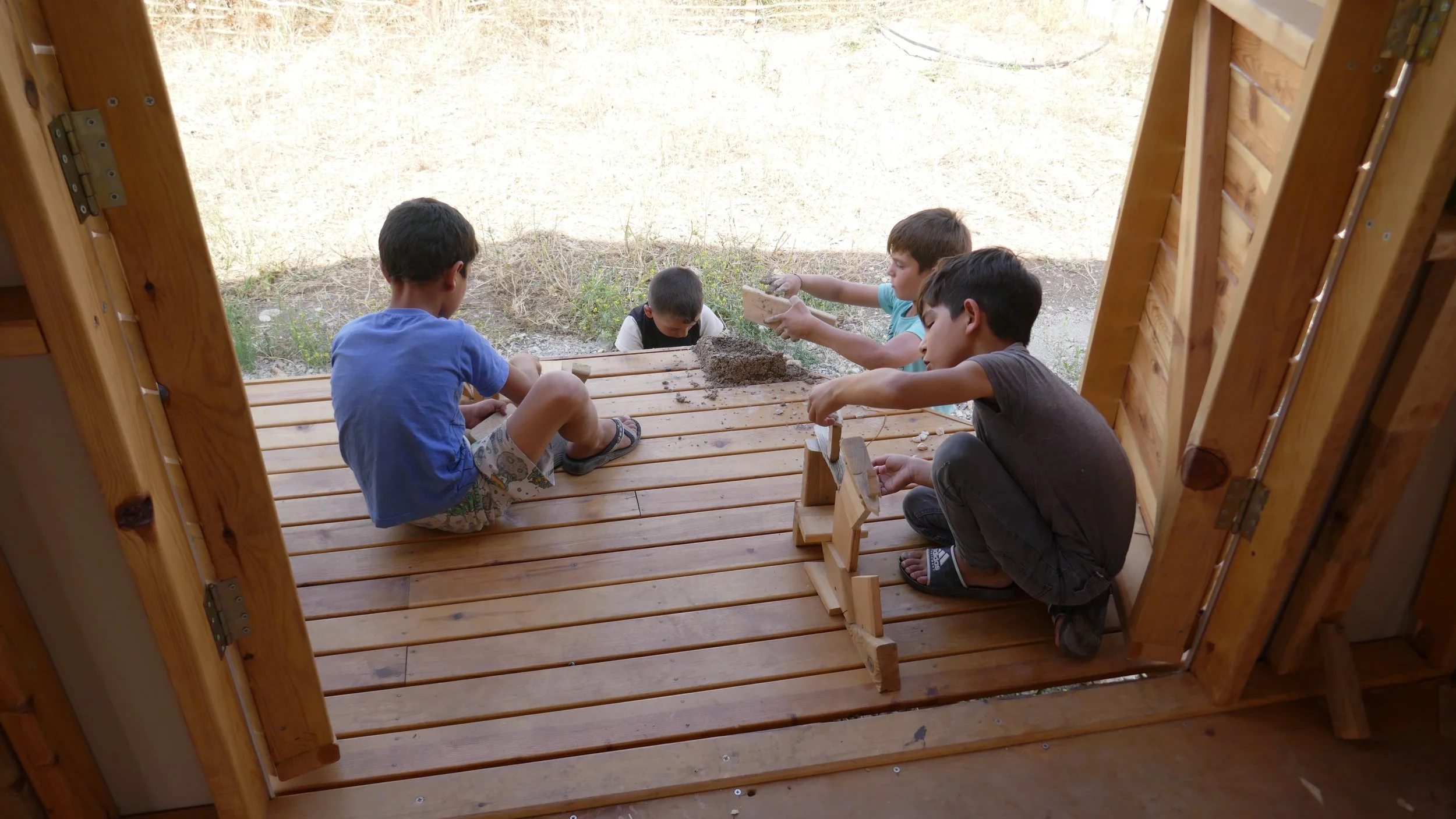
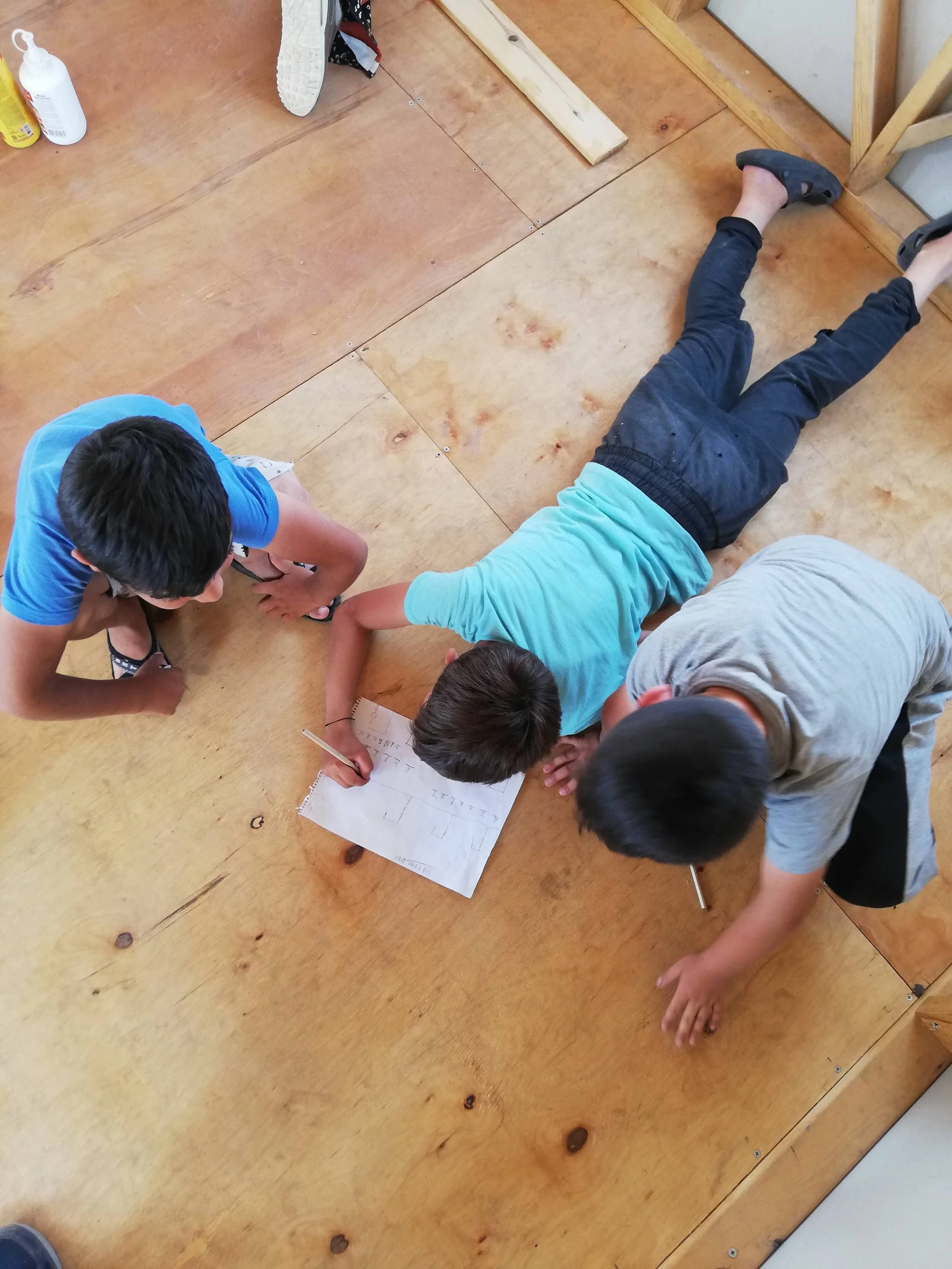
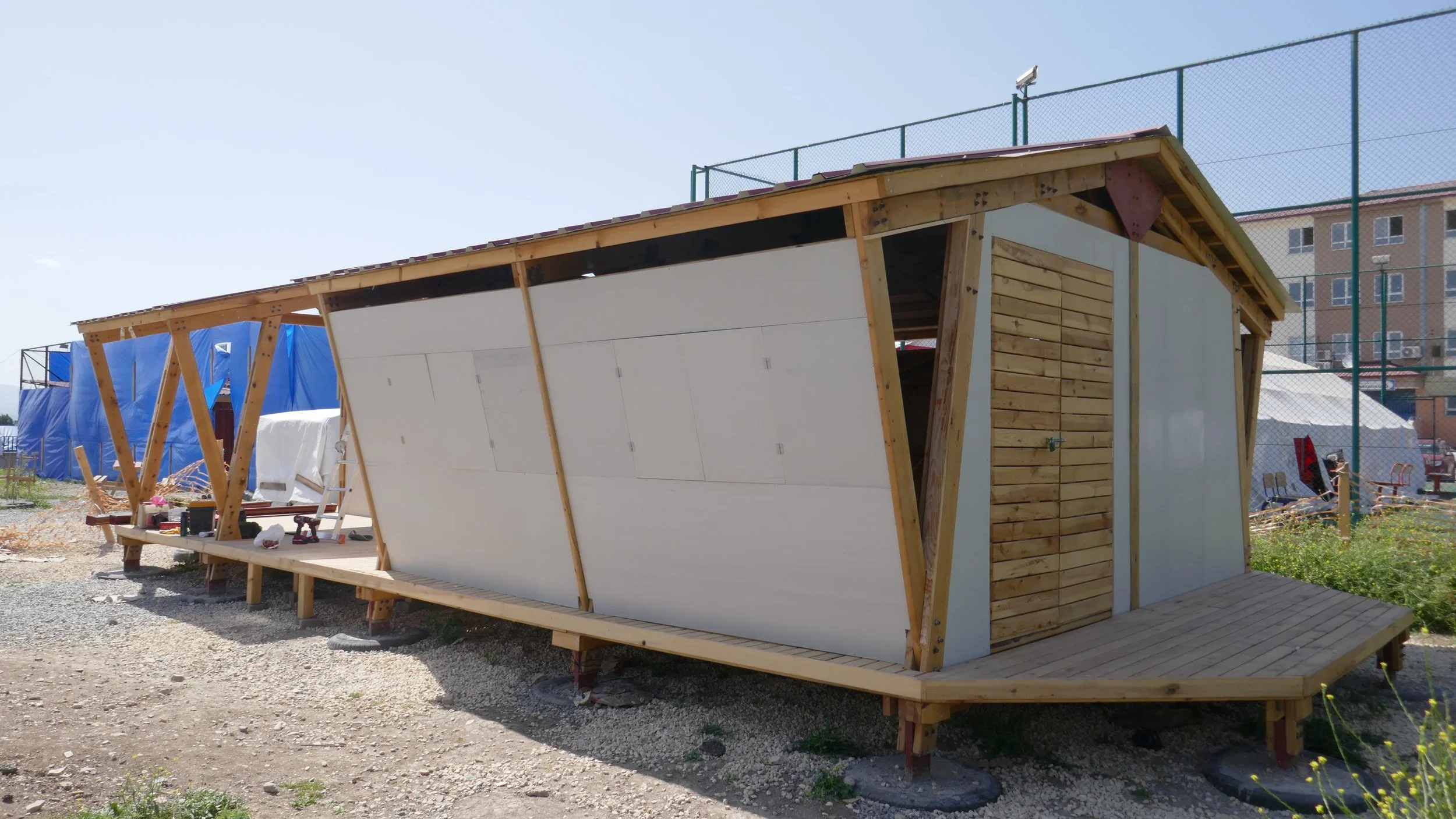
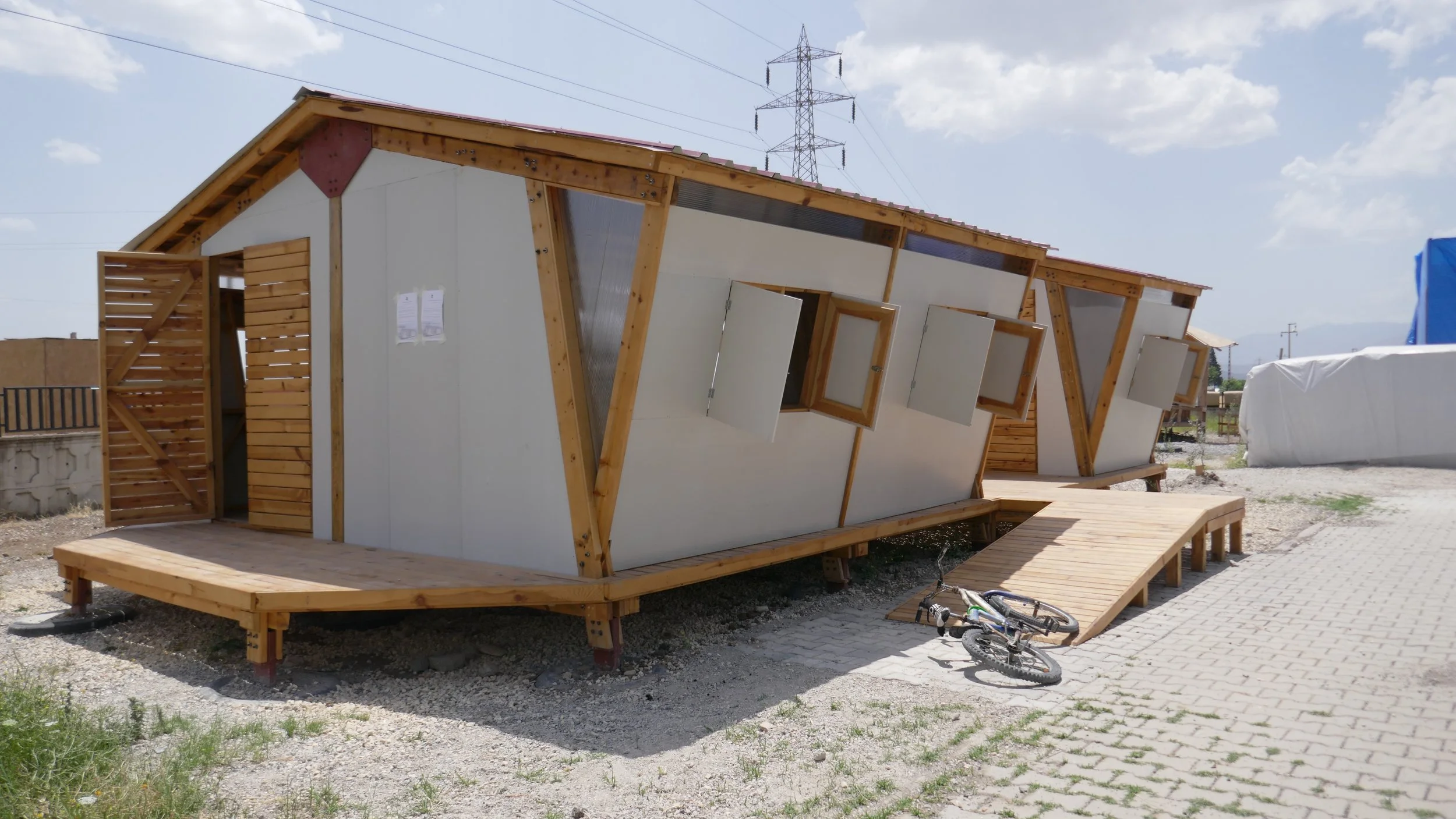
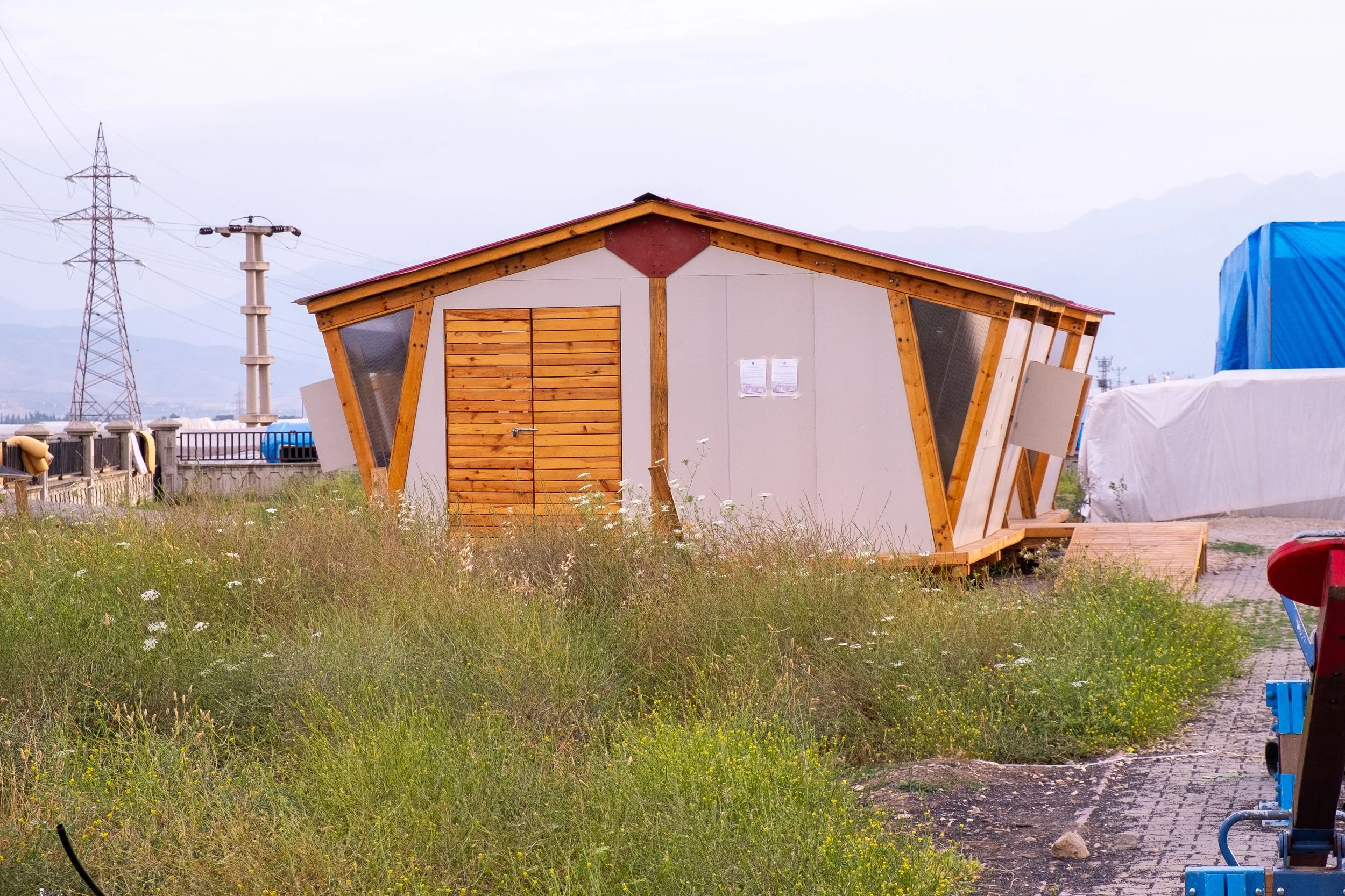
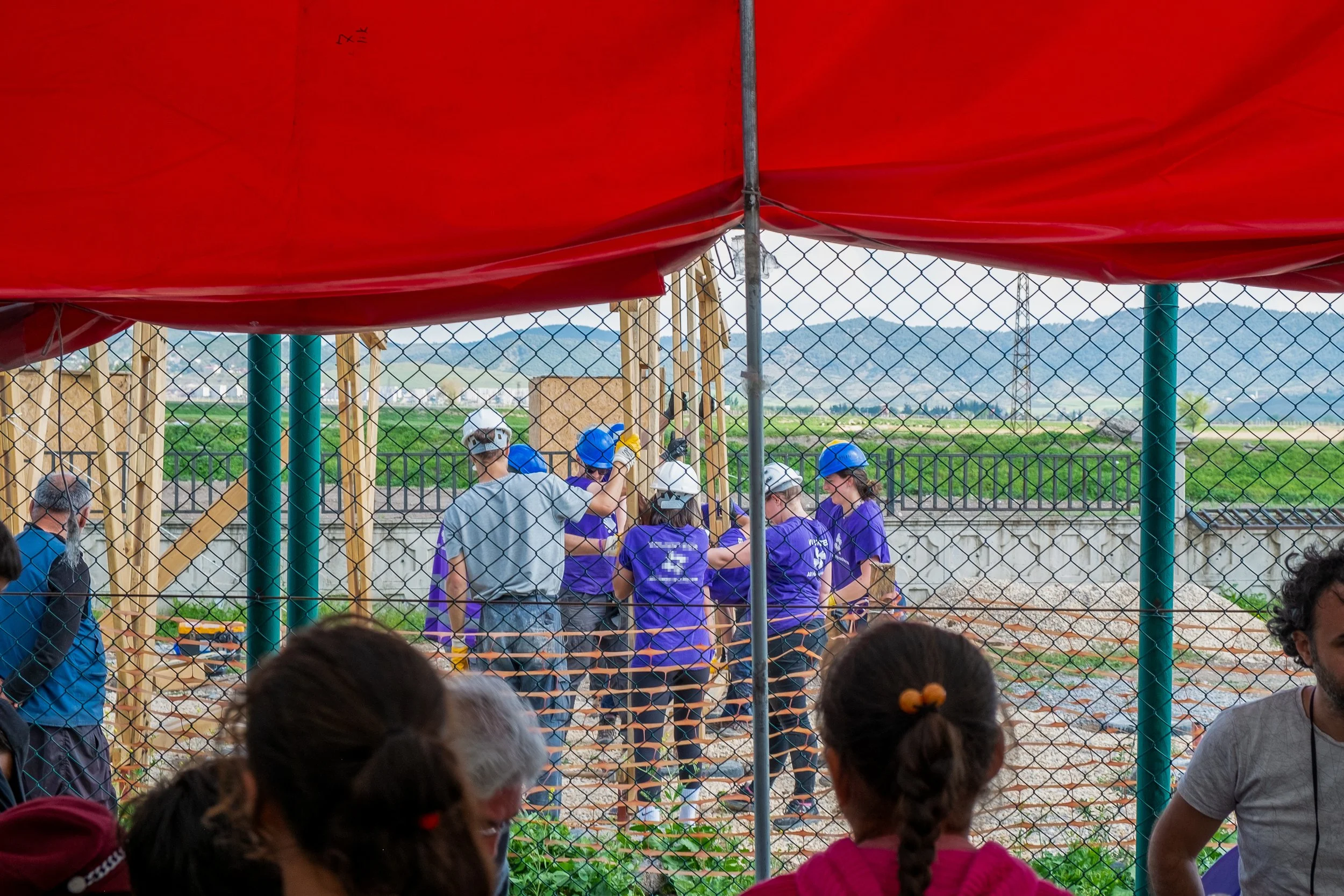
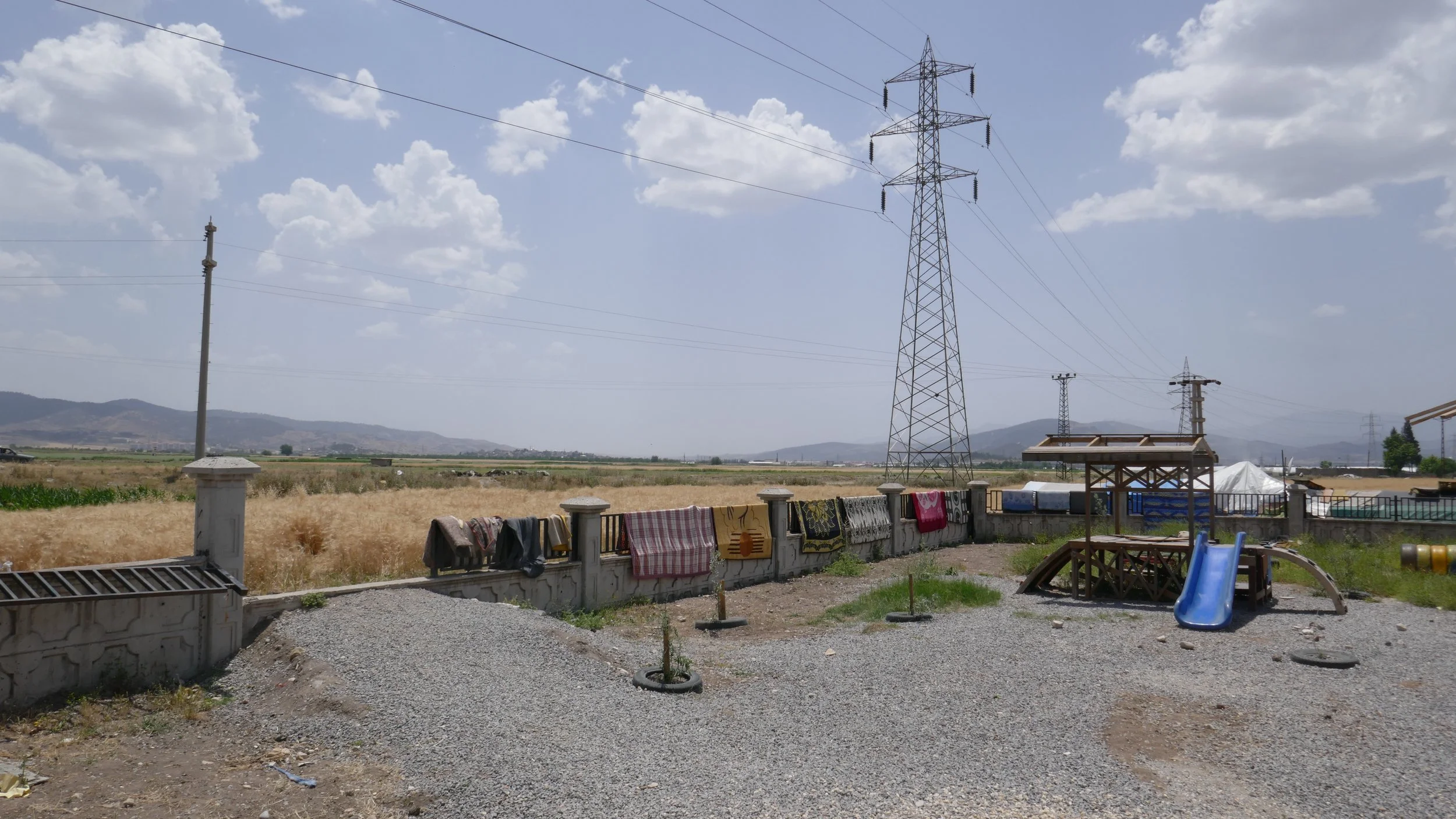
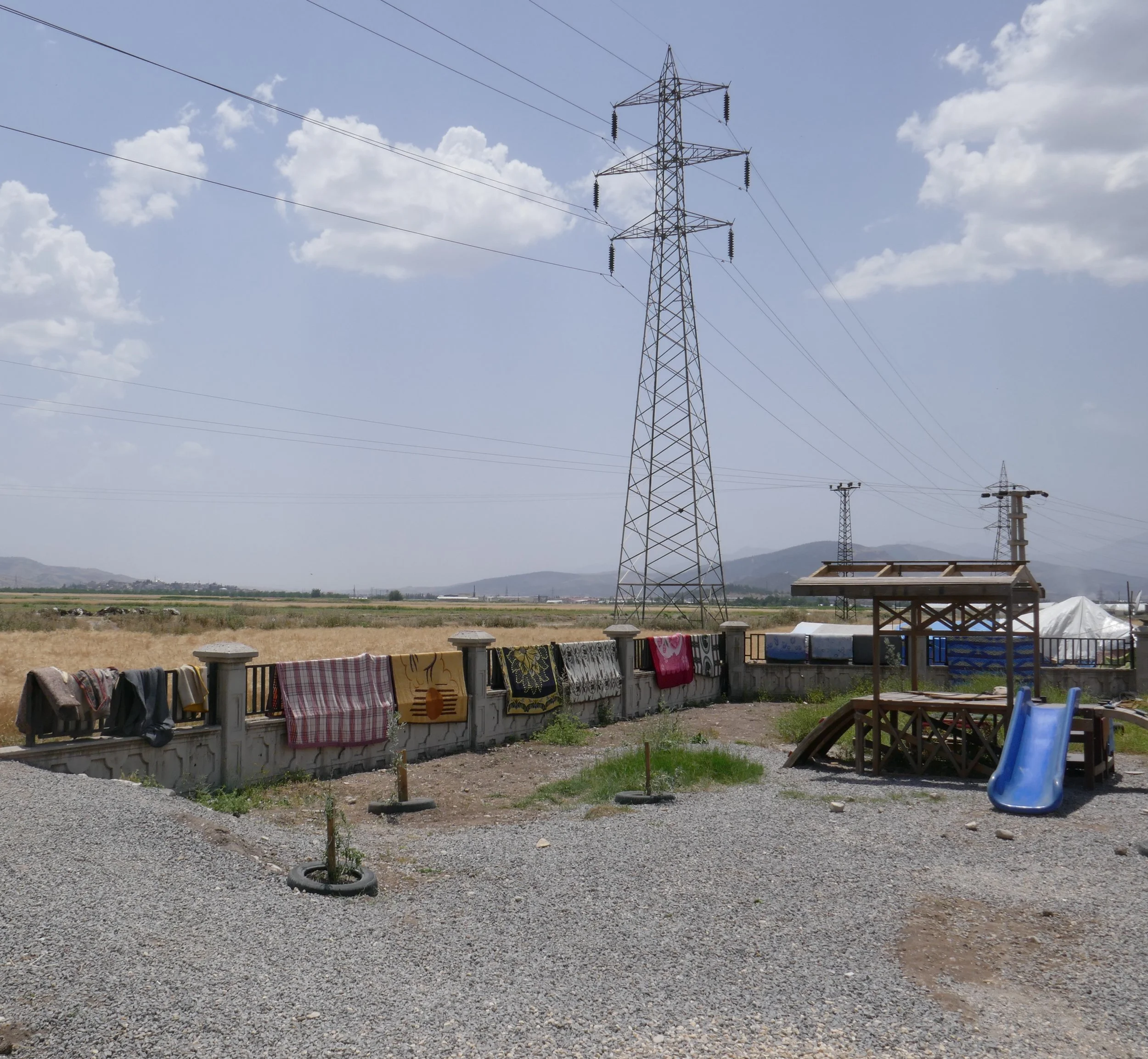
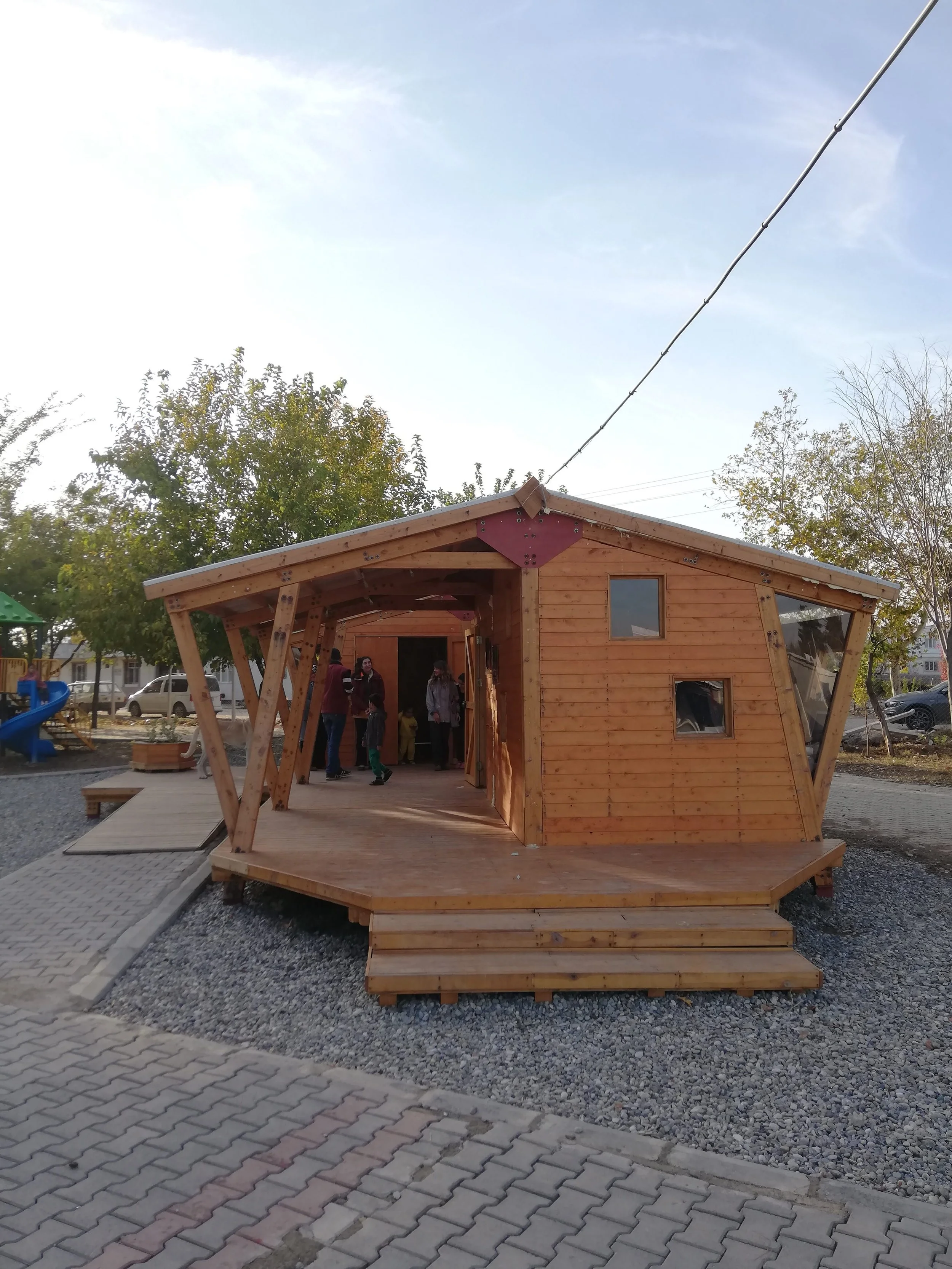
Sümer Design Build Community Space. HiM volunteers traveled to Kahramanmaraş on February 20, 2023 to partner with Kaf Kolectif, a collective of volunteers already providing post-disaster support in the tent area at the Sümer Secondary School. In early March, HiM held an open call for an Istanbul-based workshop and selected 45 individuals out of 410 applications for this project. Separated into six groups, they considered labor, the amount of donations received, the size of the site, and the affordability, type, and location of materials. Although their parameters were not strictly adhered to, data proved useful in how the space could be used in different ways.
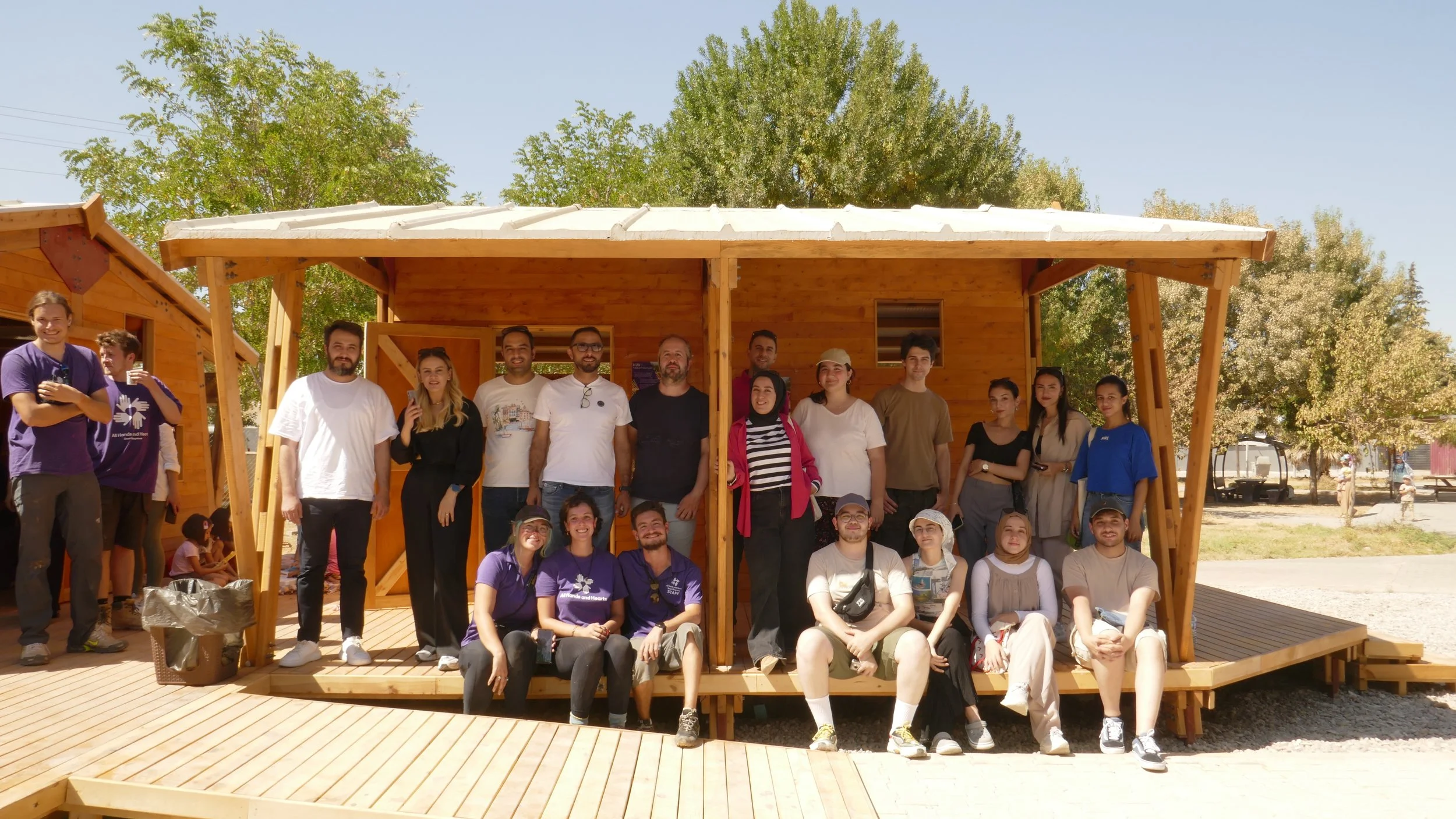
Students at Sümer had planted olive trees two months before the earthquake and they sited the building in that area. In addition to HiM and Kaf Kolektif, construction was performed by All Hands and Hearts (an American NGO), and Sümer neighborhood residents. Financial support was provided by All Hands, individuals, and Turkish and international NGOs, and a camping area was provided by the Kahramanmaraş Chamber of Architects. Local materials and labor were used which HiM believes contributes to the sense of ownership and recovery of disaster victims.
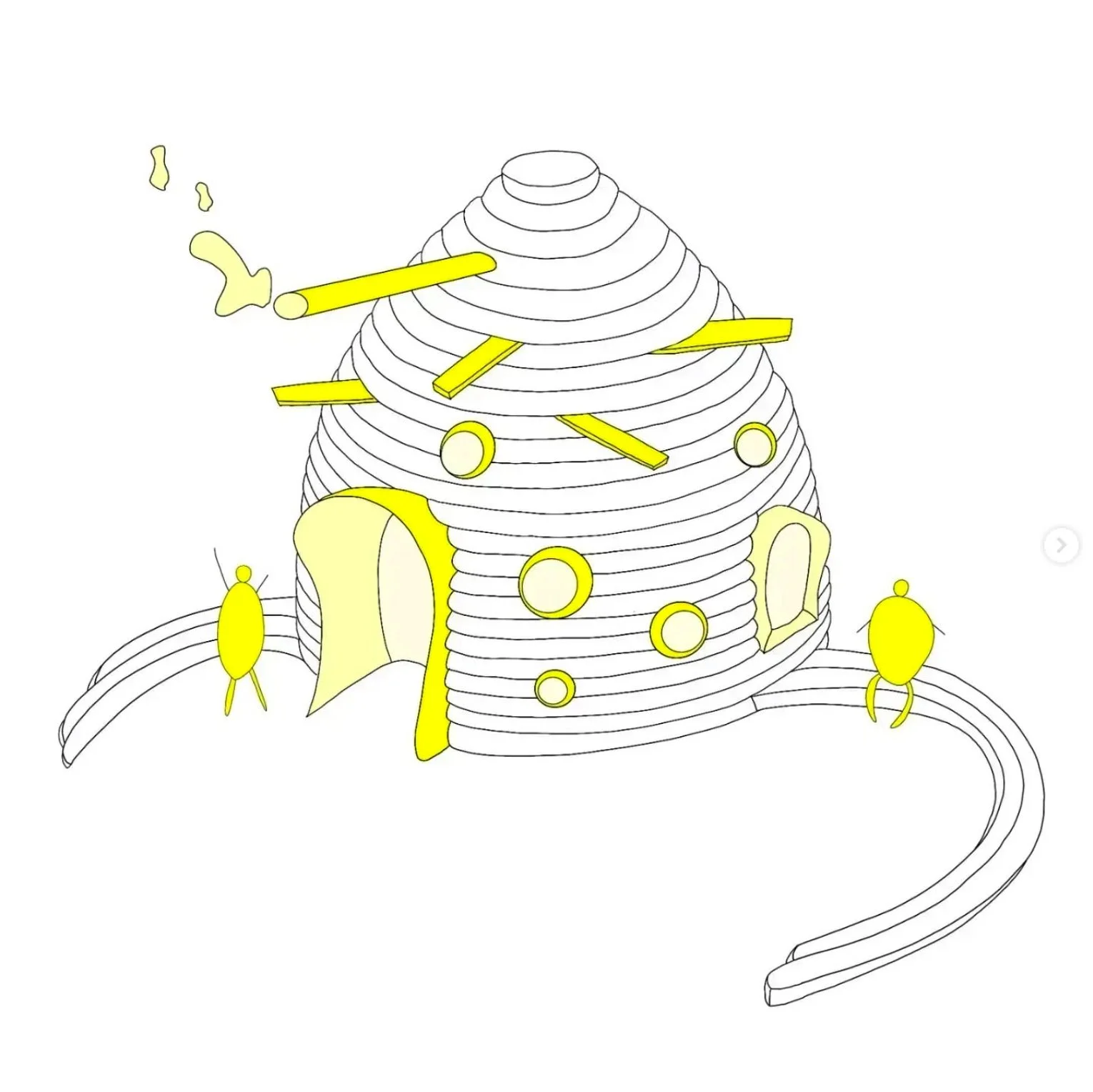
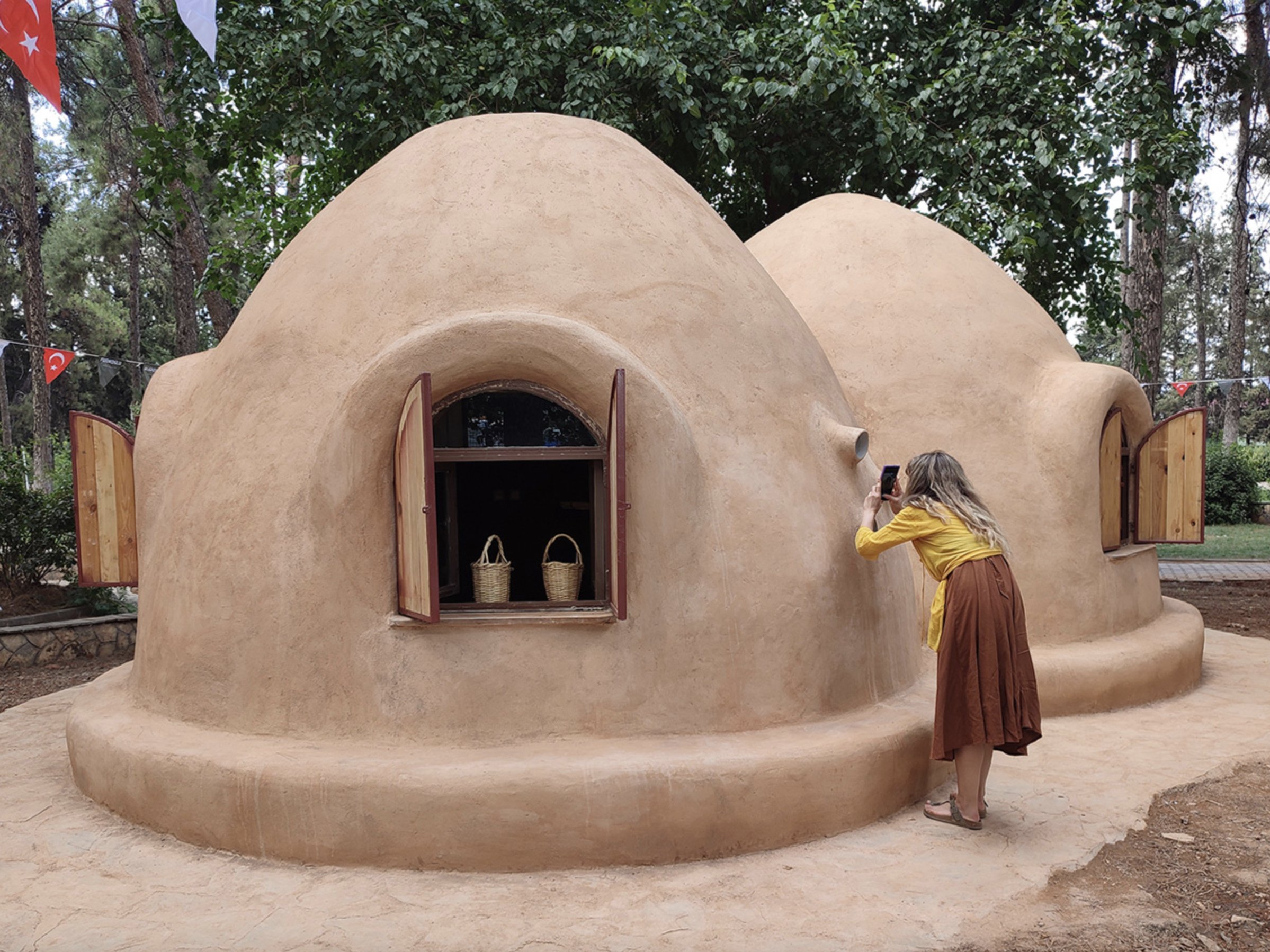
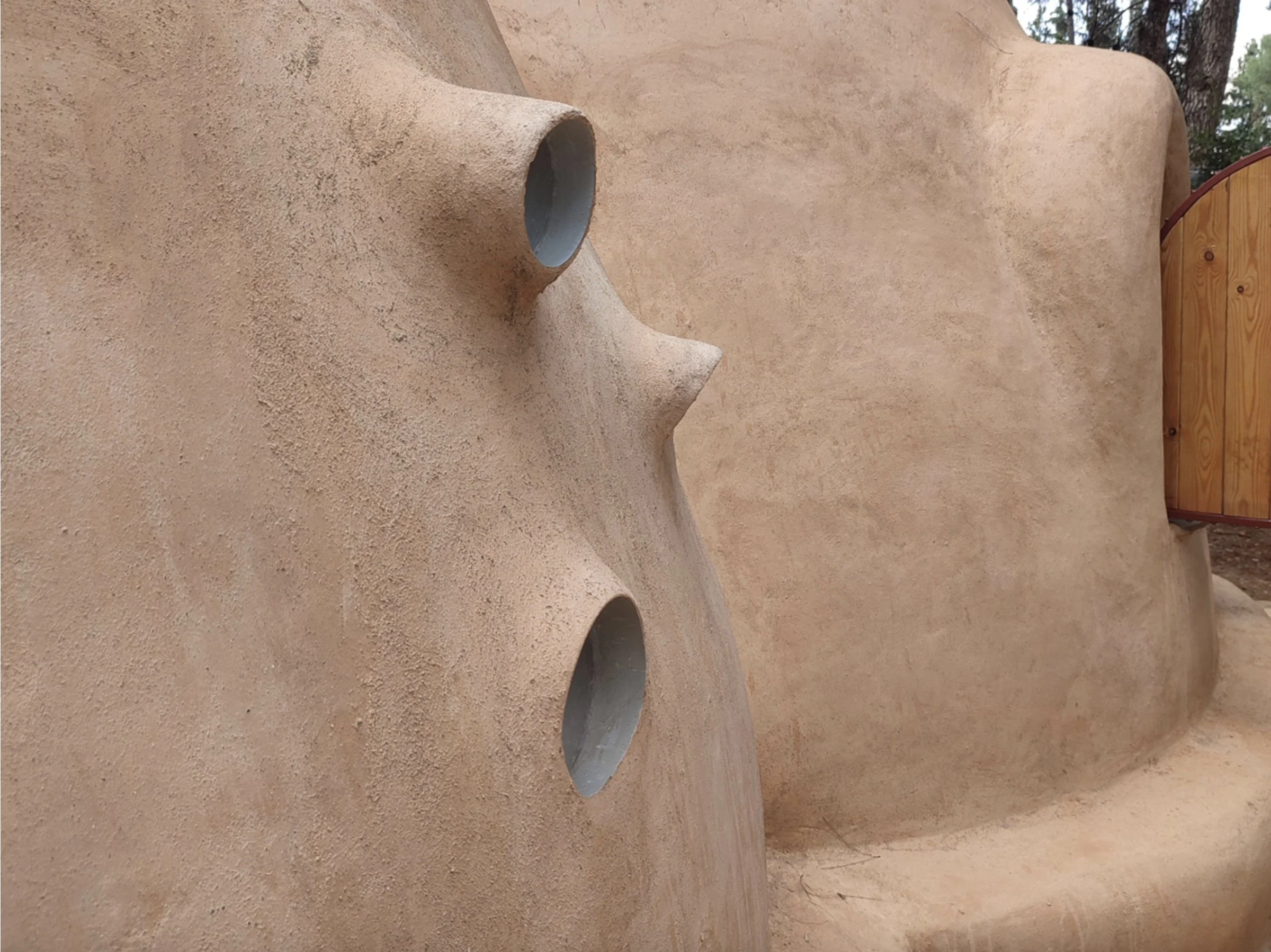
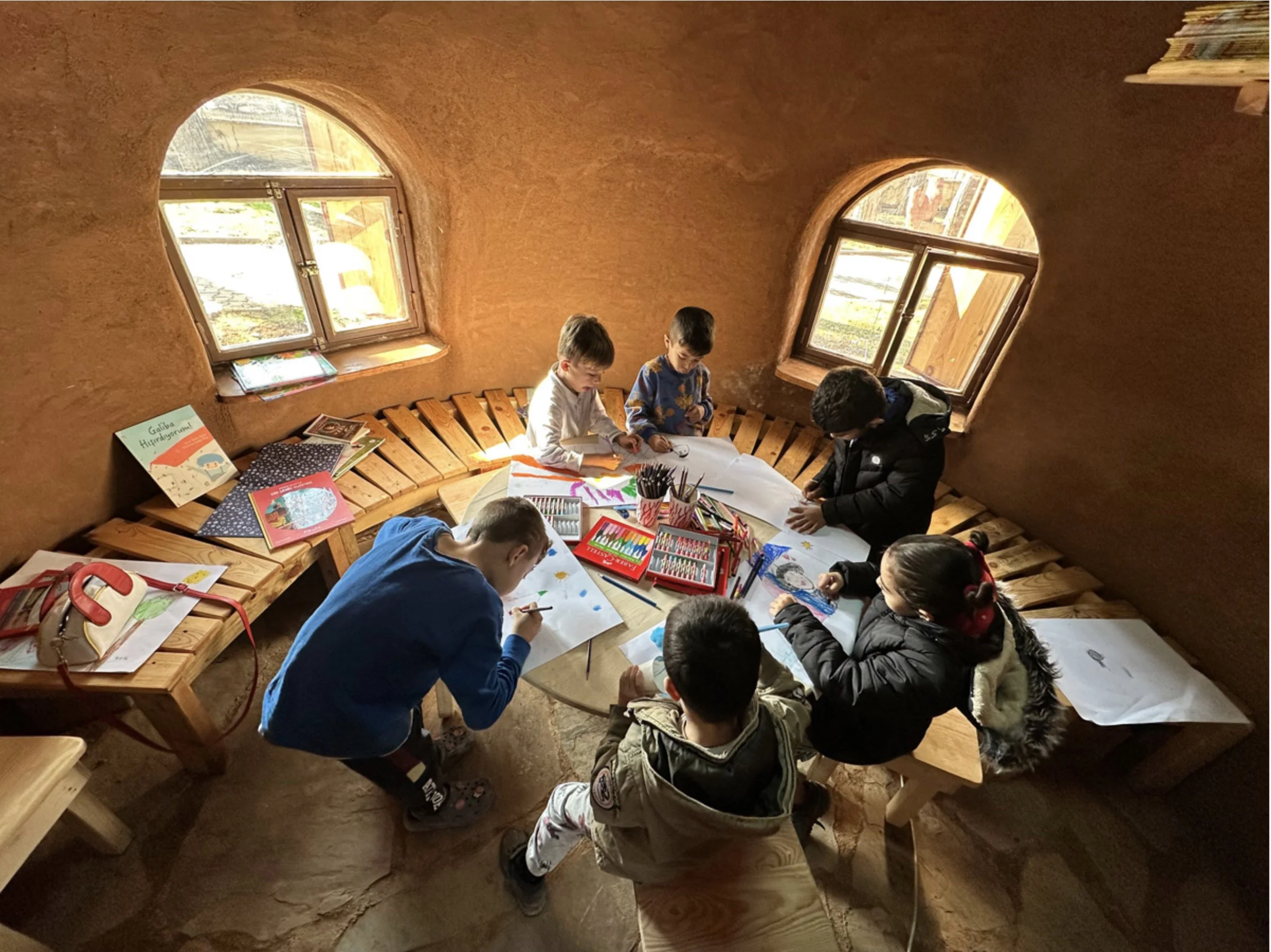
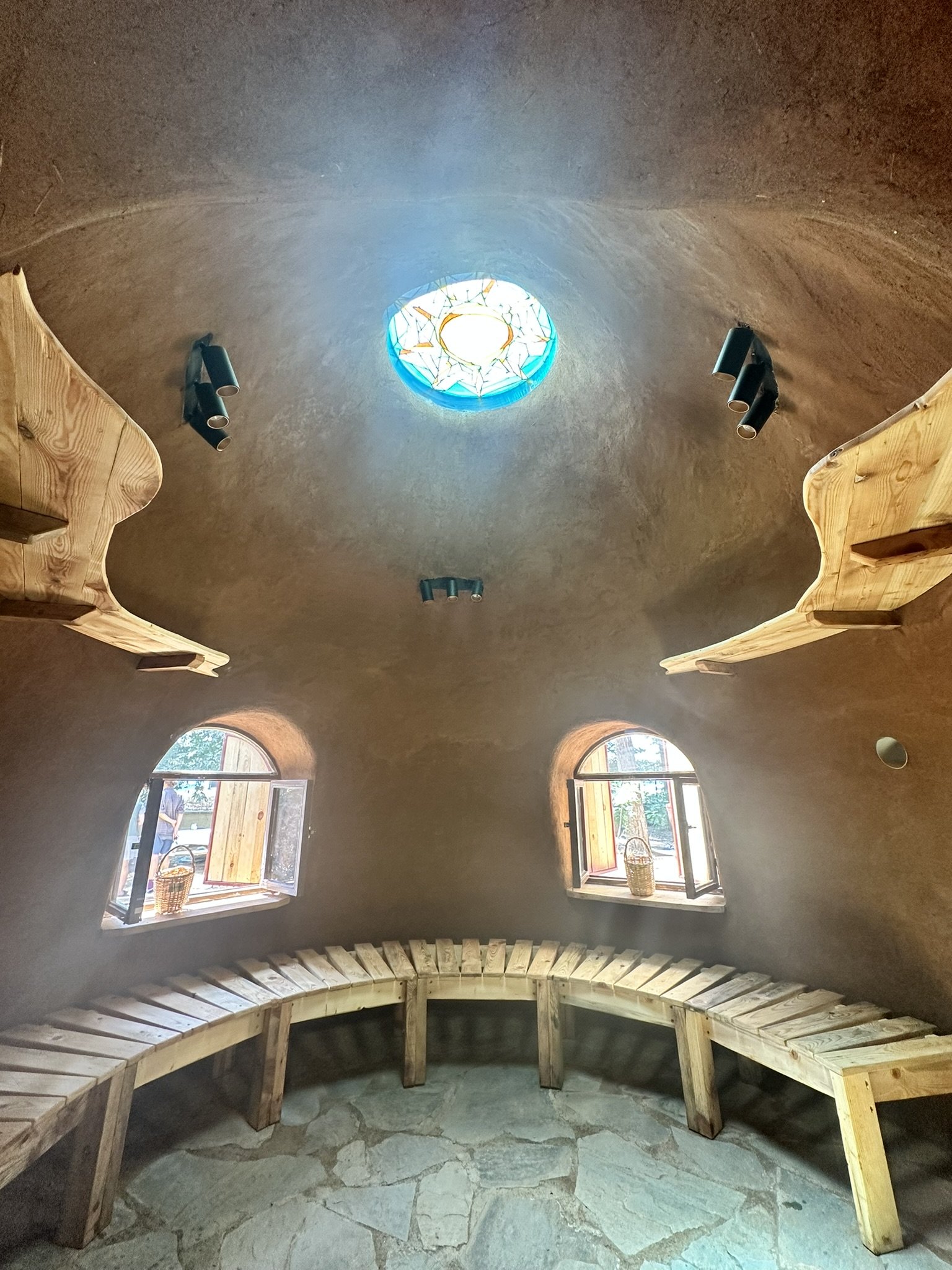
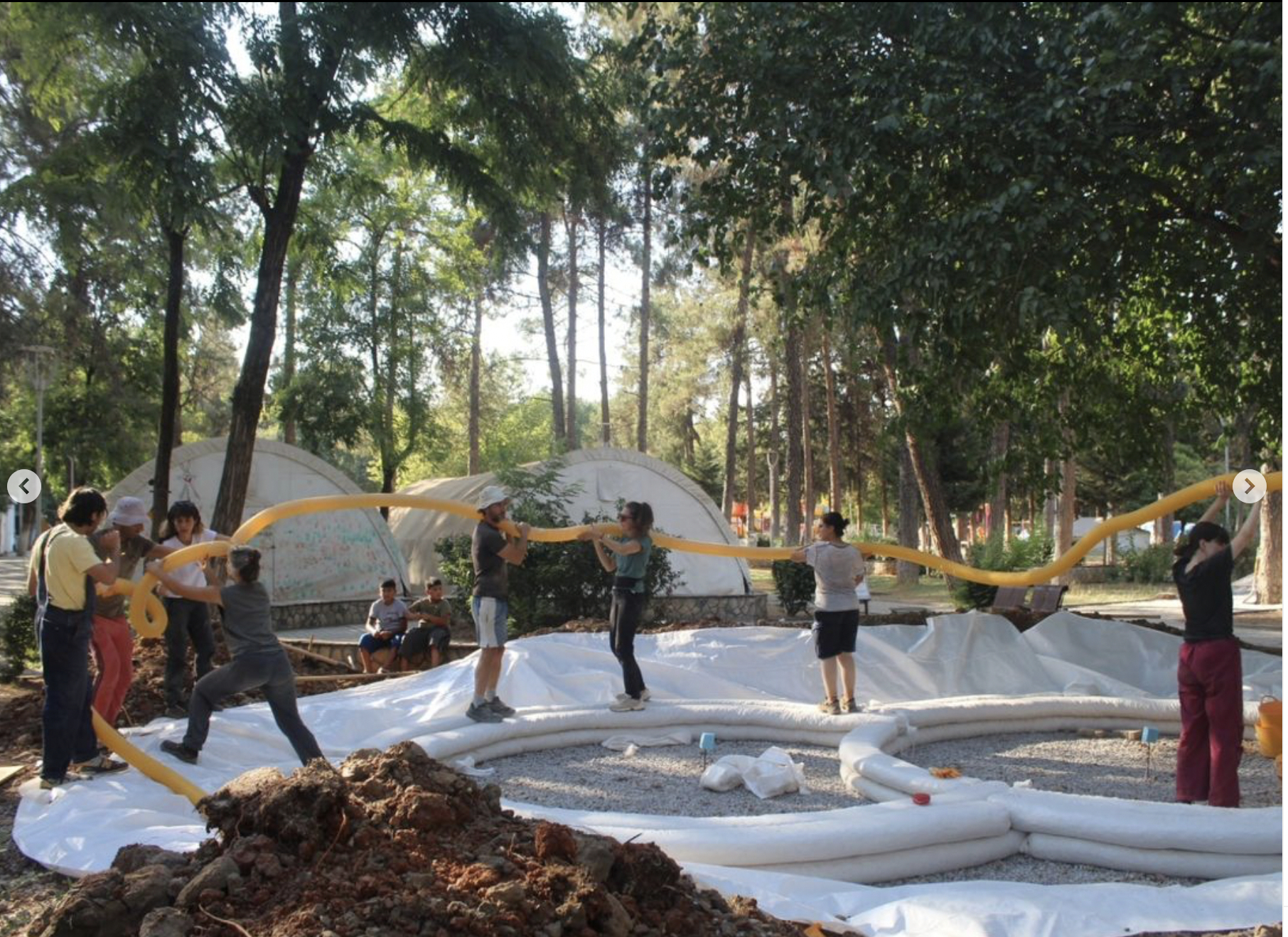
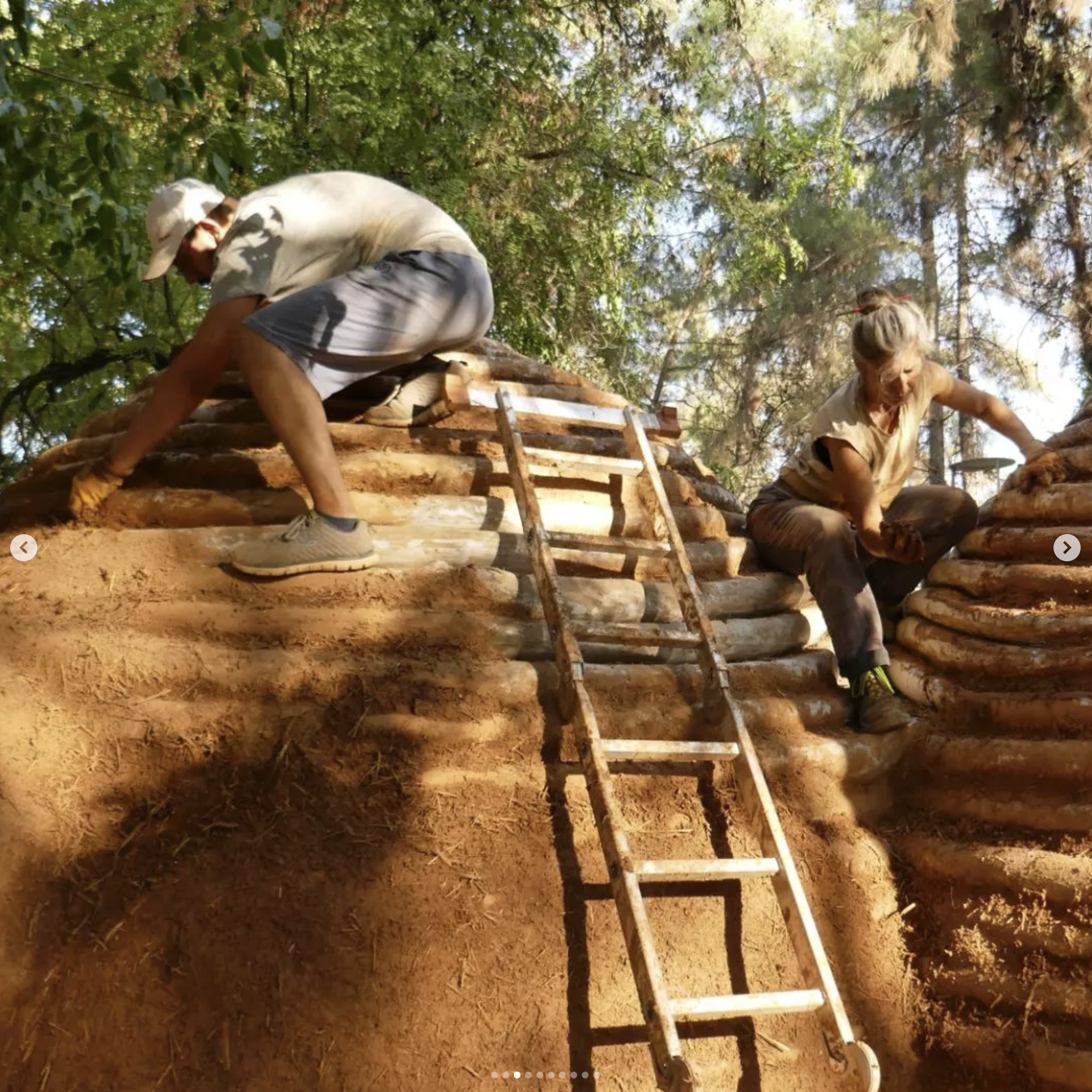
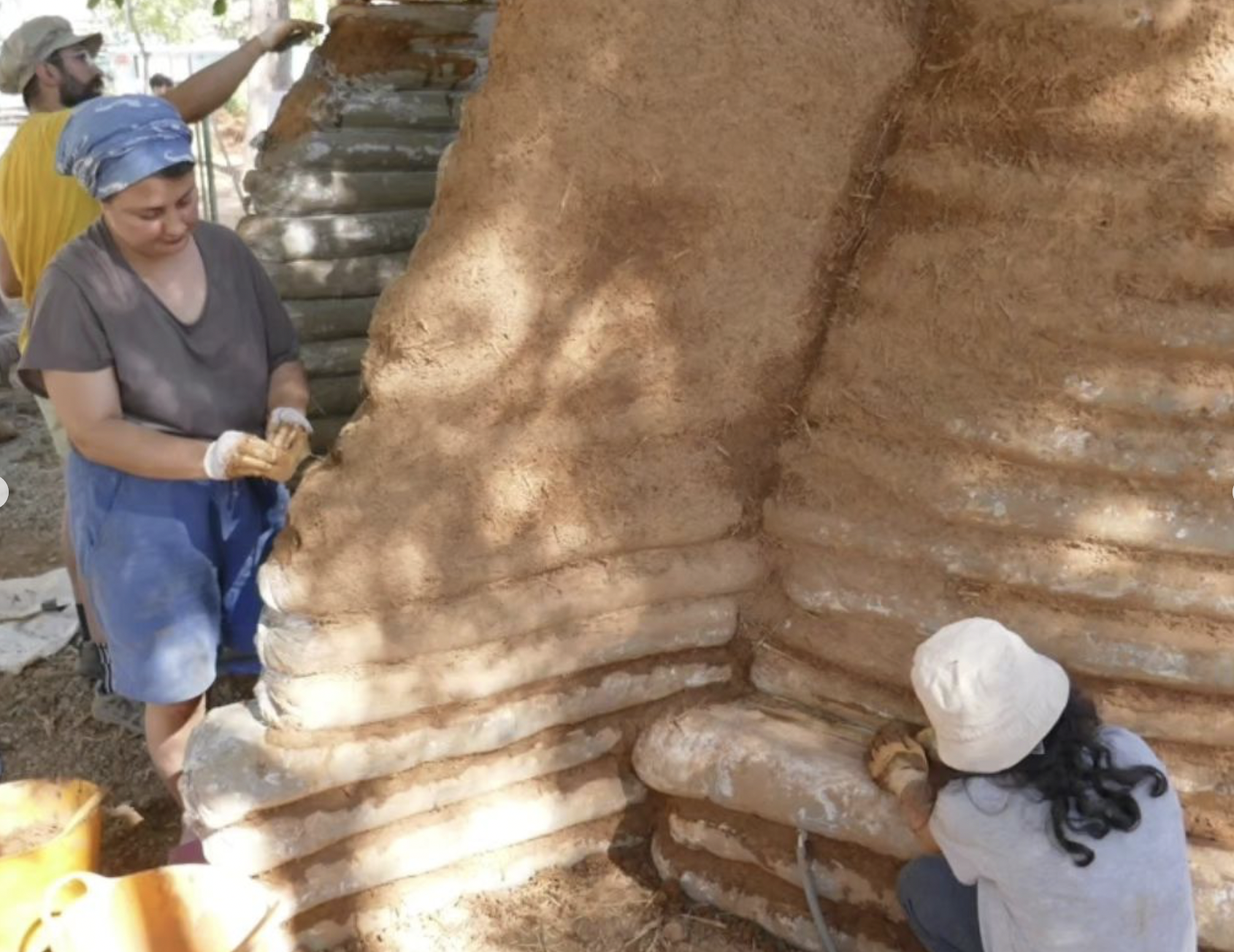
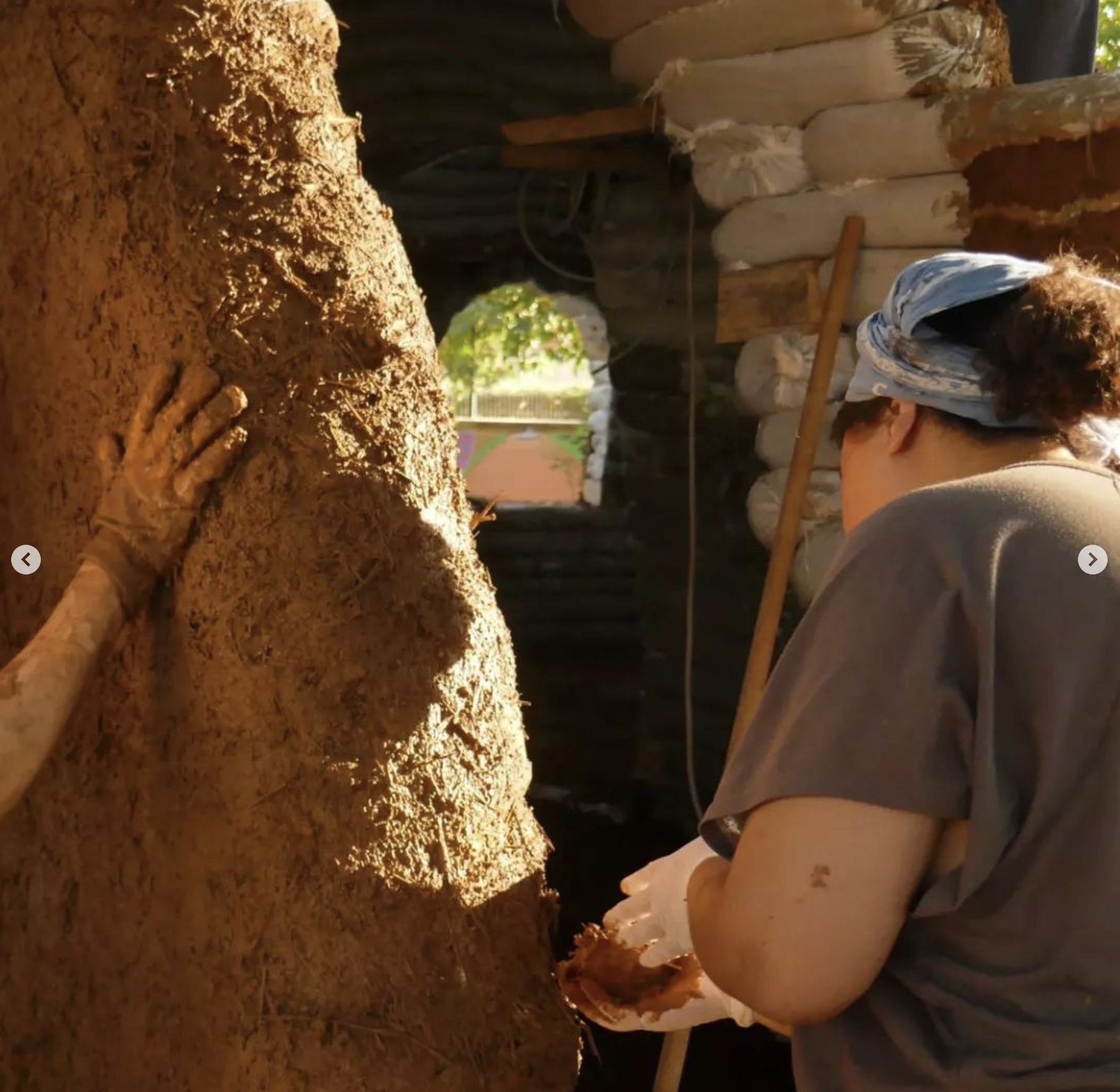
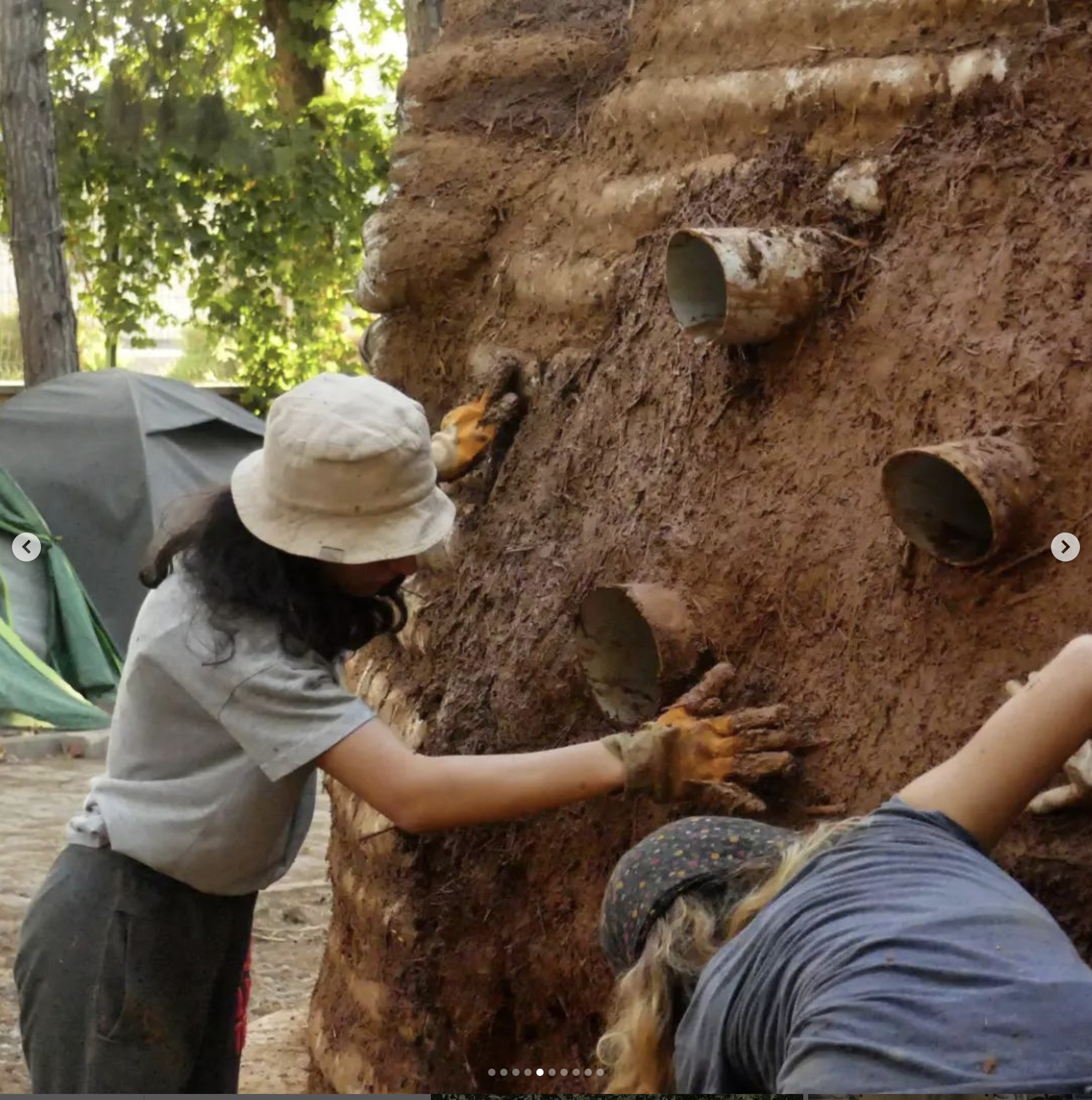
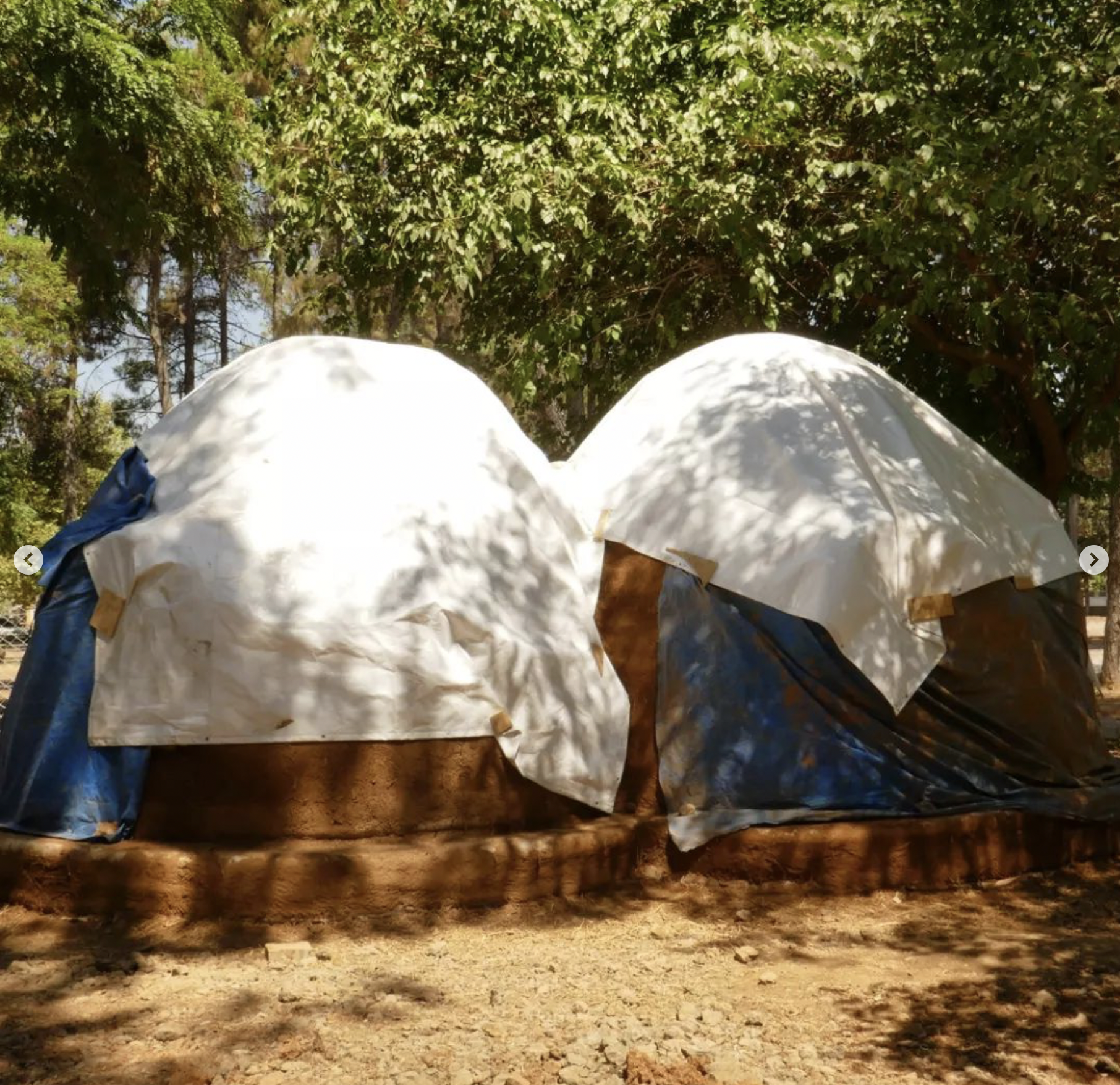
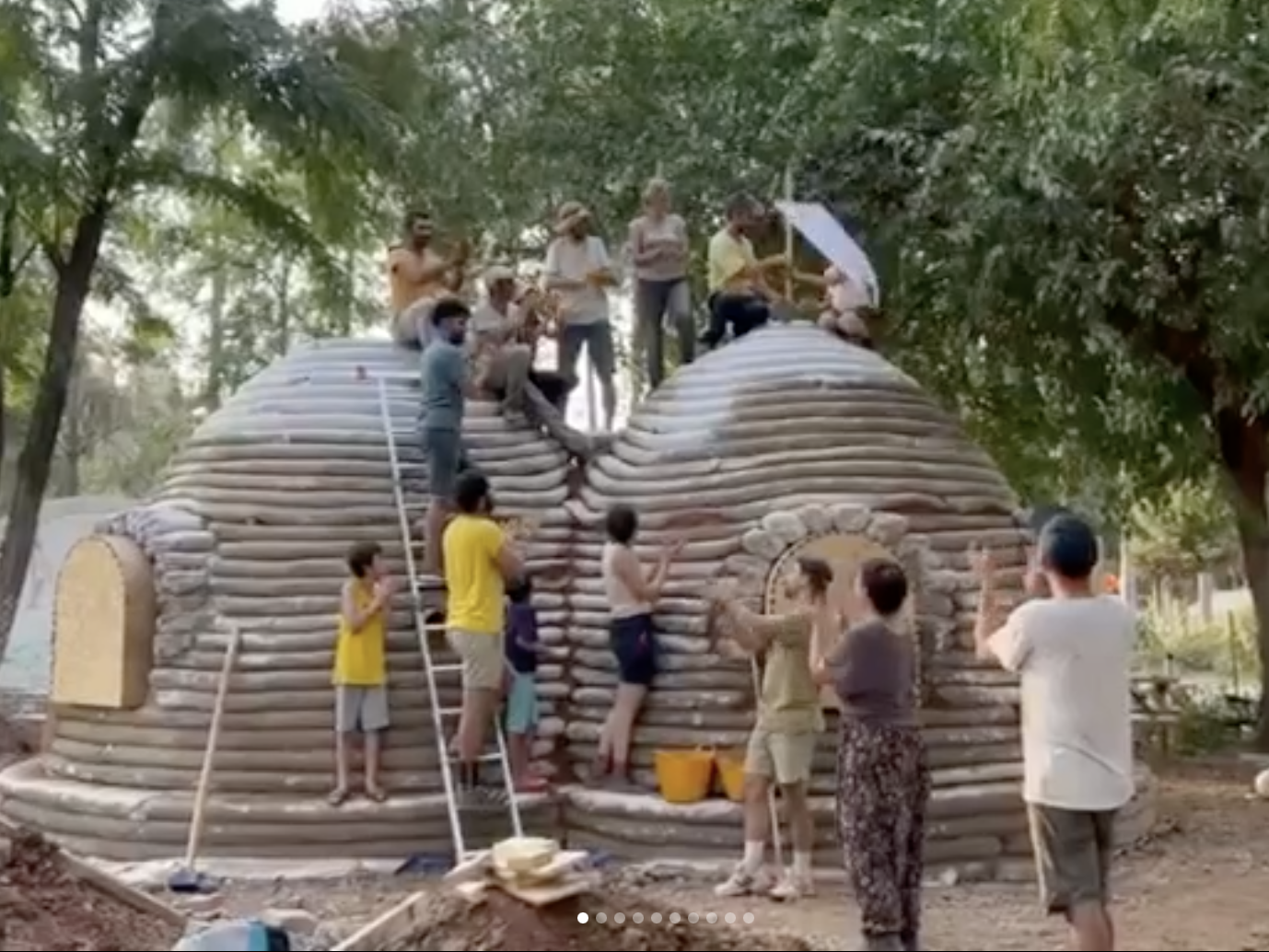
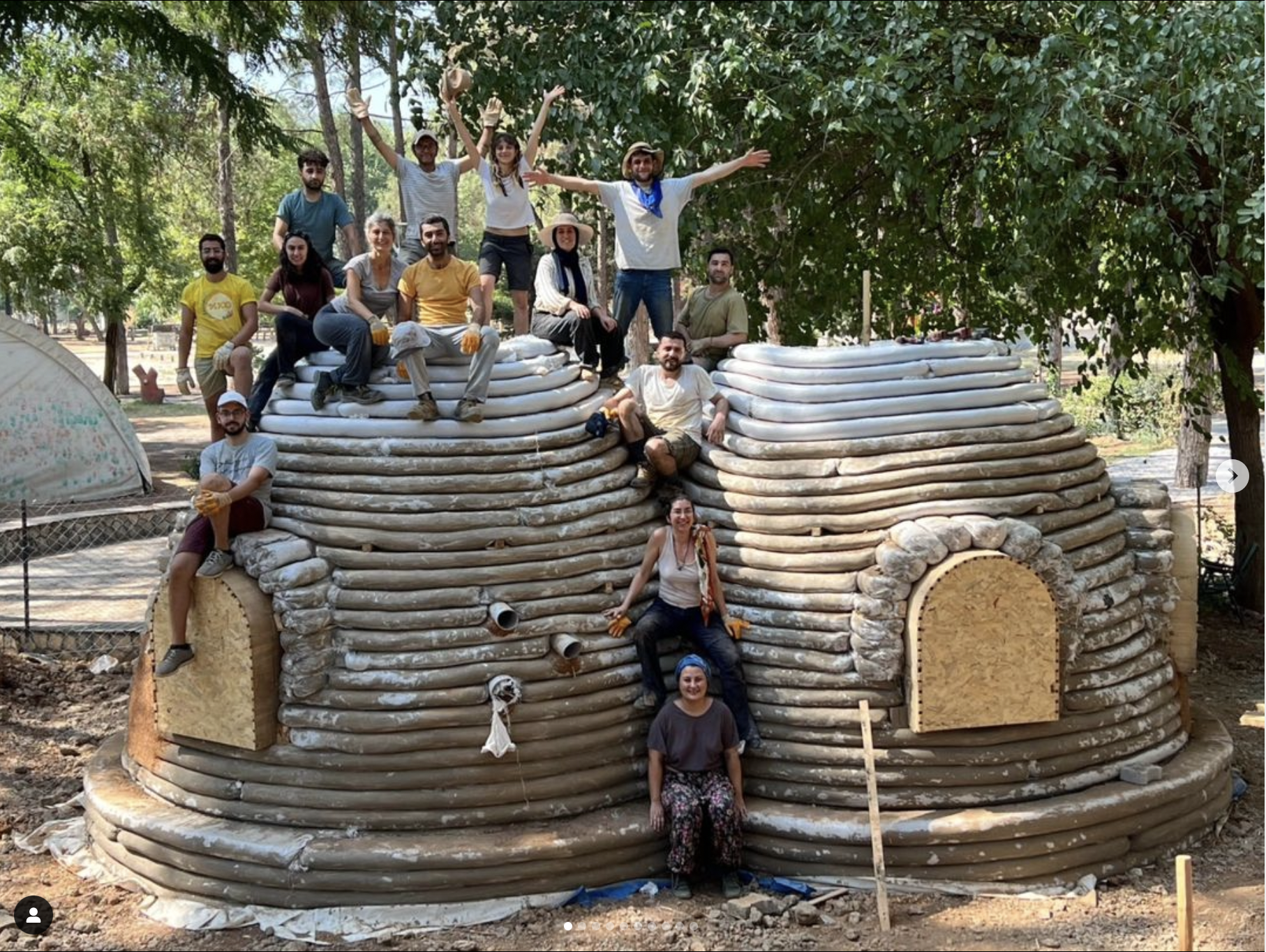
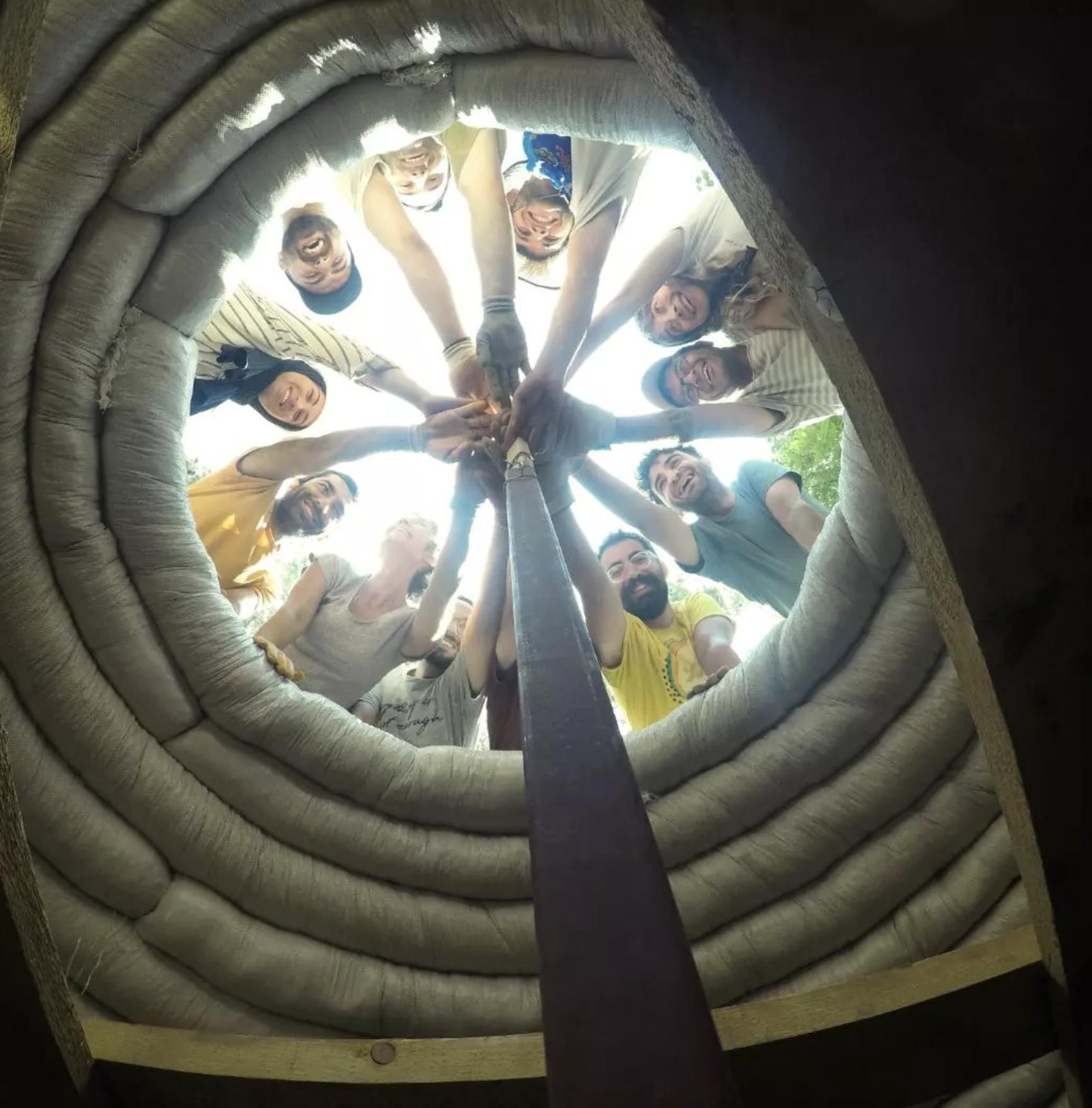
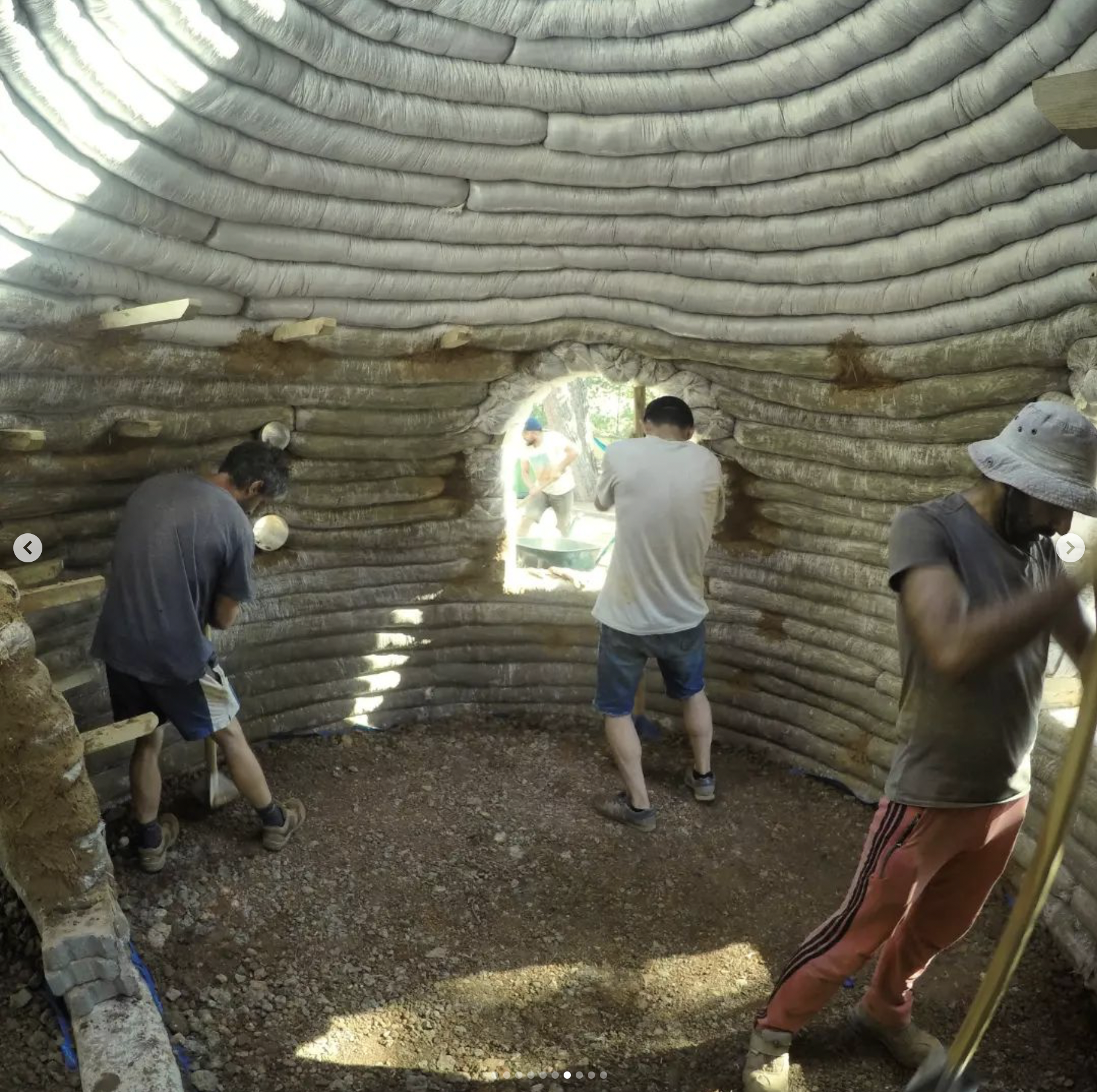
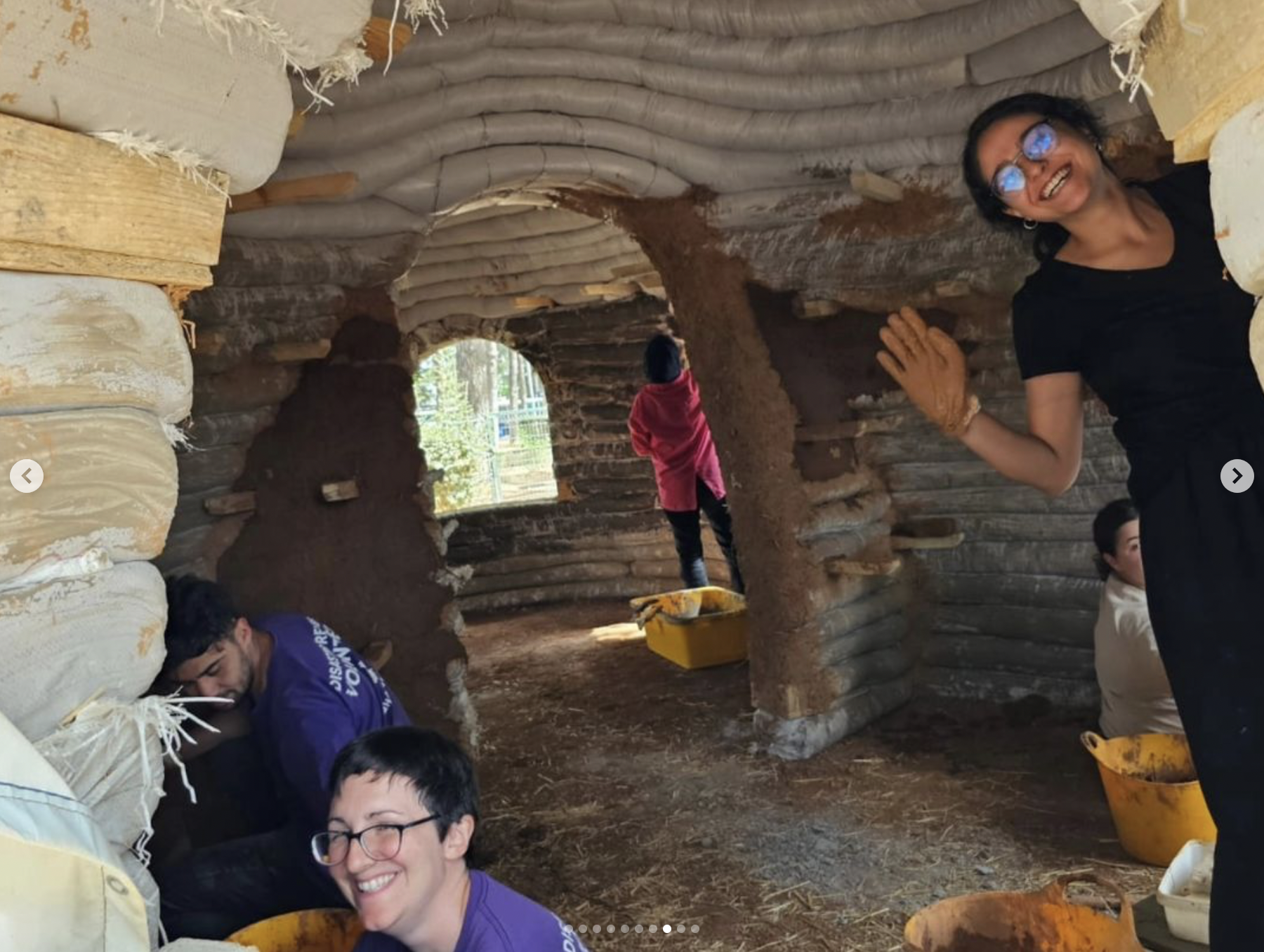
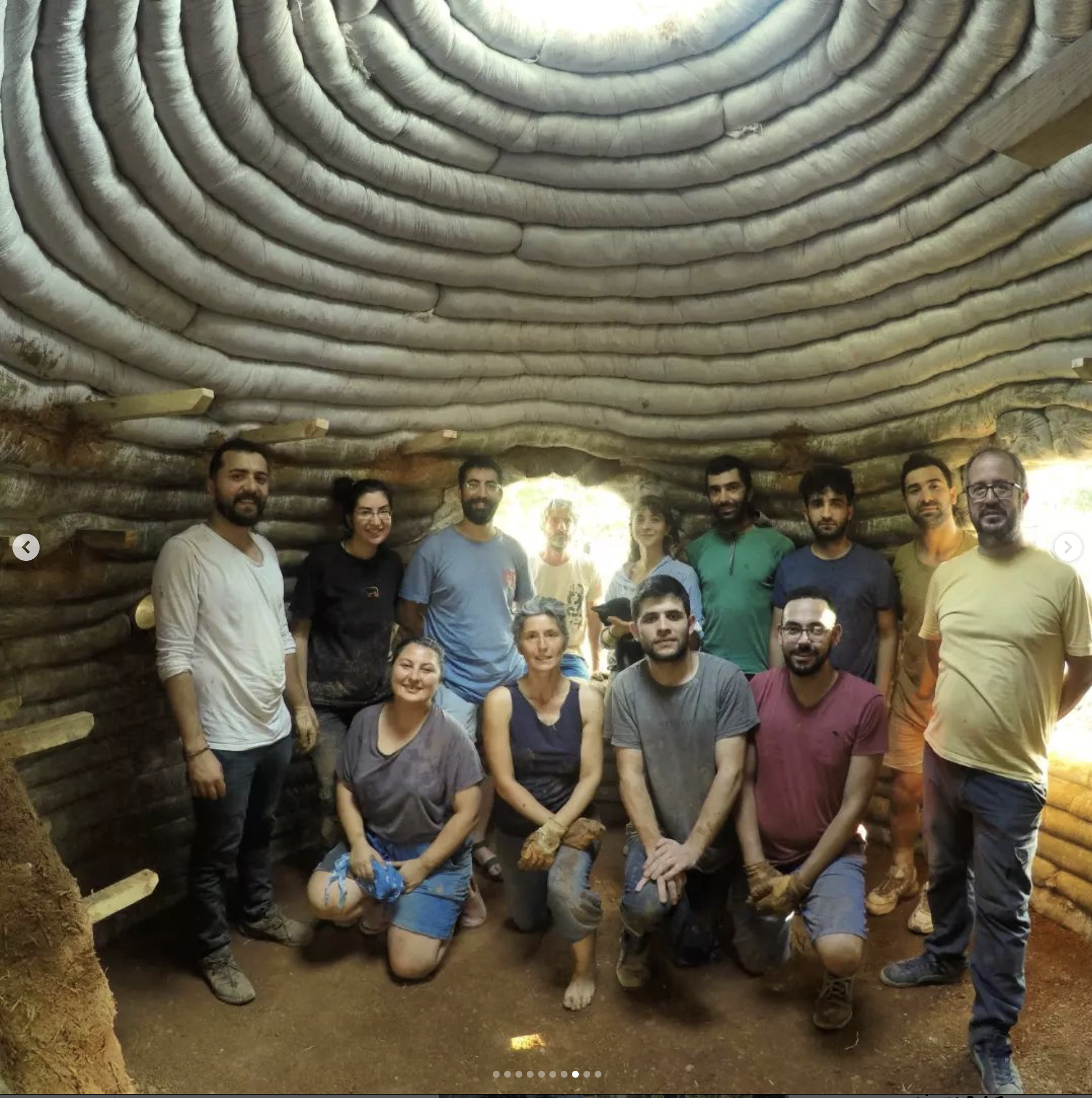
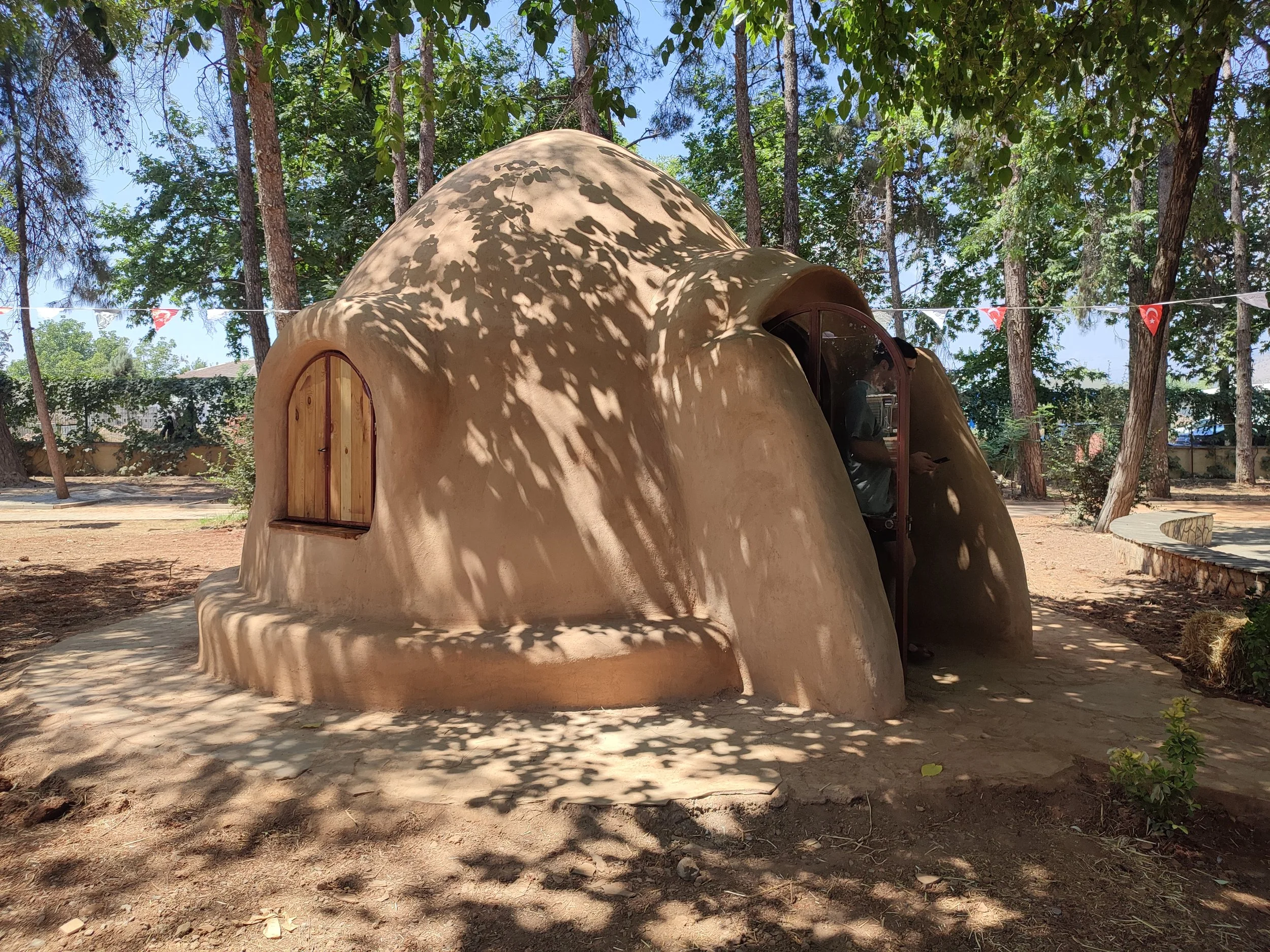
Super Adobe Children’s Library is an earthen building designed and built by HiM and Poçolana Works with the help of the Türkoğlu municipality, local residents and trades people, Koluba Kolectif, and All Hands. CalEarth Institute served as a consultant regarding the bioclimatic architectural criteria in the SuperAdobe Dome Design Guide. Faculty members from Istanbul Technical University and Izmir Institute of Technology provided soil testing. The structure functions as a public library, especially for children, and is used for workshops and educational purposes.
With their thermal mass effect and energy-efficient design approaches, these structures provide maximum thermal comfort indoors with minimal energy use. Because of the thick, interlocking monolithic walls, this technique is resistant to seismic activity and has been specifically developed for use in post-disaster areas. Developed in 1984 by architect Nader Khalili, the technique was inspired by Iran’s earthen architectural tradition. The accessibility of the material and low-tech construction methods enable the survivors to participate in the production, maintenance, and repair of these spaces during reconstruction, playing a significant role in sustainability.
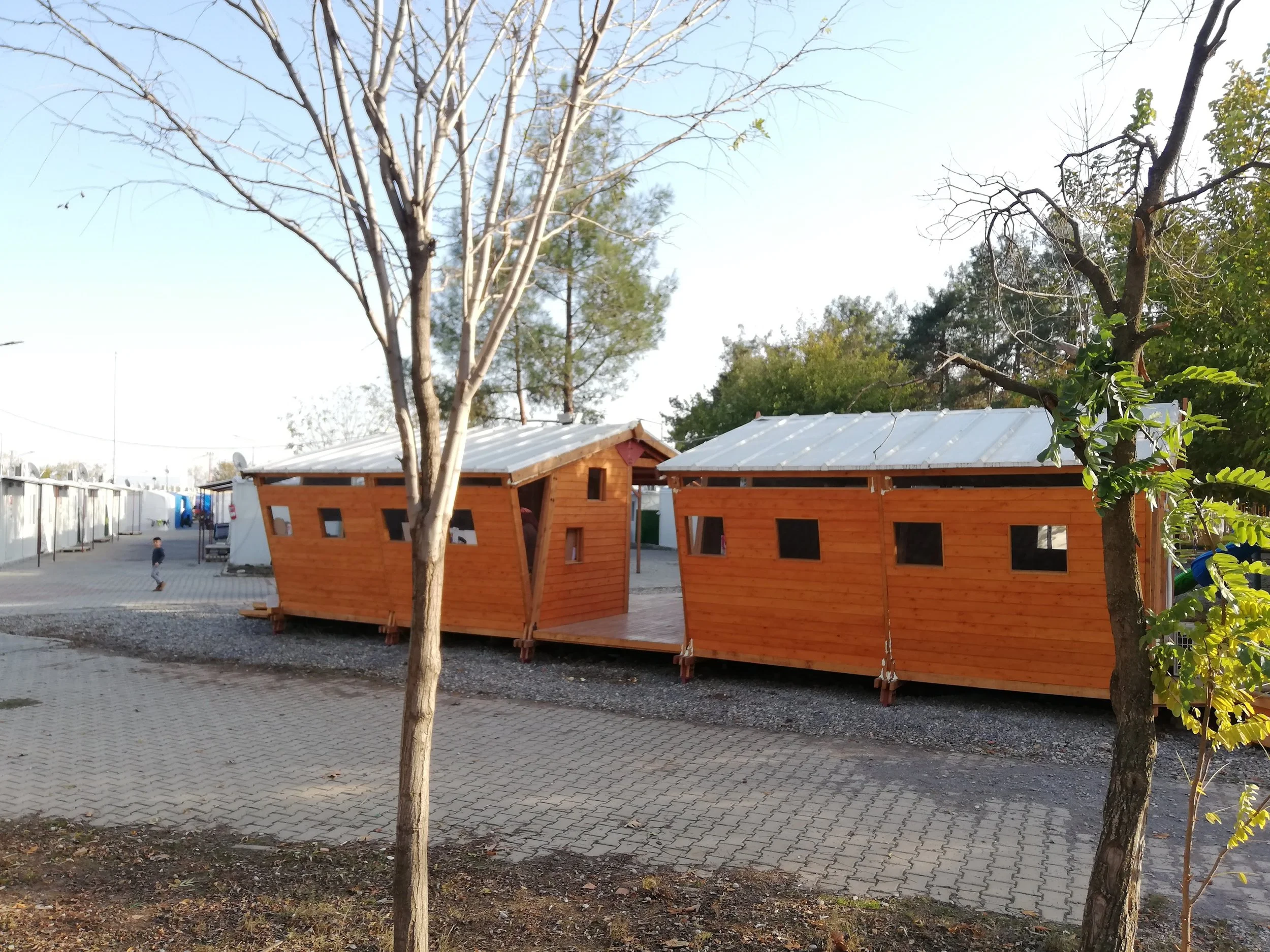
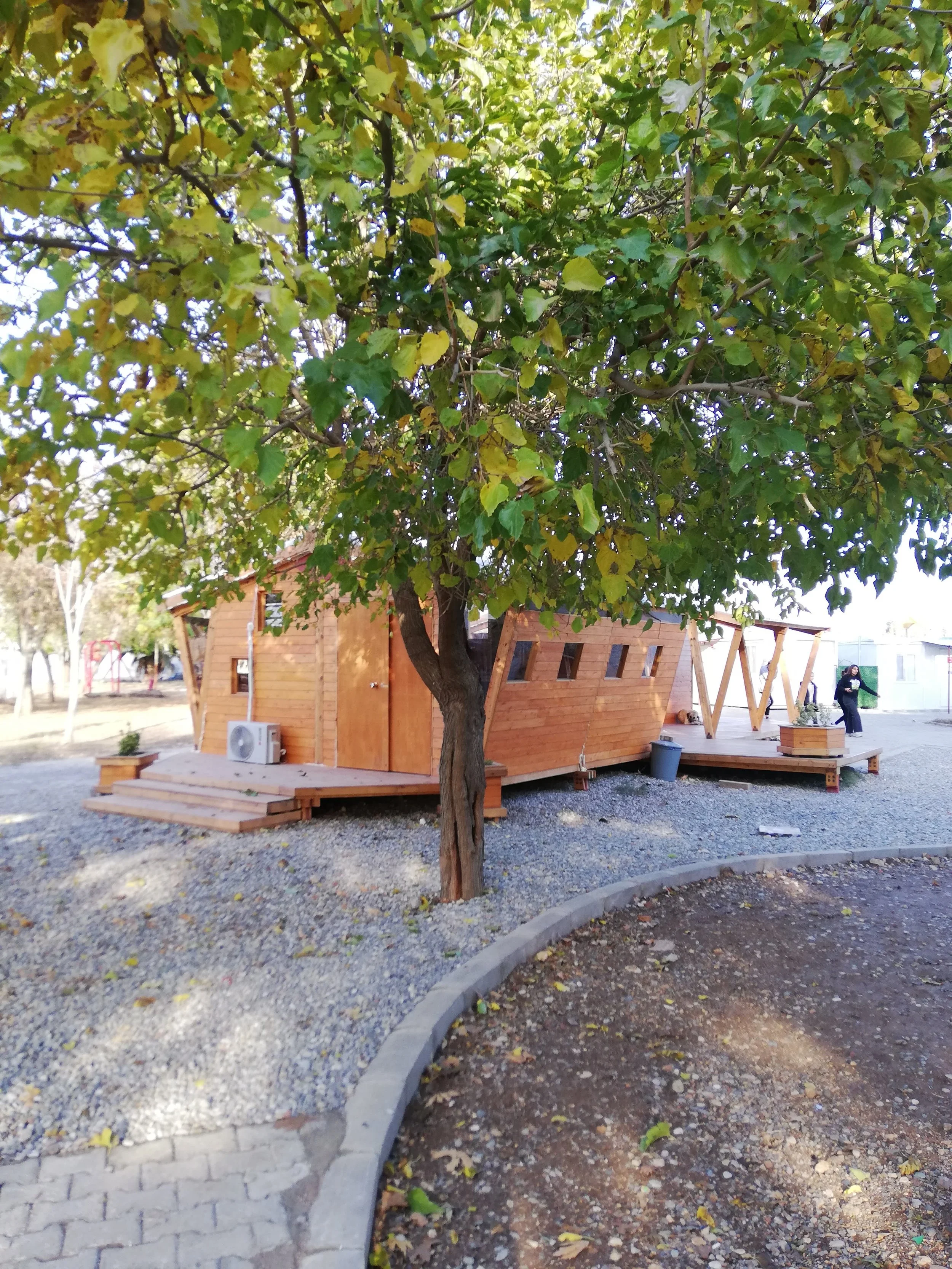
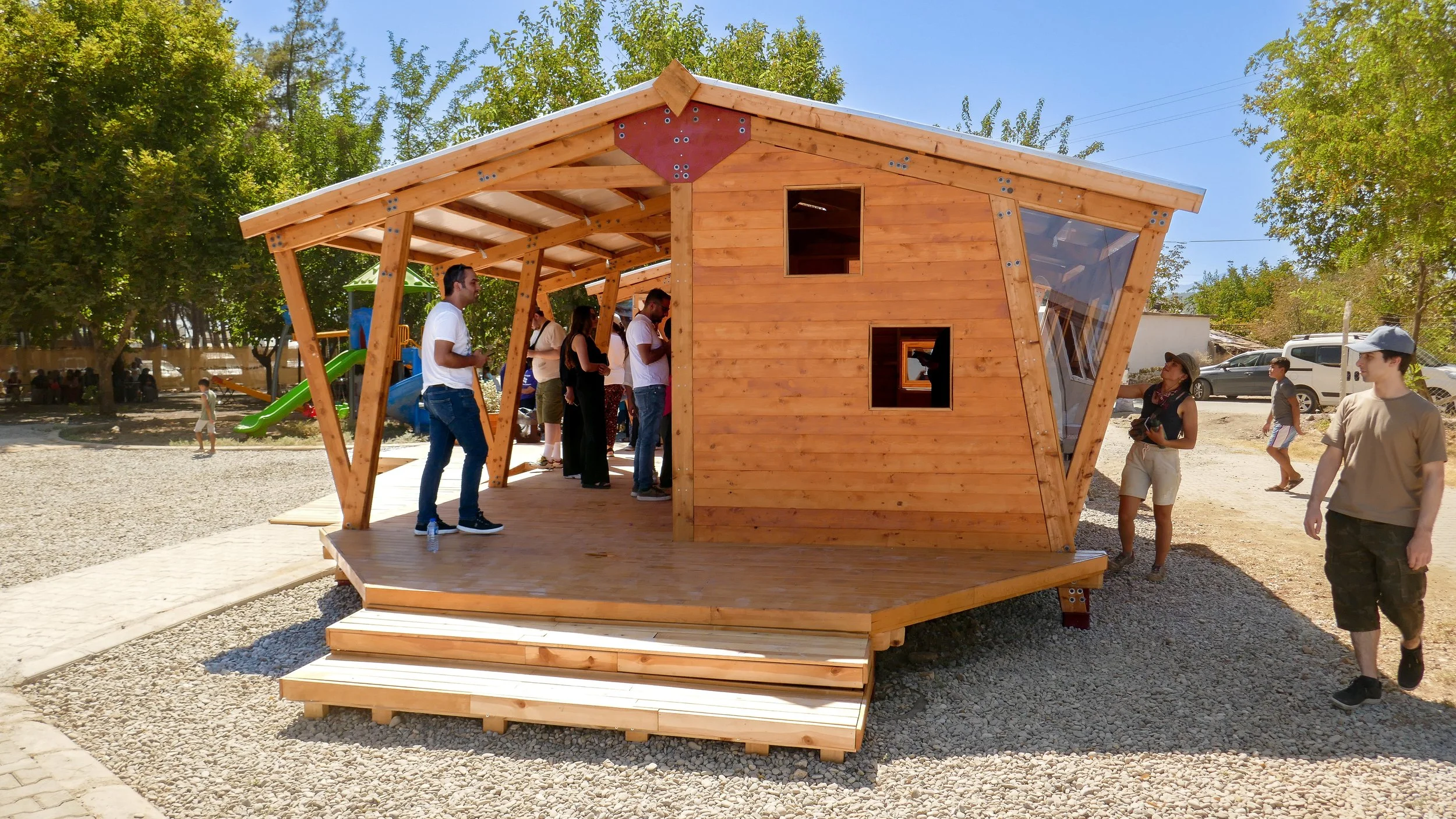
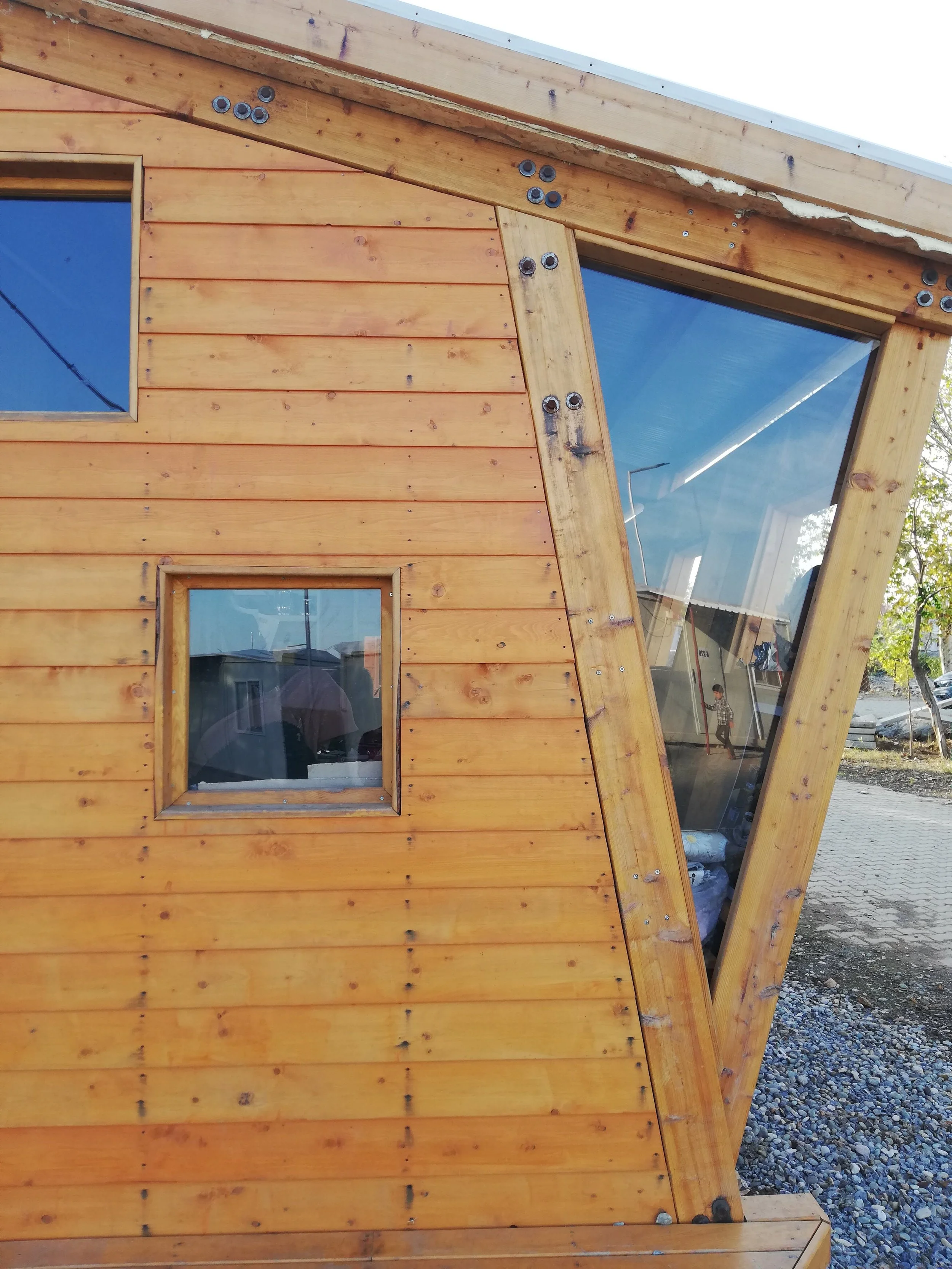
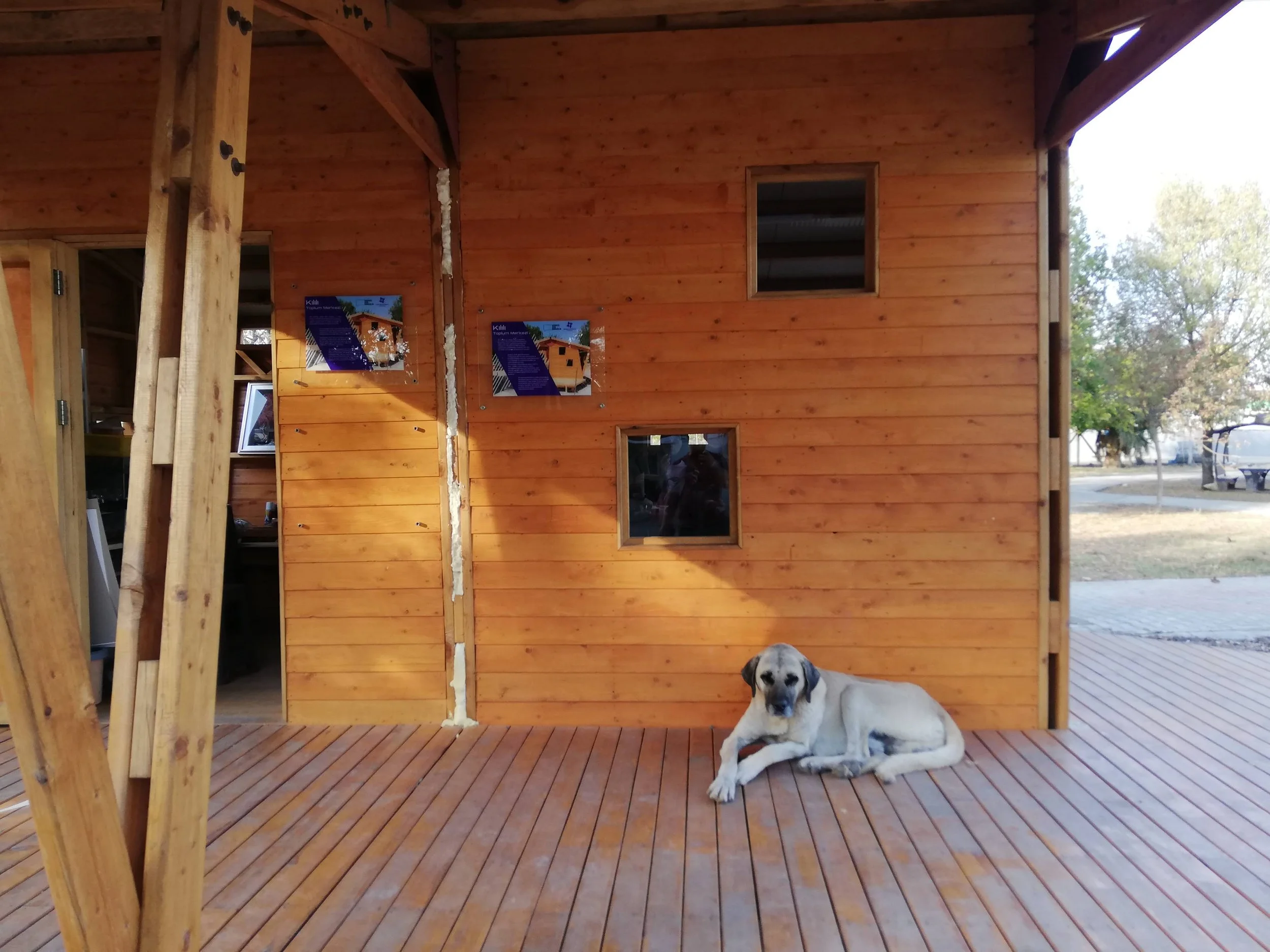
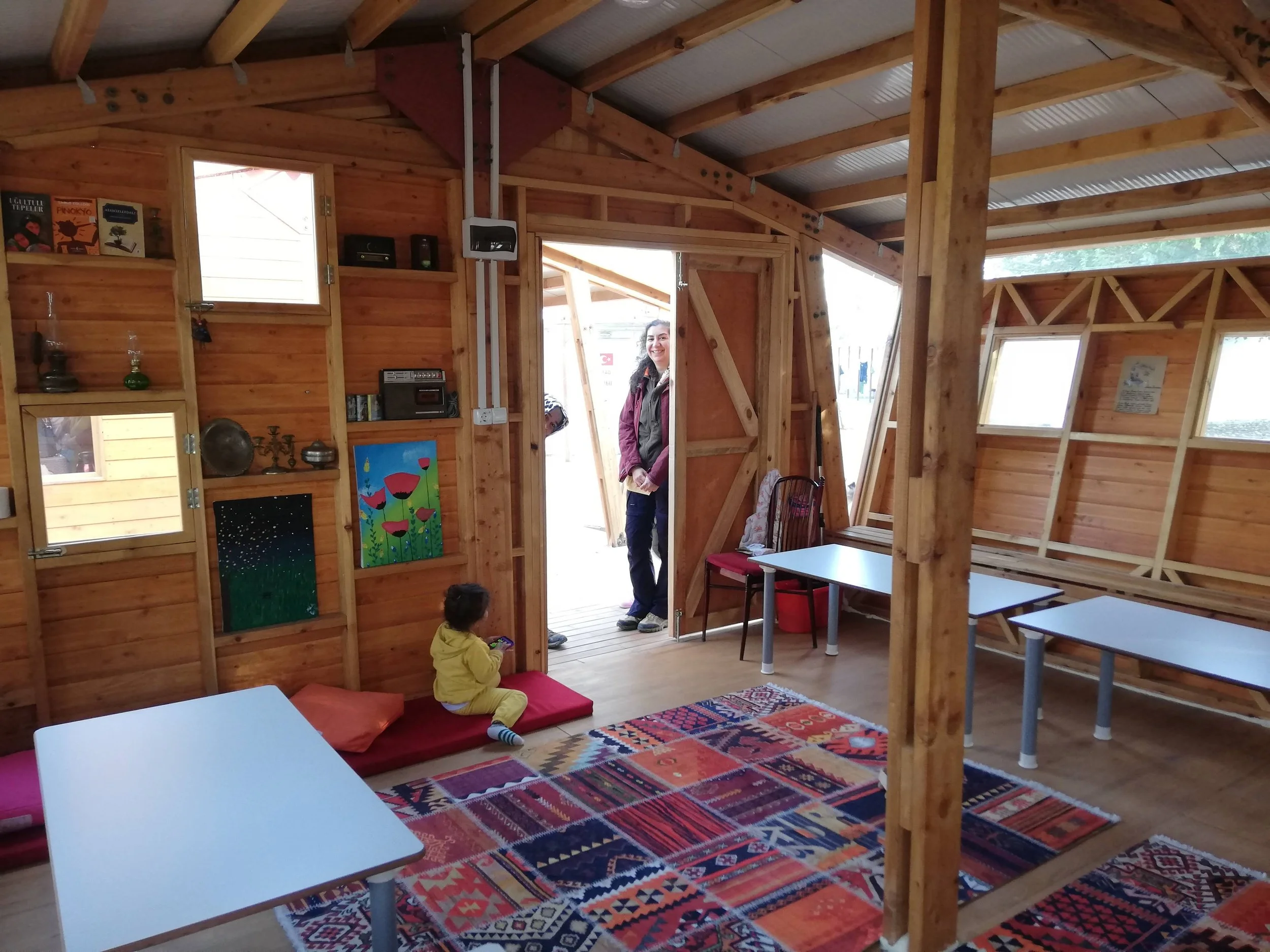
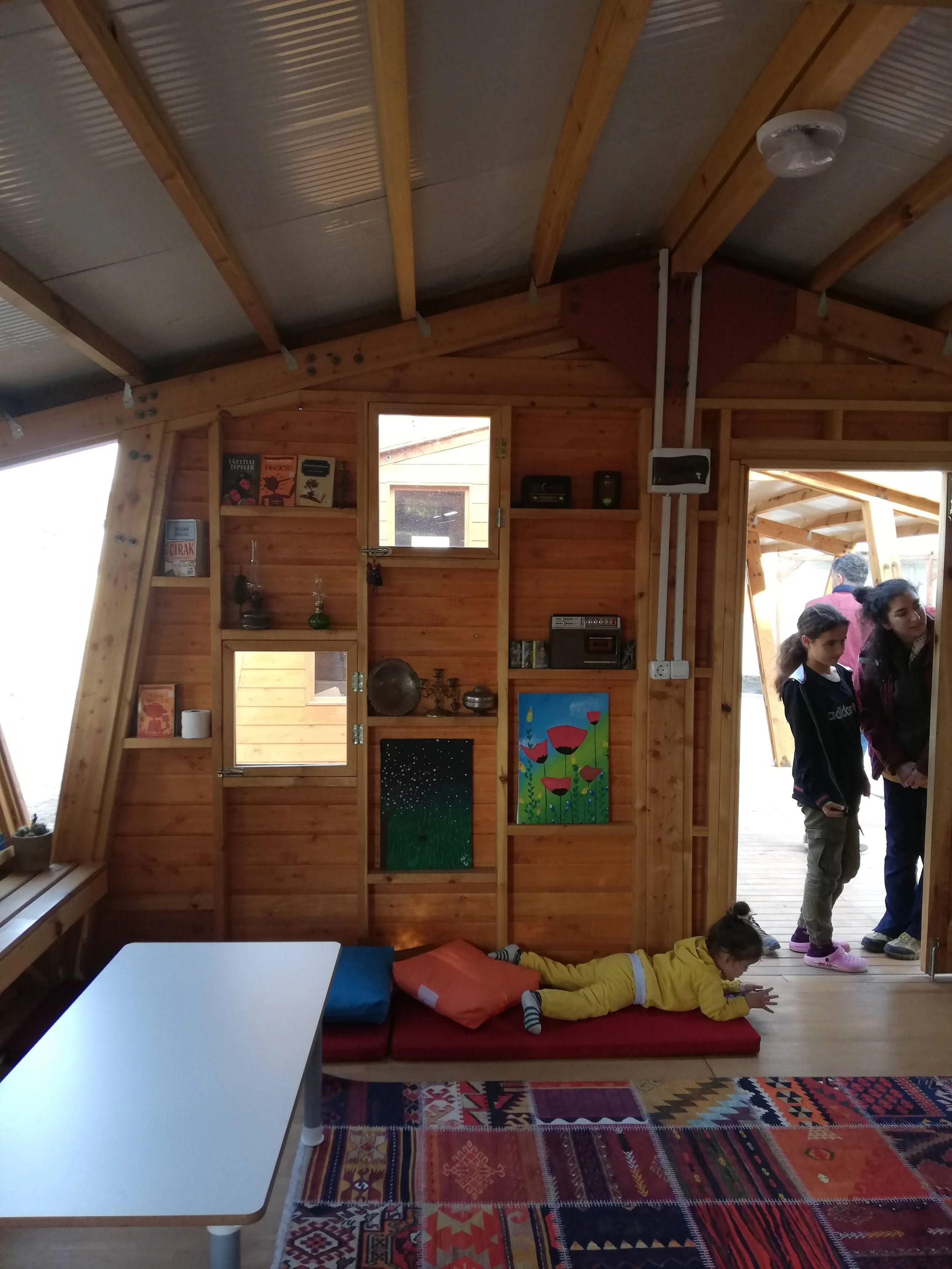
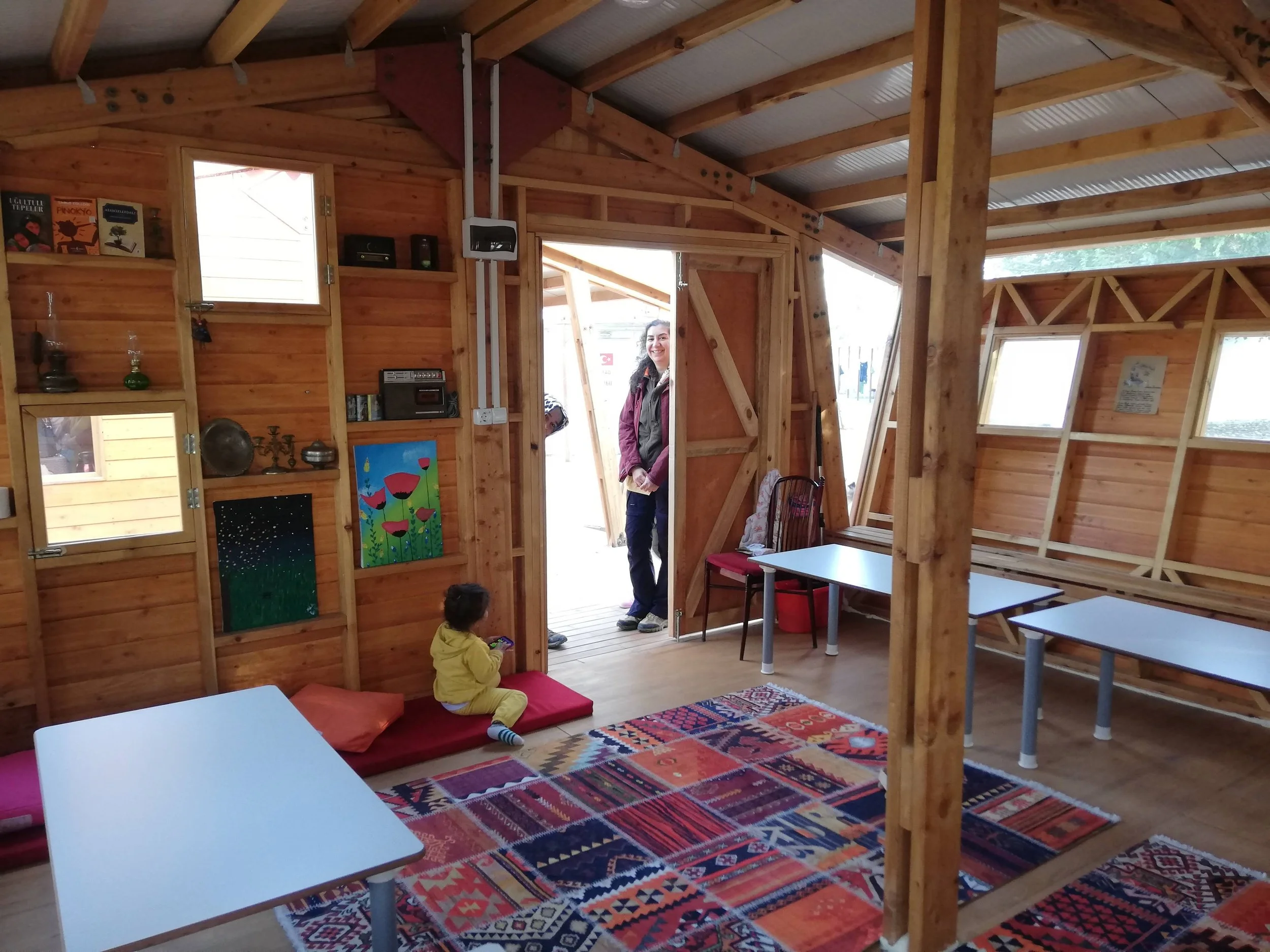
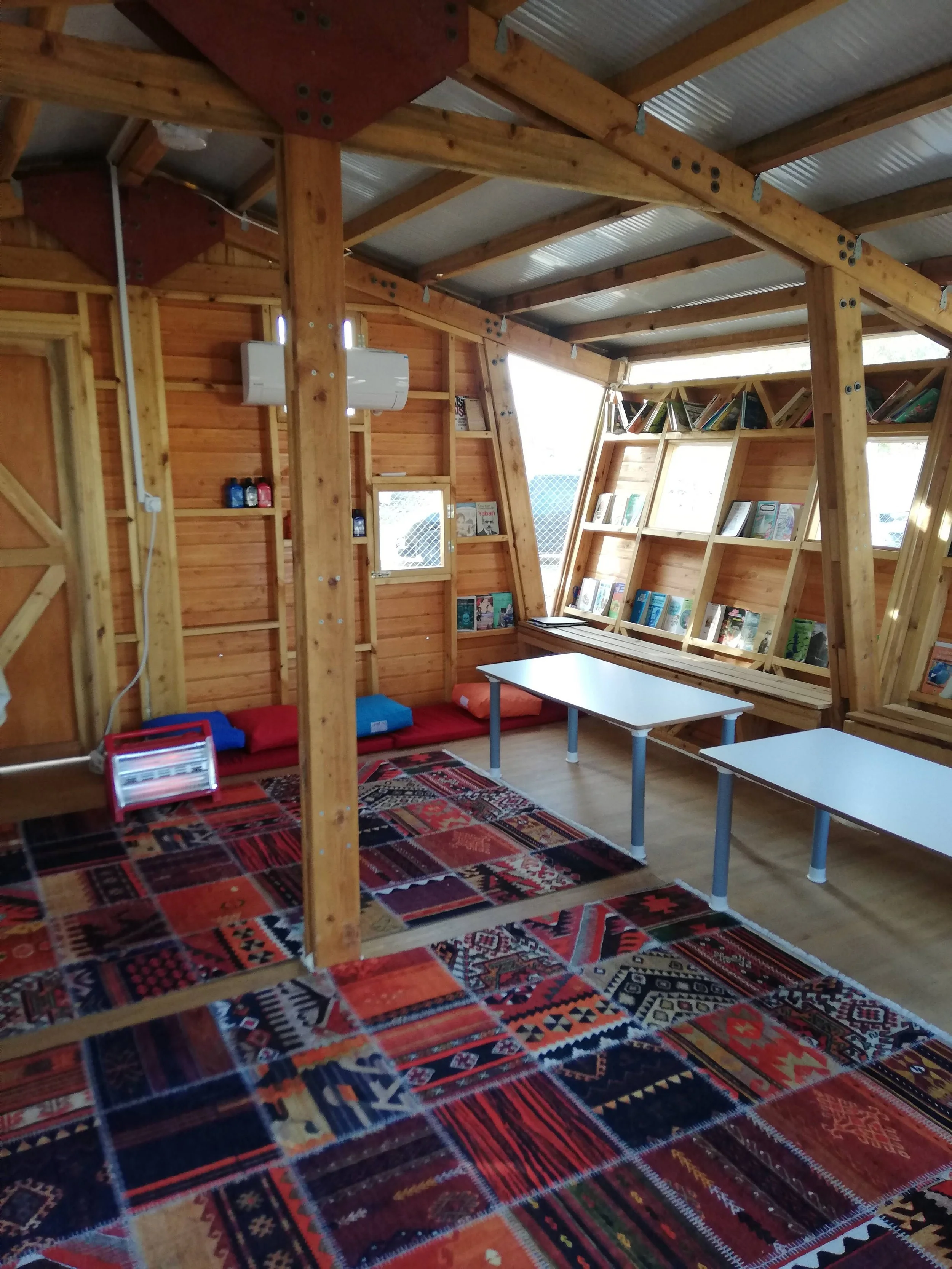
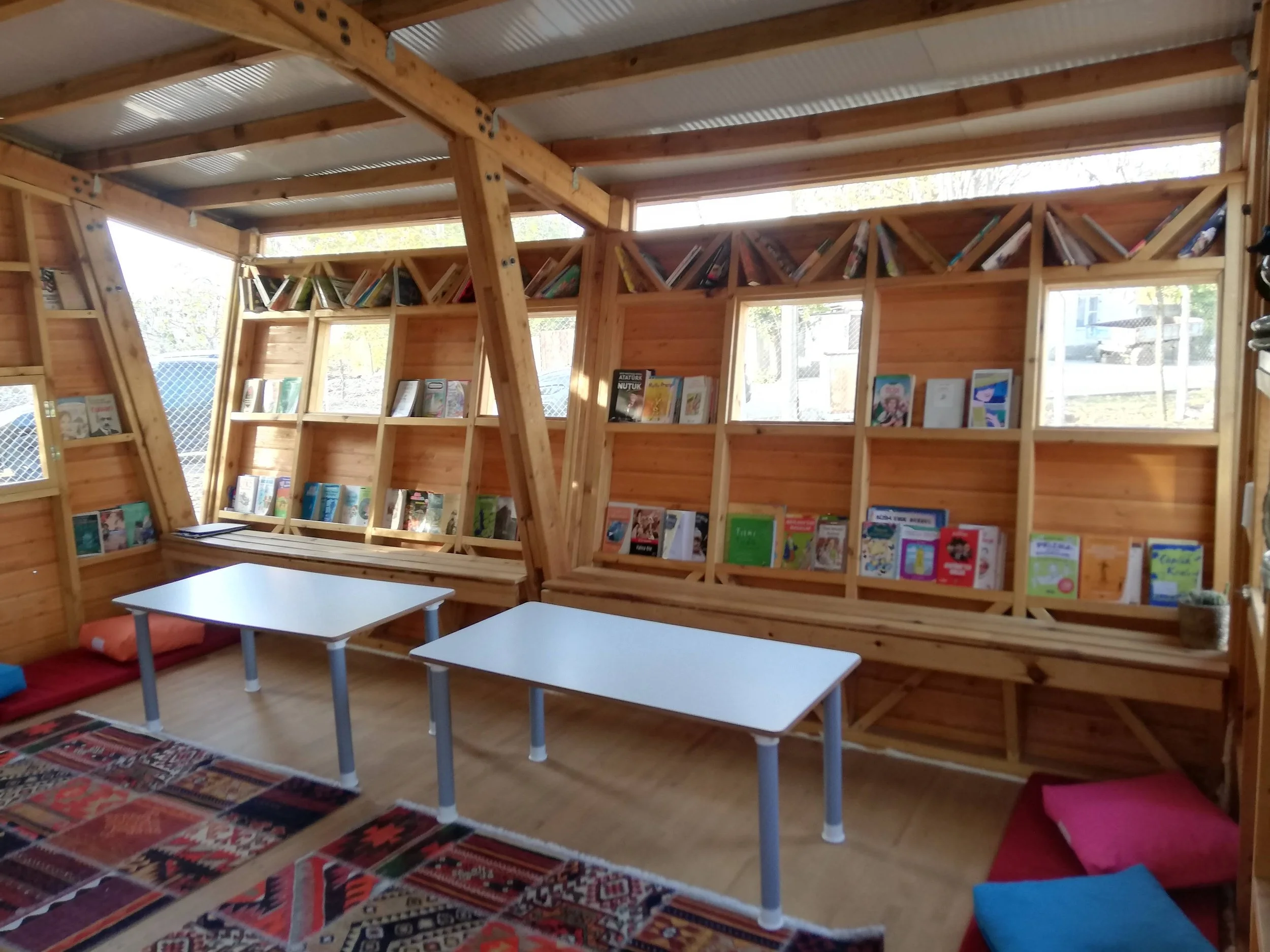
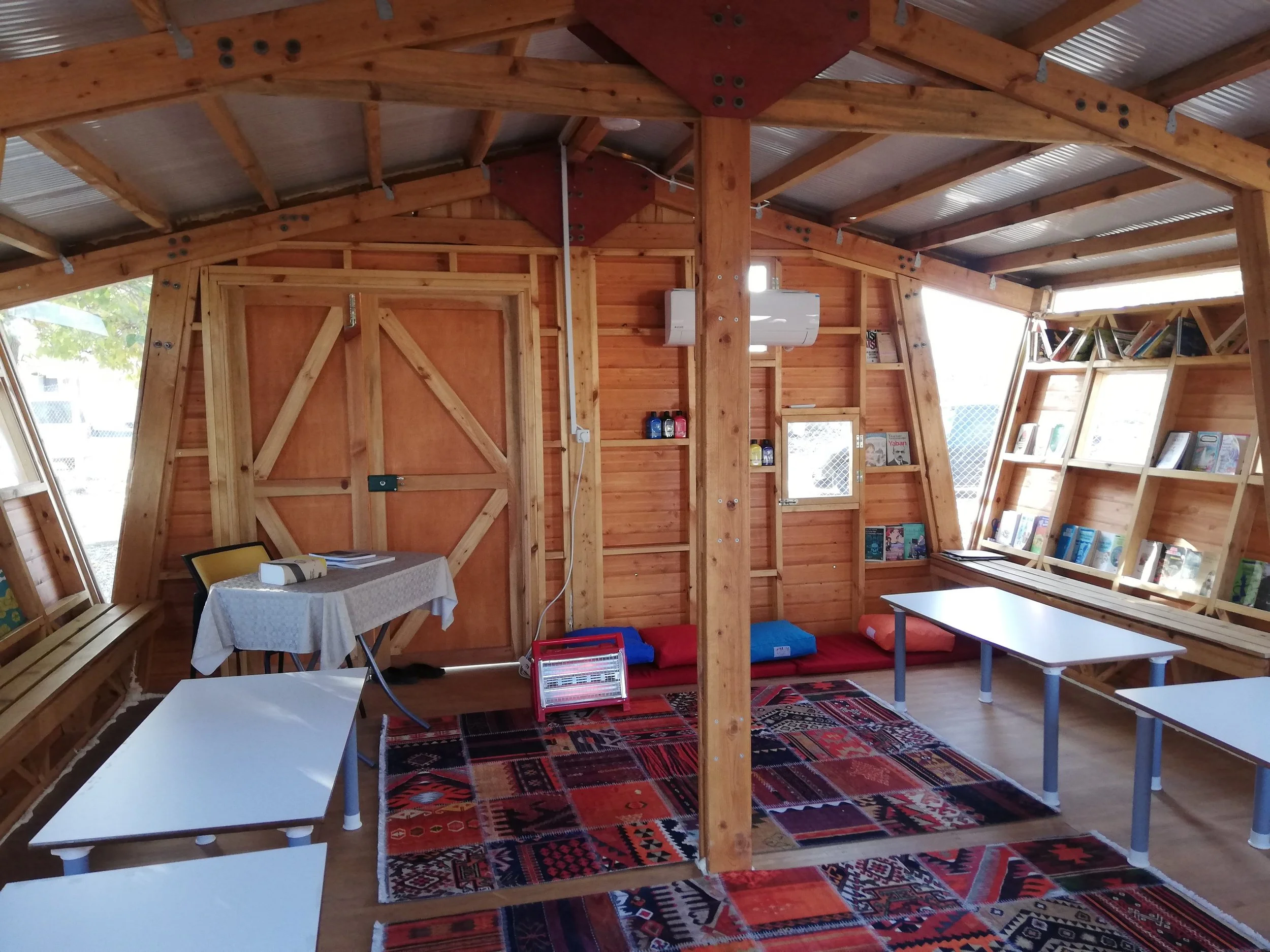
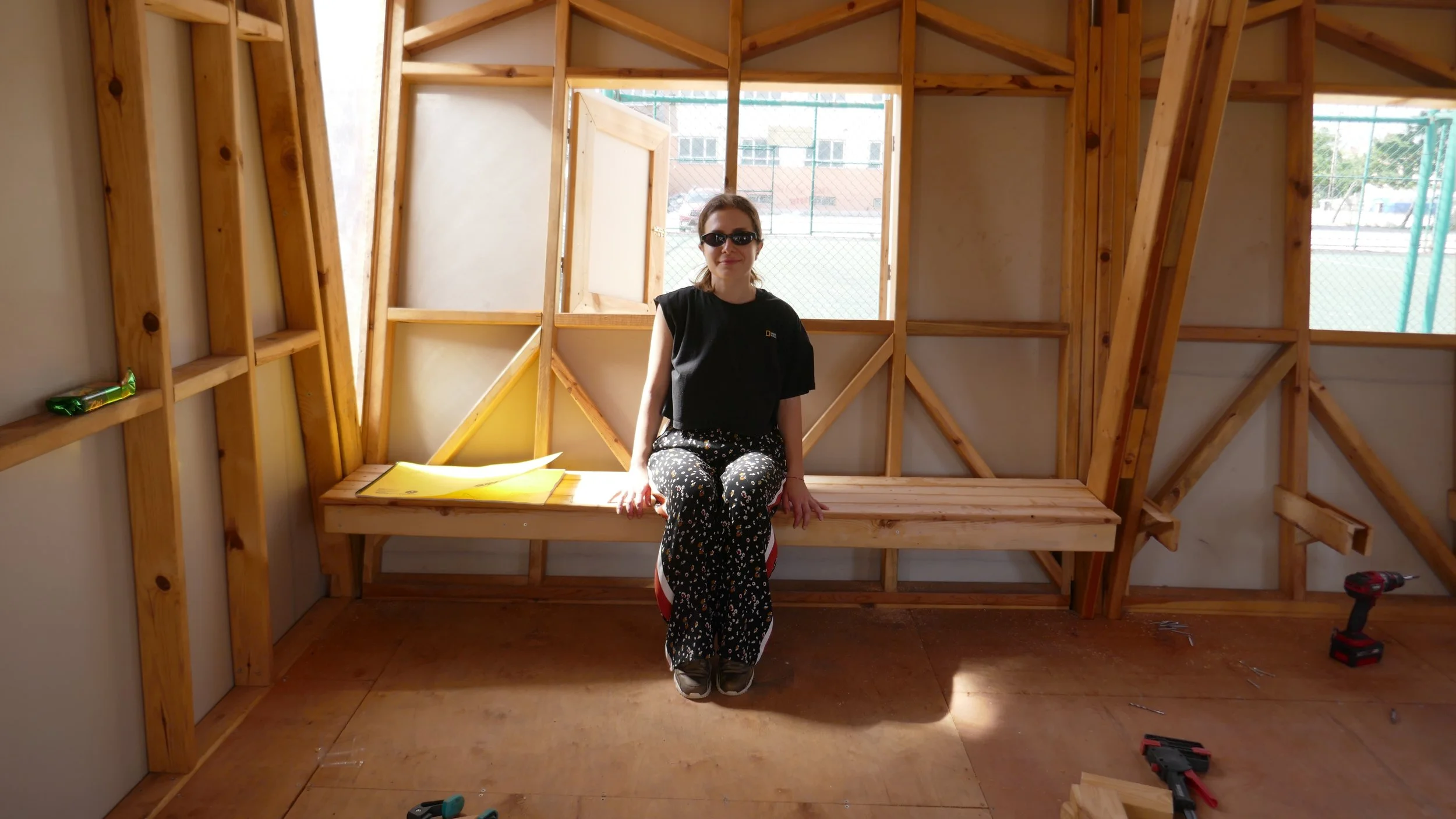
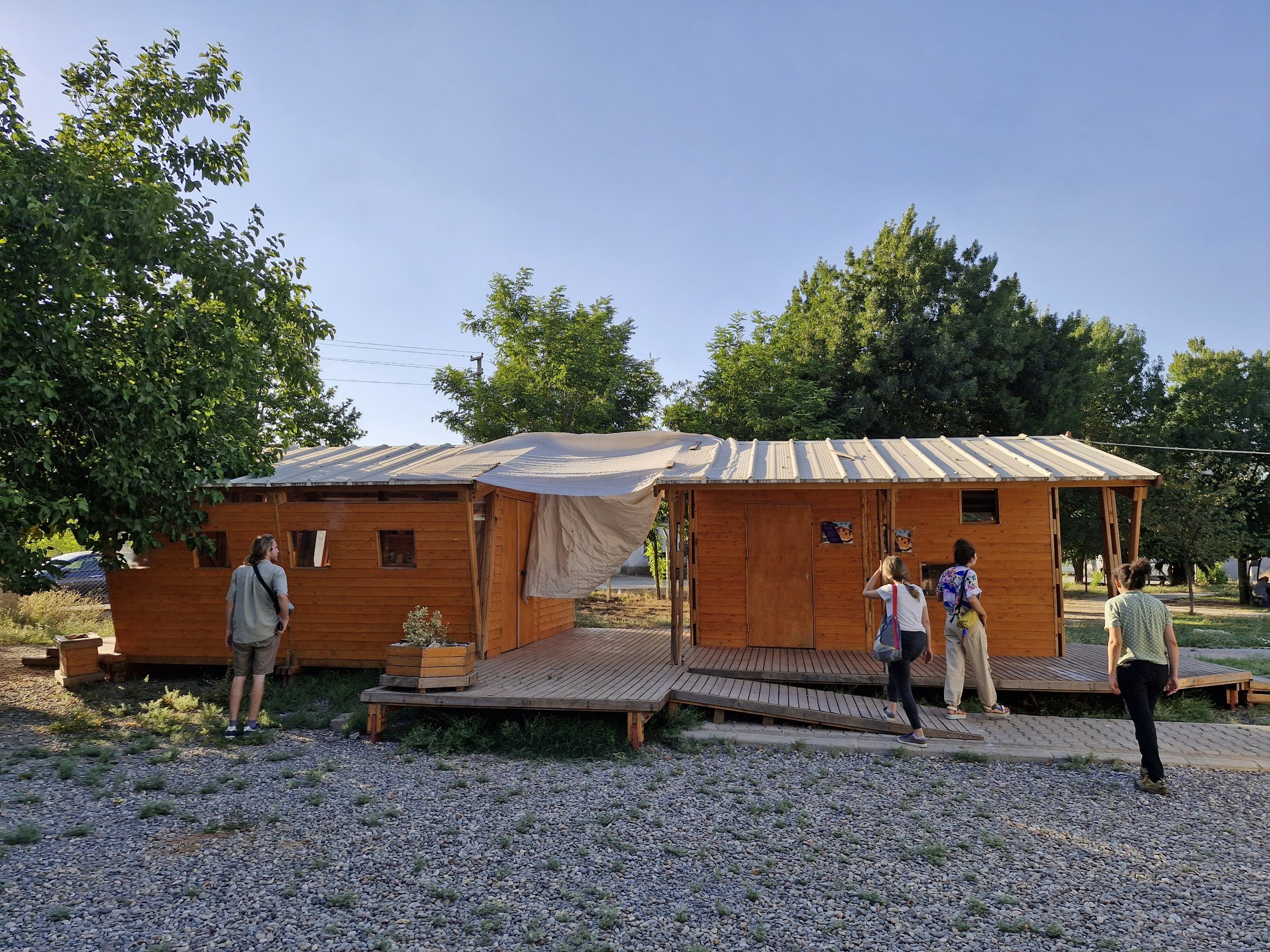
Removal of the Sümer Community Space and a Second Space
Unfortunately, by the fall of 2023, the municipality decided to remove the Sümer Community Space, citing security issues. HiM later learned that while the building was taken down, the masons who came to disassemble the structure were so impressed by the design and application that that they reassembled it as a construction site office at a container city in a nearby municipality. This provided some comfort to those who had endured so much to bring this space to life – restored because of the craftsmen’s awareness and because the design was suitable for dis- and re-assembly.
Despite this setback, All Hands stayed on with HiM to build a second community center in a container city in the Türkoğlu Municipality. By adding another frame to the initial design, the small indoor area of the building increased to 12 sqm and a second event space was also built. Other changes were made to the design and other materials were also used. The building, embraced by the principal of the nearby school who is also the administrator of the container city, is actively used to this day. Though the collaboration was successful and the center was built, All Hands departed at the end of September, not long after the Kaf Kolektif team returned to Istanbul, having faced resistance which we hope to discuss during the exhibition.