
Ankara, Türkiye
Urgent Design Studio (Acil Tasarım Stüdyosu)
Middle Eastern Technical University (METU) / Orta Doğu Teknik Üniversitesi (ODTU)
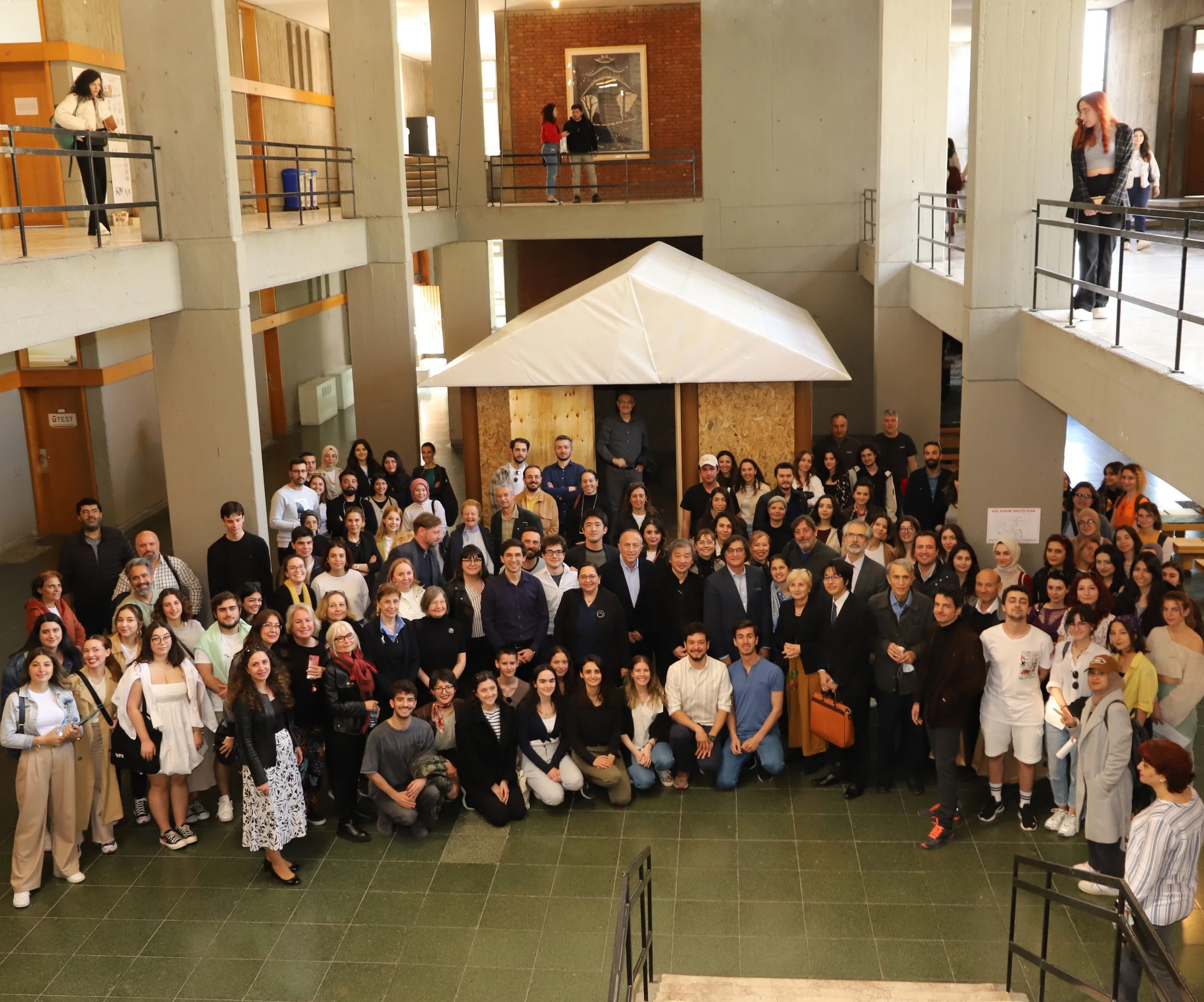
Established as a voluntary initiative at Middle East Technical University (METU) following Türkiye’s February 2023 earthquakes, Urgent Design Studio (UDS) brought together volunteers from different educational backgrounds, ranging from first-year undergraduate students to Ph.D. candidates and academics. The studio focused on developing temporary spatial solutions for disaster-affected regions.
UDS has since grown into a multidisciplinary network of volunteers and experts, providing a non-hierarchical platform for collaborative learning and production. Through the contributions of numerous individuals, institutions, and organizations, the initiative has incorporated a broad range of perspectives and areas of expertise. Its works include easy-to-install hygiene cabins, PPRC tents, animal shelters, a community park design, and temporary post-disaster housing solutions such as the Wooden Housing Unit and the Paper Log House (designed by Shigeru Ban Architects and the Voluntary Architects’ Network (VAN) and adapted by UDS).
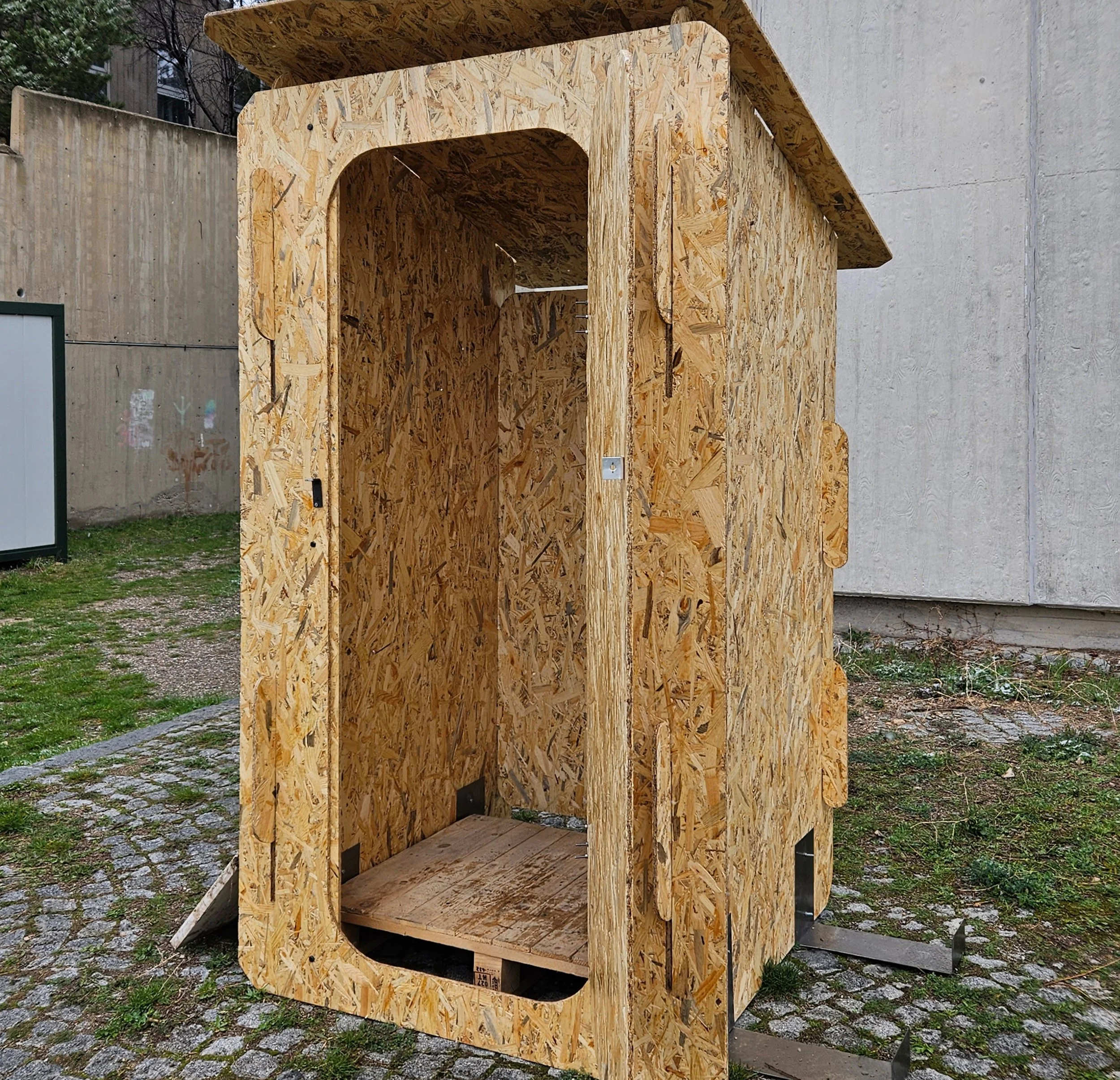
Hygiene Cabin
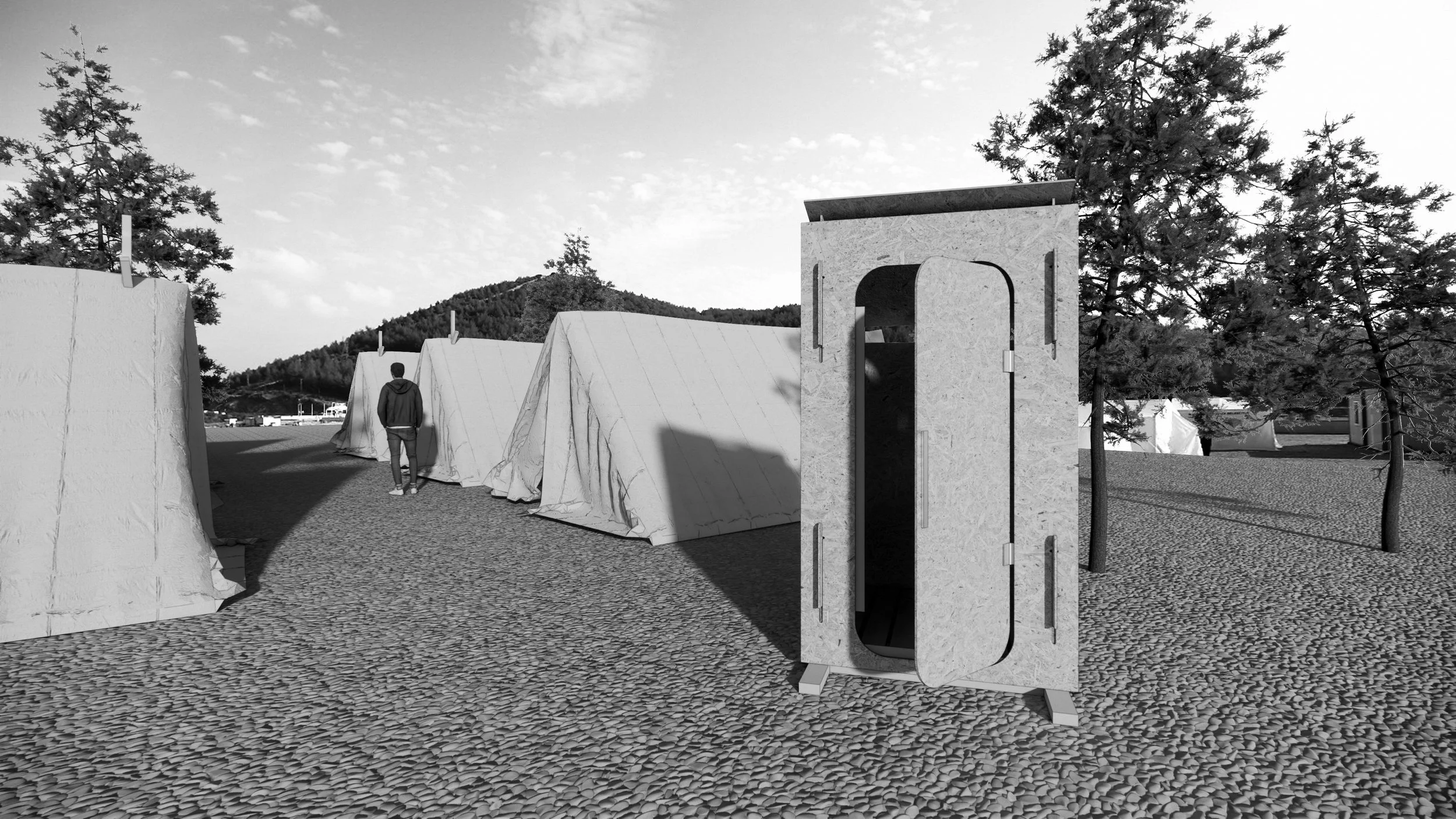
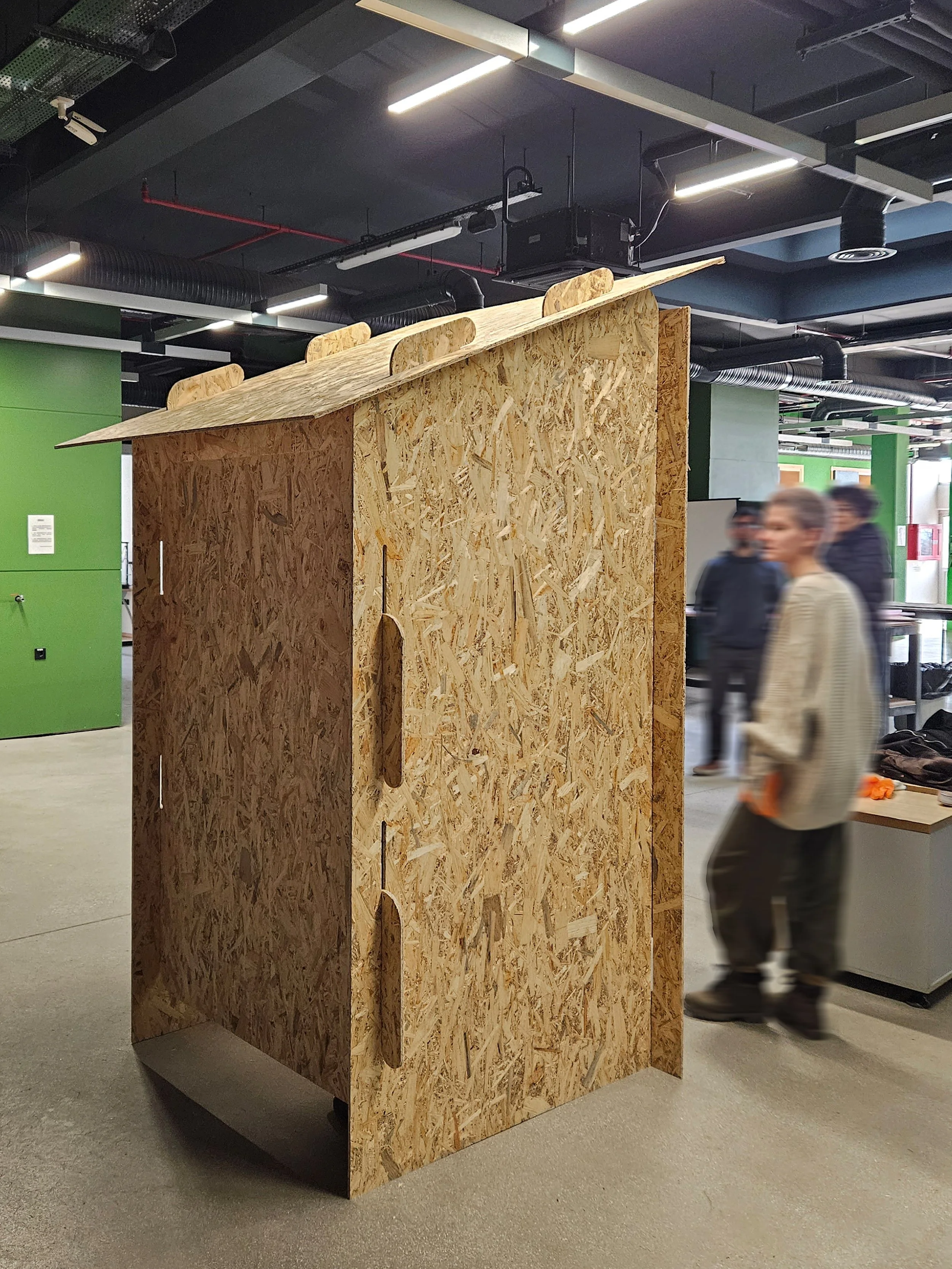
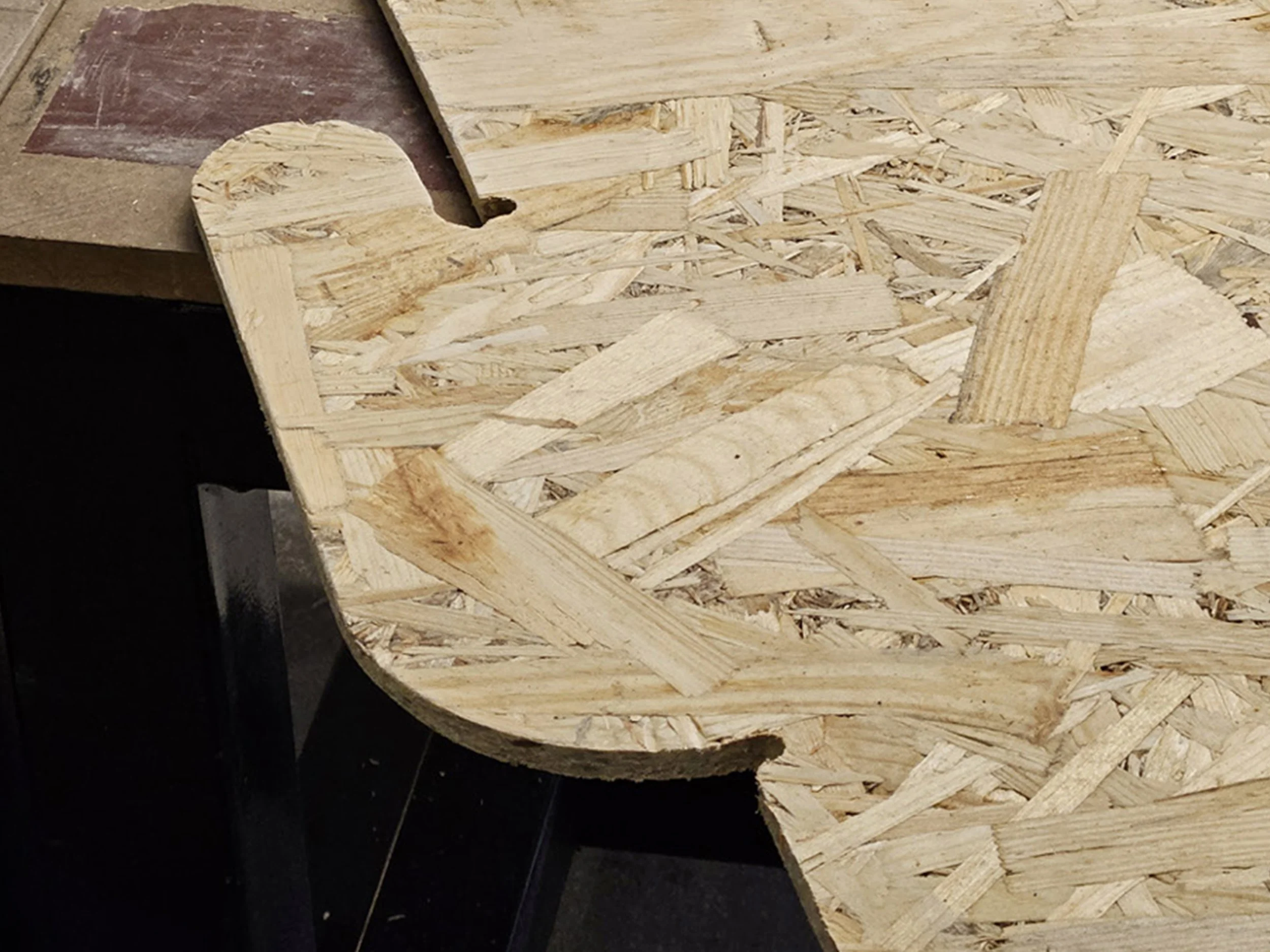
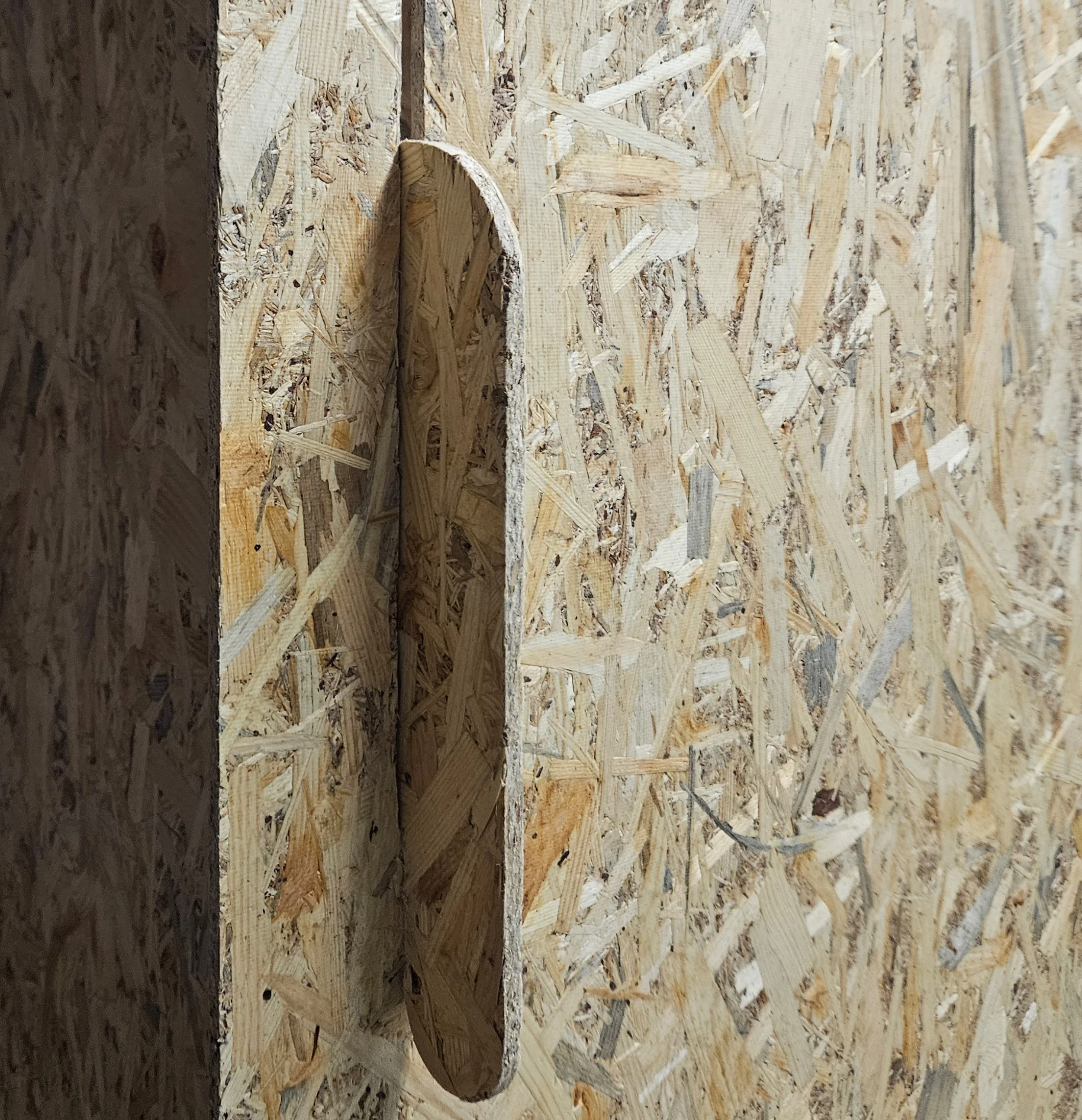
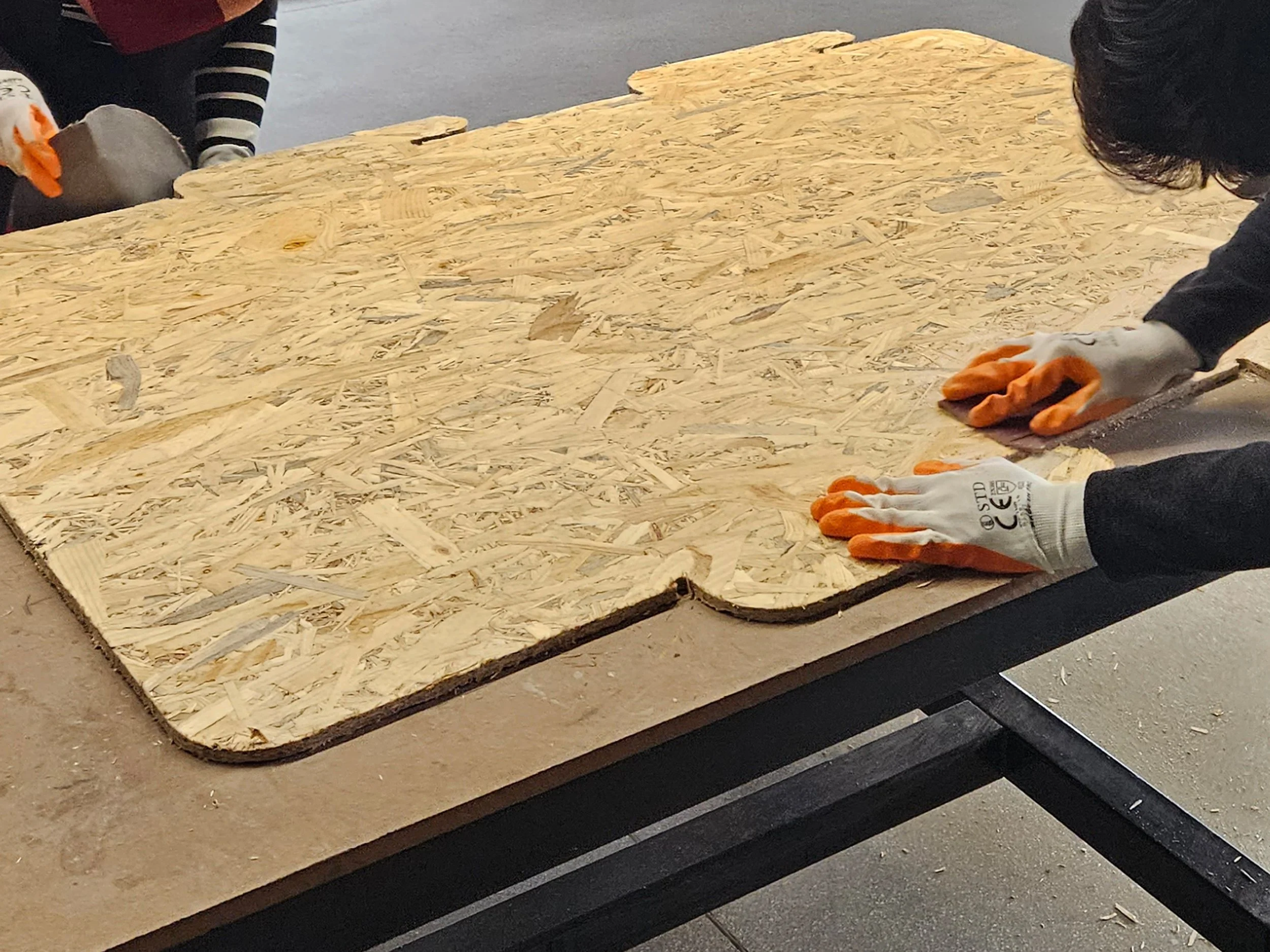
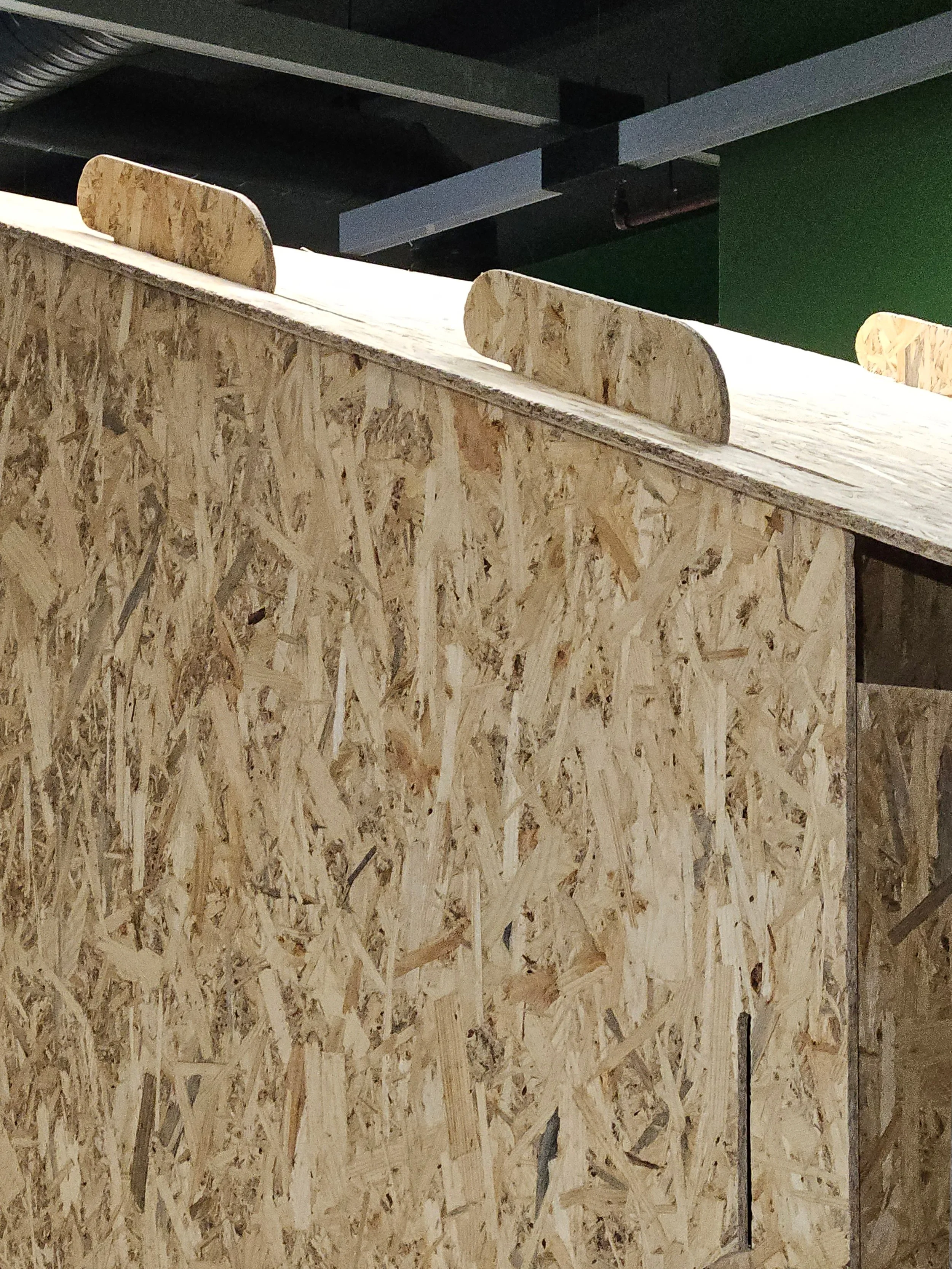
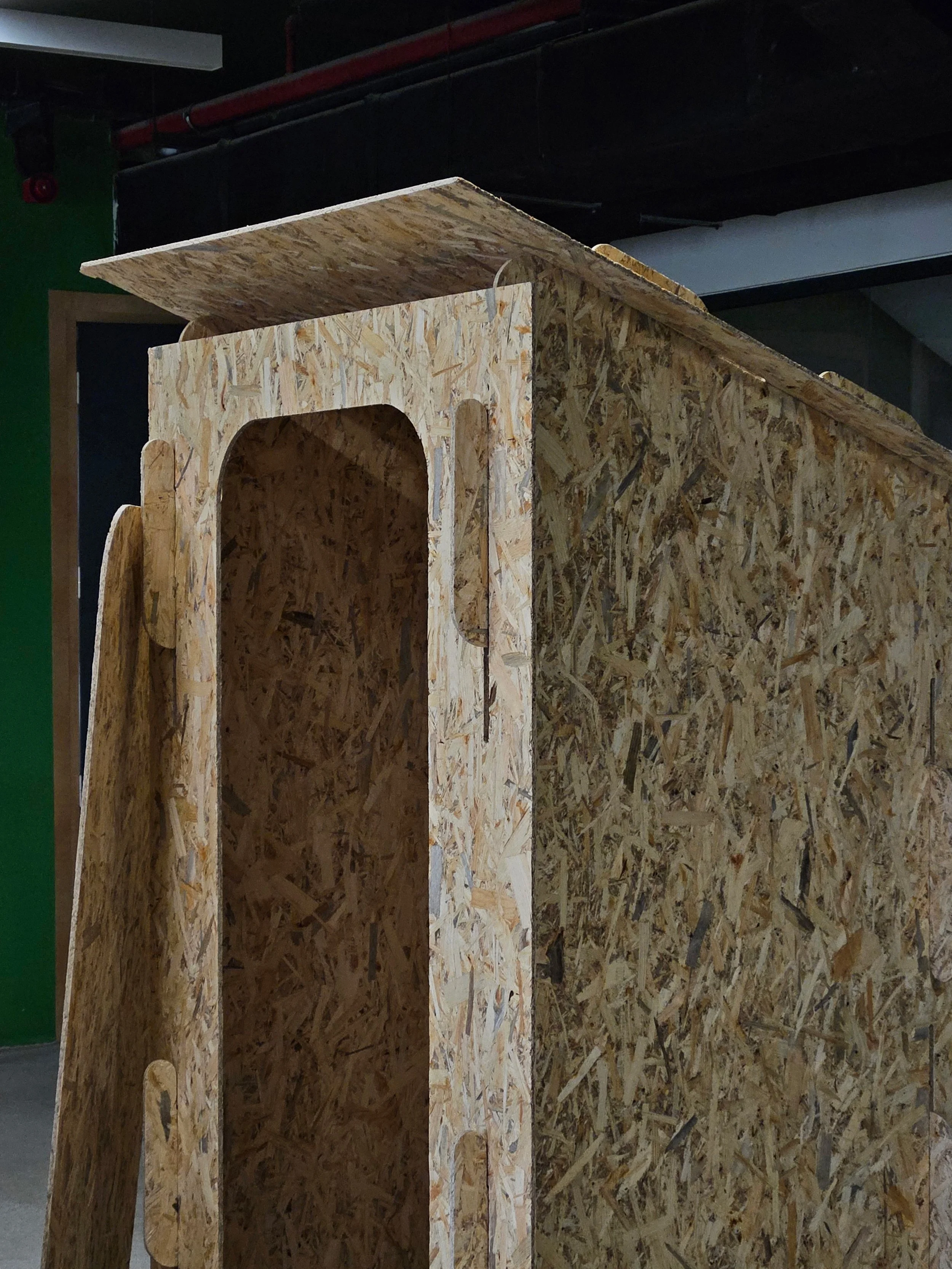
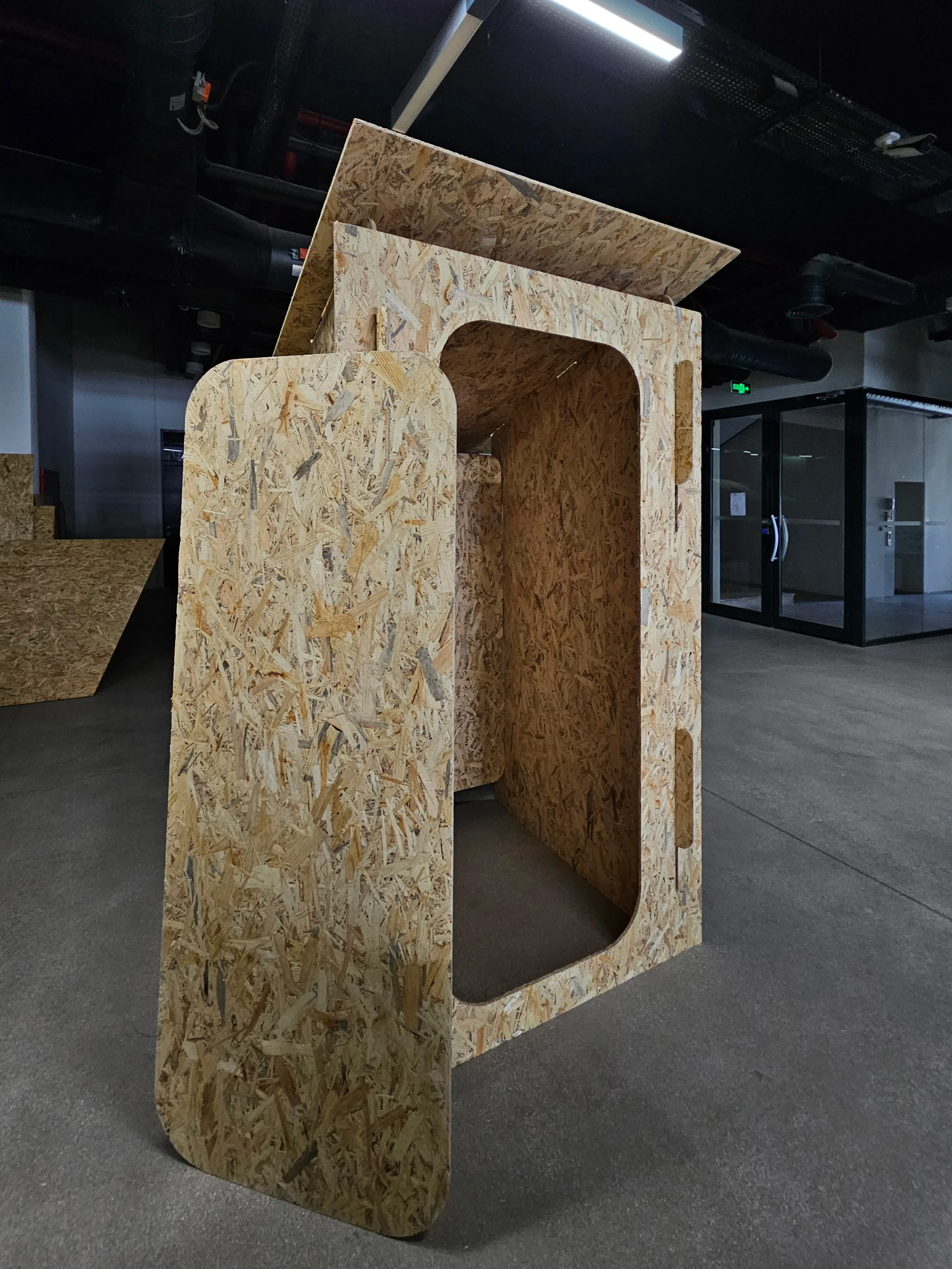
The Hygiene Cabin was developed as an early response to the need for sanitation infrastructure. As damaged plumbing systems made conventional toilets unusable, the project adopted the principles of a field-type dry toilet. A compact, modular structure, the cabin can be transported and stored using minimal space. Its interlocking system allows installation, dismantling, and relocation with little equipment. Three people can assemble the cabin in approximately ten minutes. Operating independently of plumbing infrastructure, the cabin can be installed above a shallow pit and relocated once the pit reaches capacity. This extends its service life while avoiding additional construction.
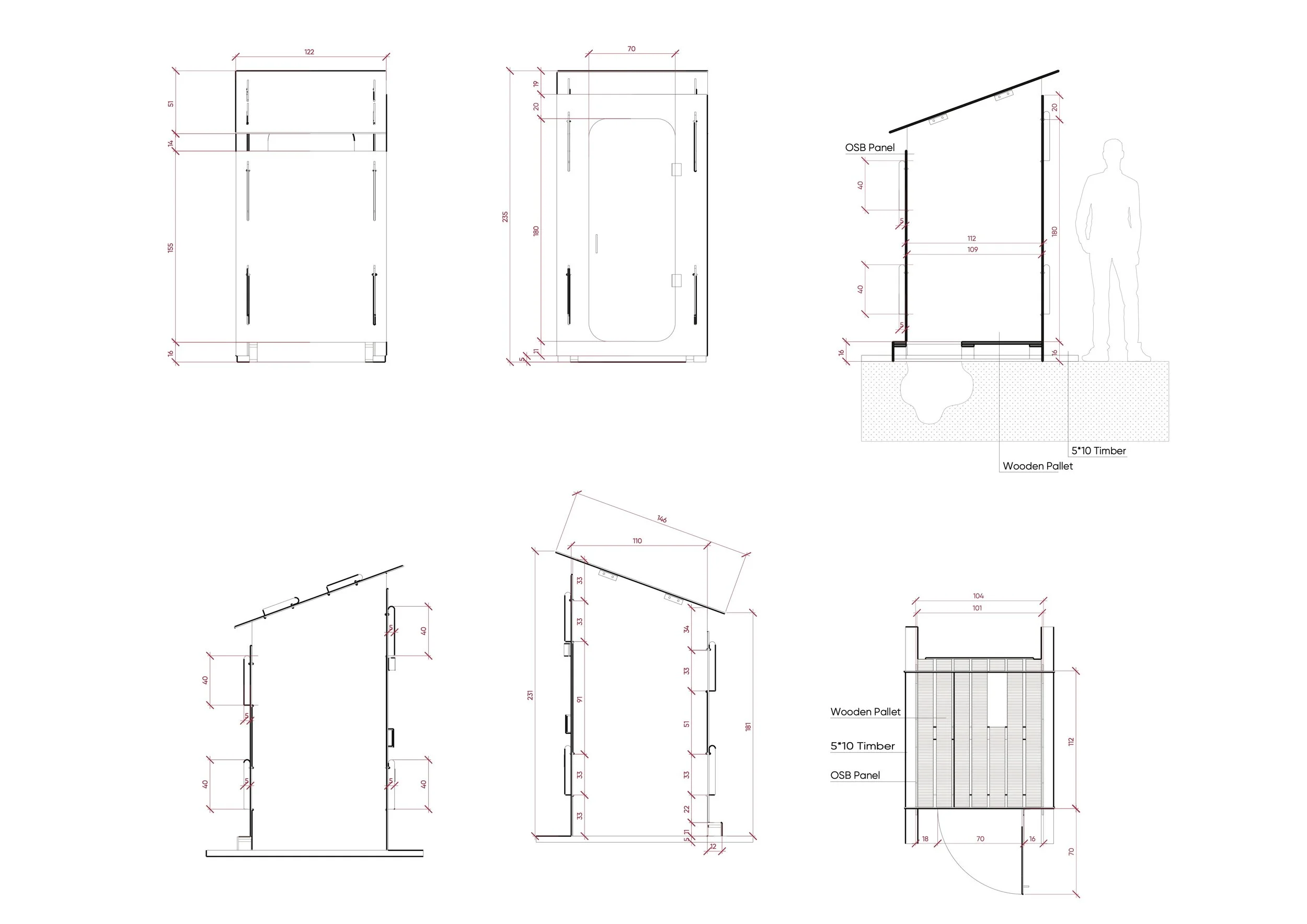
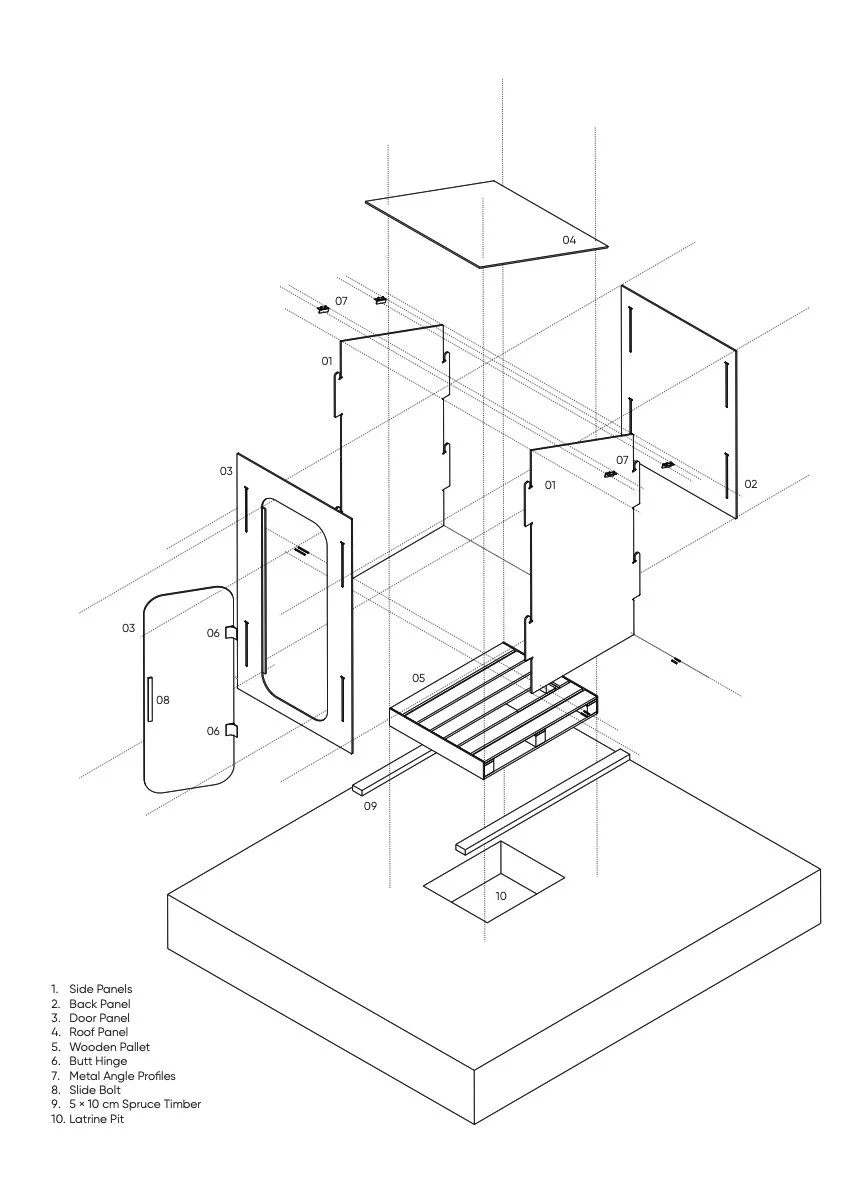
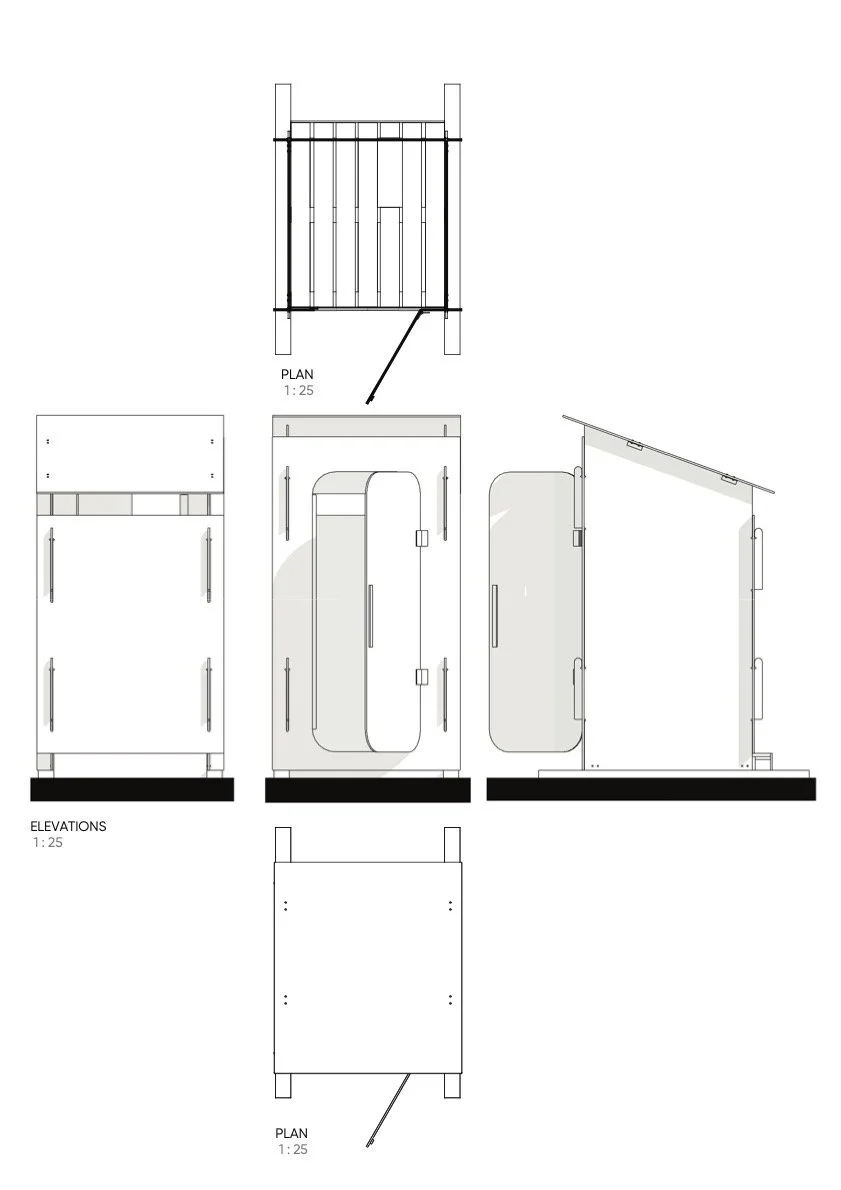
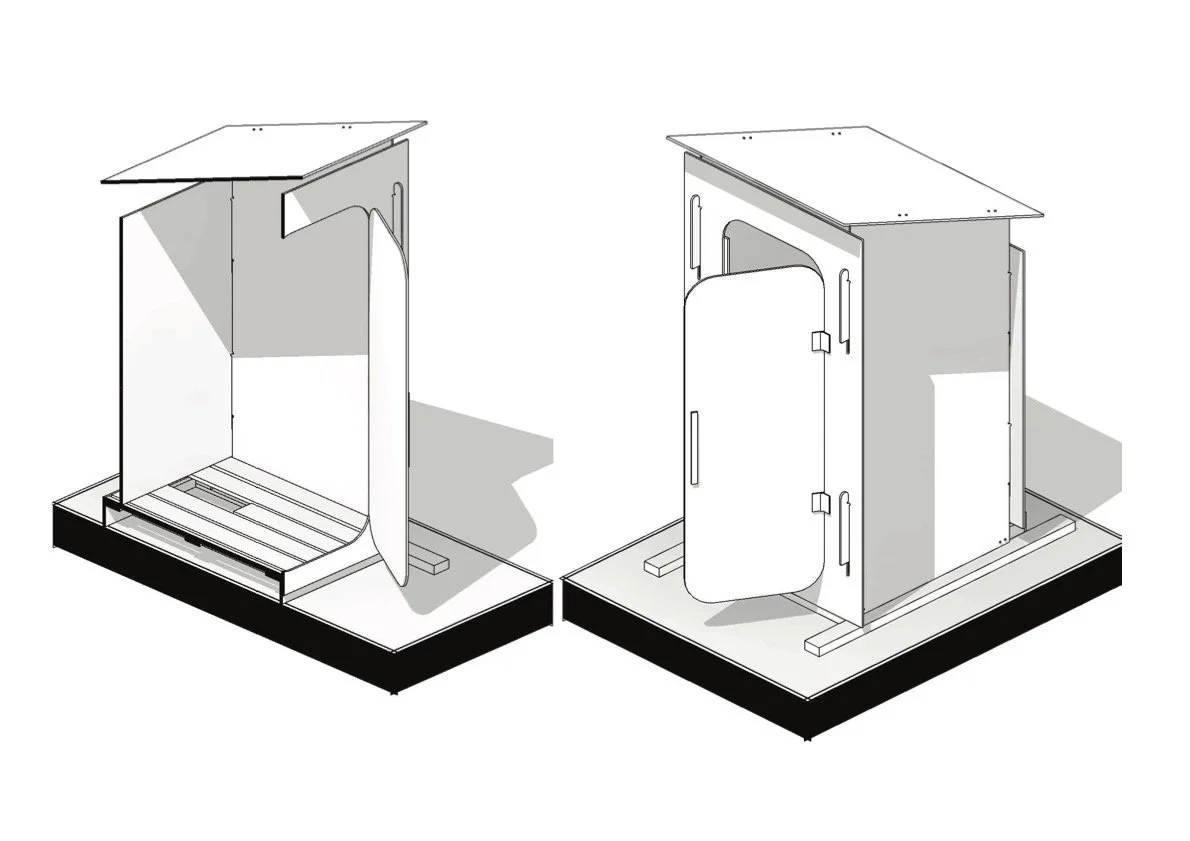
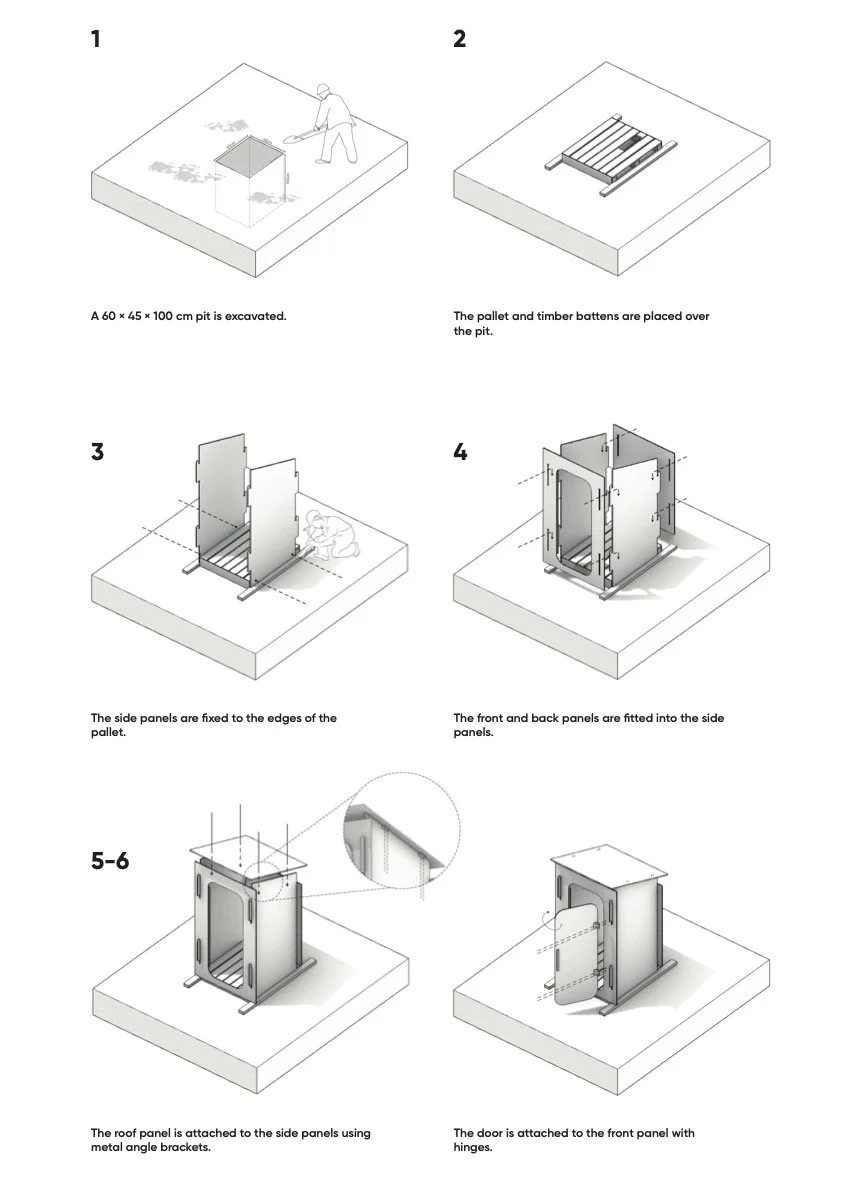
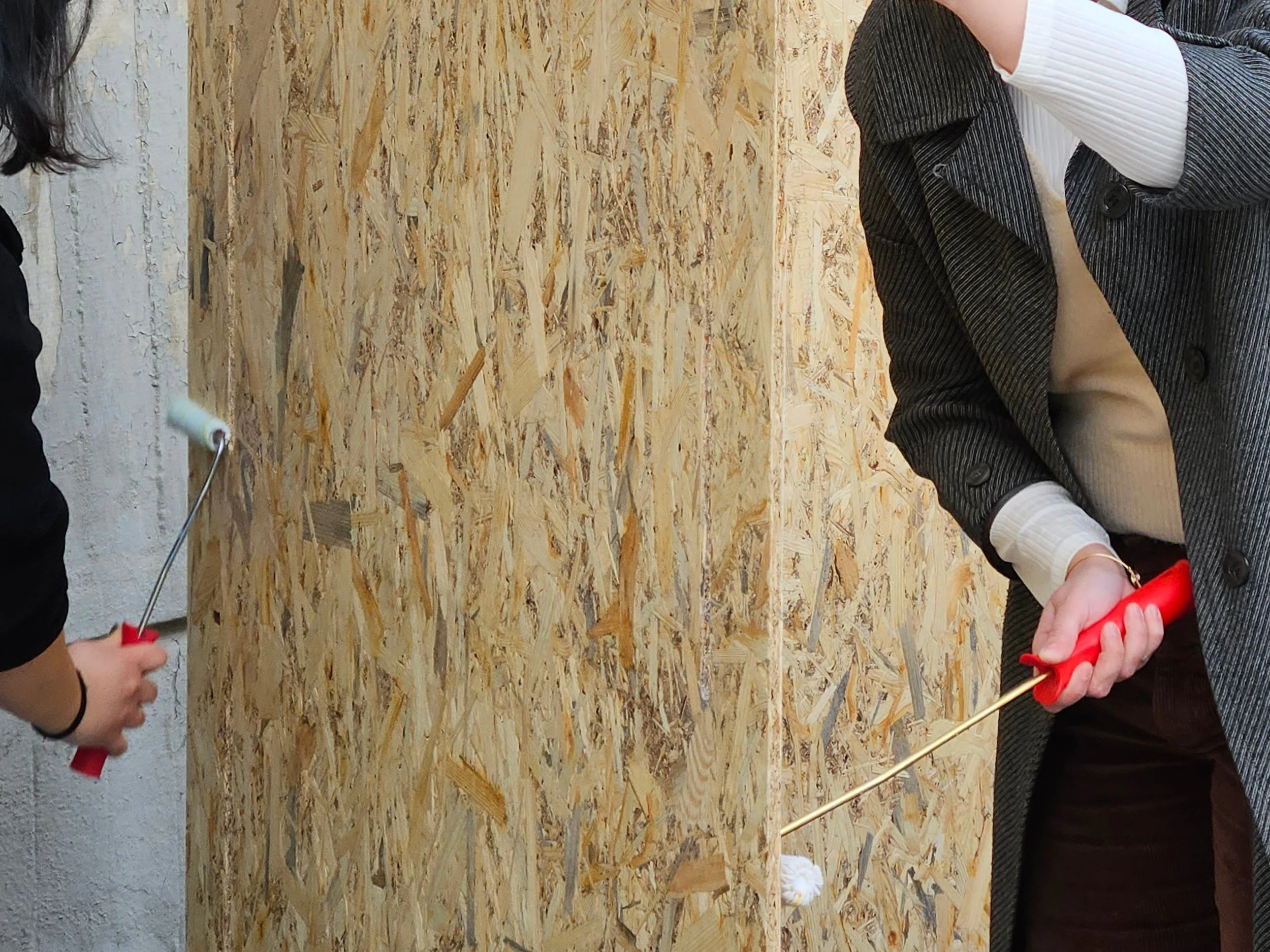
The need for a lightweight, affordable, and durable structure guided the material selection. Oriented Strand Board (OSB), coated with marine epoxy, was chosen for its balance of cost, weight, manufacturability, and structural performance. Plywood and stainless-steel interlocking components were also tested but proved either too heavy and costly or caused the OSB panels to crack under stress.
The prototype was tested in Ankara under challenging weather conditions. Despite its protective coating and added weights, prolonged exposure to heavy rain and storms eventually compromised its structural integrity. Further development was discontinued as a cabin of this scale was no longer required in the field. Nevertheless, the project remains valuable as an open-source model for a compact, rapidly deployable emergency solution.